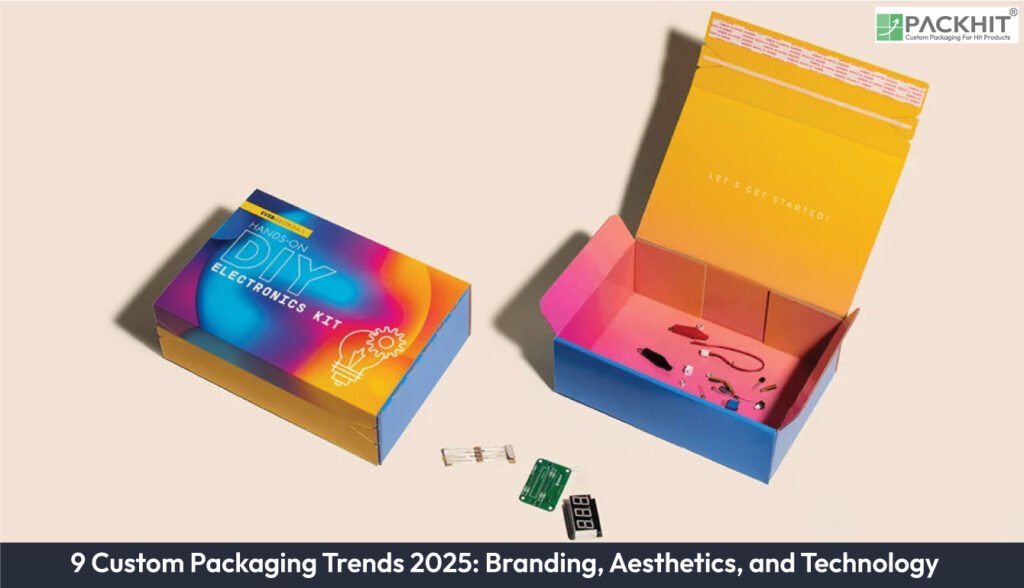
The nine custom packaging trends in 2026 include sustainable packaging, printed thank-you cards, personalised handwritten notes, custom artwork design, luxury magnetic closure packaging, customised cutouts and windows, thematic packaging, minimalist packaging and zero-waste packaging. Sustainable packaging in 2025 uses mono-material boards, PET or PLA films, and aqueous coatings with FSC or compostability certifications to reduce impact. Printed thank-you cards on uncoated or recycled stocks use finishes like emboss or spot gloss and often include QR codes for retention. Personalised handwritten notes, manual or robot-signed, add authenticity through pigmented inks and controlled QC. Custom artwork design relies on precise dielines, 300-dpi print files, and CMYK or Pantone workflows for consistent branding. Luxury magnetic-closure packaging uses rigid board, embedded magnets, and premium wraps for protection and reuse. Customised cutouts and windows apply controlled aperture geometry with PET or PLA films for visibility. Thematic packaging supports seasonal campaigns with controlled versioning, while minimalist packaging reduces colours and parts for faster production. Zero-waste packaging closes the loop using reusable boxes, compostable substrates, and reverse-logistics systems.
The nine trends of custom packaging in 2026 are mentioned below:
1. Sustainable Packaging
Sustainable packaging reduces environmental impact through deliberate material choice, mono-material construction, and a verified chain of custody. Three common substrate groups include kraft board, recycled coated board, and mono PET film. Use aqueous coatings and water-based varnish for surface protection and avoid solvent-based laminates to keep recycling streams consistent. Designers prefer mono-material window films such as PET and PLA cellulose film and single-adhesive systems to simplify sorting and recycling. Balance barrier performance, print quality, and end of life when specifying substrates for food, e-commerce, and beauty applications. Certification options include Forest Stewardship Council (FSC) chain of custody, recycled content declarations, and industrial compostability standards such as ASTM D6400 and EN 13432. Apply right-sizing and lightweighting to reduce material per unit and lower transport emissions, and use industrial composting if local facilities accept certified materials.
2. Printed Thank-you Cards
Printed thank-you cards are insert-level communications that deliver post-purchase messaging and simple promotional calls to action. They are available in standard stock weights and sizes, such as uncoated 300 g/m² and recycled 350 g/m², and typical dimensions 85 × 55 mm and 100 × 150 mm. Finishes include spot gloss, emboss, and soft-touch lamination. Paper choices include uncoated board, coated board, and recycled board. They continue to trend in 2026 because personalisation increases retention, low unit costs support scaling, and QR-enabled cards connect offline purchases to online loyalty programs.
Personalisation options include variable data printing, QR codes that link to promotional landing pages, and staff-signed notes produced by manual signing or pen-plot robots. Common use cases include direct-to-consumer apparel, subscription boxes, and jewellery orders, where a brief handwritten message raises perceived value and supports repeat purchase tracking.
3. Personalised Handwritten Notes
Personalised handwritten notes create perceived authenticity through human signing or print-to-look methods. Variants include staff-signed cards, thermal pen robots, and inkjet handwriting fonts, and materials include pigmented inks and quick-dry coatings that resist smudge on a range of board stocks. Operation follows a data merge, then a signing station or pen plotter, then insertion into the pack, and manufacturers select manual signing for low-volume luxury packs and automated signing for recurring subscription runs to match labour and throughput. Quality control covers ink adhesion tests, drying validation and visual verification of pen alignment and signature placement. Personalisation can include the customer’s name, order reference, and a brief handwritten message that links to loyalty programs or reorder incentives. Typical applications include jewellery direct to consumer and curated subscription boxes, where a handwritten touch increases perceived value and repeat purchase intent.
4. Custom Artwork Design
Custom artwork design defines the printed appearance and panel geometry of packaging and requires print-ready files, controlled colour management, and precise dielines. Custom artwork continues to trend in 2026 because SKU variation and strict brand reproduction improve shelf recognition and reduce rework. Three standard file formats are PDF/X-4, Adobe Illustrator with outlined fonts, and high-resolution print PDF with images at 300 dpi. Three common colour workflows are CMYK process, Pantone spot, and mixed process plus spot for metallic or speciality inks.
5. Luxury Magnetic-closure Packaging
Luxury magnetic closure packaging is a rigid-board case that integrates recessed magnets to produce consistent reclosure and noticeable tactile feedback. Components typically include rigid chipboard or laminated rigid board, NdFeB strips or ferrite discs, foam or textile liners, and finishes such as soft-touch lamination or foil stamping. Three primary benefits are repeatable closure with measurable closing force, increased product protection from a rigid chassis plus internal liners, and higher reuse rates that reduce reliance on single-use secondary packaging. Manufacturing adds discrete steps, including die-cut rigid board, precise magnet placement with jigs and adhesive fixtures, veneer wrap or panel application, and final finishing.
6. Customised Cutouts and Windows
Custom cutouts expose the product while preserving structural integrity by using designed bridge widths and choosing window film. Design parameters include aperture geometry, bridge width matched to board grade, common window films such as PET and PLA cellulose film, and attachment methods such as thermal adhesive and cold adhesive. Common uses of customised cutouts and windows include retail display, food packaging, and cosmetic gift sets, where visibility drives purchase.
7. Thematic Packaging
Thematic packaging adapts artwork and sometimes structure for seasonal or campaign runs and requires SKU version control. Versioning examples include holiday artwork and limited-edition artist collaborations, and operational controls include consolidated print plans, barcode segregation, and timed release schedules. Benefits of thematic packaging include targeted merchandising and short-term uplift, while constraints include increased SKU count and inventory complexity.
8. Minimalist Packaging
Minimalist packaging cuts visual elements, removes secondary parts, and limits finishing passes to keep complexity low and lead time short. Designers choose one or two colour print, uncoated board, and selective deboss, while production teams run fewer plates, shorter makeready, and reduced finishing steps. This method fits tech accessories, core cosmetics, and refill basics because restrained visual language supports cost control and aligns with 2026 trends that focus on simpler formats mentioned in industry updates.
9. Zero-Waste Packaging
Zero-waste packaging eliminates waste by utilising reuse loops, industrial compostable substrates, and deposit return logistics. Pathways include returnable boxes, cellulose-based films, and bagasse board because these substrates support reuse cycles referenced in the recent 2026 industry reviews. Operational steps include reverse logistics, sanitisation protocols, and tracked barcodes that support chain of custody audits from pack out to return. Constraints relate to compostability certification and food contact validation, and higher upfront logistics costs that operators offset through lower raw material purchase over time.