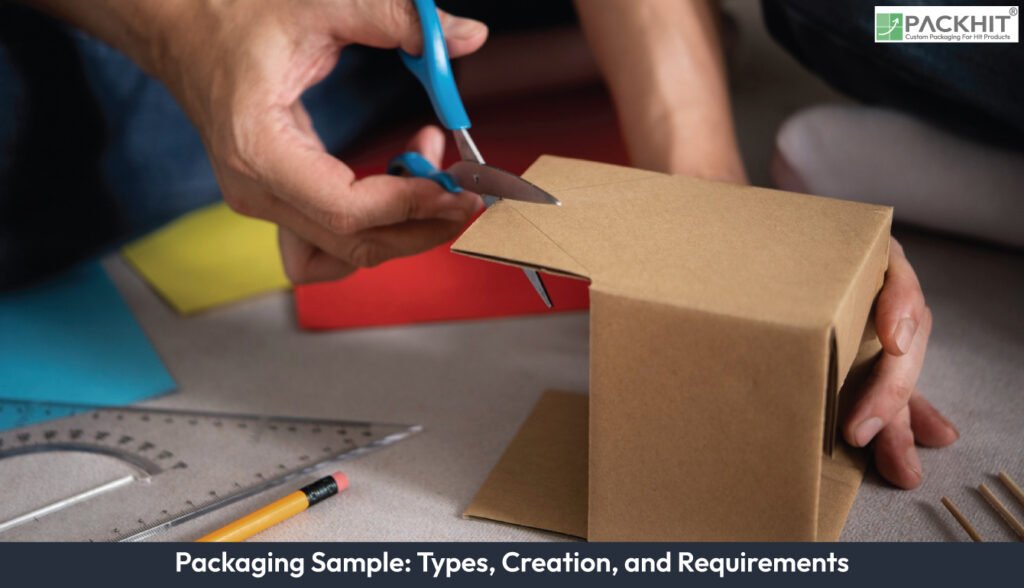
A packaging sample verifies structure, print behaviour and full-run accuracy through three sample types that serve different approval stages. Plain samples check geometry, random printed samples check colour and finish from recent production, and pre‑production samples confirm the final printed pack. Each type of packaging sample depends on dielines, artwork and substrate data, then moves through cutting, printing, assembly and inspection. Manufacturers use these samples to assess dimensions, press colour, surface durability and sealing strength, if the pack uses pouches. Cost splits between prepress, tooling, print set-up, materials and shipping. Lead times change from hours for plain prototypes to weeks for pre‑production pieces. Brands request custom or kit-based samples, including plain, random and fully printed items, to compare structure, artwork and finishes before committing to production.
- What is a Packaging Sample?
- What are the Types of Packaging Samples?
- Decision matrix: which sample type suits which objective?
- How to Create Packaging Samples?
- 1. Define the sample type
- 2. Gather technical inputs
- 3. Confirm print and finishing requirements
- 4. Produce a cutting path
- 5. Run the sample on appropriate equipment
- 6. Assemble and apply any required labels
- 7. Inspect structural and visual output
- 8. Package and dispatch the sample
- What Technical Inputs Does a Manufacturer Require for Each Sample Type?
- What Constitutes the Sample Cost Breakdown?
- How to Customise a Packaging Sample to Display Brand Assets?
- How Should Packaging Samples be Labelled?
- What Quality Checks and Tests are Common When Approving Samples?
- How do Lead Times vary by Sample Type?
- How to Minimise Time and Cost When Ordering Samples?
What is a Packaging Sample?
A packaging sample is a reduced-quantity package created to present a product in a controlled context and to verify manufacturing, shipping and shelf behaviour. It validates three technical facets: structural geometry and tolerances, material performance under expected handling, and graphic reproduction of branding elements. Use cases include in-store trials, mail-outs, user testing and production sign-off. Examples of packaging samples include single-dose sachets, 50 ml trial bottles and printed folding cartons.
What are the Types of Packaging Samples?
Three operational sample categories are used in most production chains: plain (unprinted) samples, printed samples and pre-production samples. Each category addresses a different approval objective, such as structural proof, lot-level verification or final-process approval, so selection depends on whether the priority is fit, consistency or exact visual fidelity.
1. Plain (unprinted) Packaging Samples
A plain sample is an unprinted structural prototype produced to confirm dimensions, closure function and material choice. Common uses are tooling checks, assembly trials and machine set-up. Typical inputs required: a dieline or CAD file showing cut-and-fold geometry, substrate specification such as paperboard grammage or corrugated flute, and adhesive or closure details. Examples include a blank corrugated tray, a plain tubular carton or a heat-seal pouch without artwork.
Cost and timing for plain samples stay low because the printing setup does not apply. Most cost sits in die creation, prototype cutting and sample handling. Lead time ranges from same‑day output for a laser‑cut mock‑up to a few days for a die‑cut paperboard piece, if dies and substrate stock are present. Plain custom samples also help remove extra rounds of rework because size and structure are confirmed before artwork enters the process.
2. Printed Packaging Samples
A printed sample is a specimen drawn or produced to represent a lot and used to verify production quality, colour stability and finishing consistency. It confirms in-line processes such as registration, varnish application and lamination. Requirements include final artwork with colour references, print method specification (for example, flexographic, offset or digital), finishing instructions and, if applicable, barrier or laminating film specification. Examples are a printed blister card, a flexo-printed sachet and a digitally printed promotional carton.
Cost and timing: printed samples require printing set-up and finishing costs, as the price depends on the printing method and run size. Digital proofs reduce set-up expense and shorten turnaround, whereas offset or flexo samples demand plate or cylinder set-up and thus higher per-sample set-up cost. Shipping and inspection add to the final sample cost.
3. Pre-production Samples
A pre-production sample is a full-fidelity pack produced using the same substrates, inks and processes planned for mass production, supplied for final approval prior to a production run. Its objective is final sign-off for product launch, regulatory compliance and shelf display. Deliverables required: production-ready artwork (PDF/X preferred), colour separations or Pantone references, substrate certificates, finishing recipes (varnish, lamination), and quality acceptance criteria. Examples include a press-checked folding carton, a pilot-run pouch with barrier lamination and a shelf-ready display with applied embossing.
Cost and timing: pre-production samples are the most expensive per unit because they incorporate full production set-up costs, tooling and small-run inefficiencies. Lead times align with production scheduling and may match the normal prepress-to-press interval for the plant, typically longer than unprinted prototypes and shorter than a full production run if slots are available.
Decision matrix: which sample type suits which objective?
Plain samples confirm structure, random printed samples confirm print behaviour, and pre‑production samples confirm the final printed and finished pack.
This table compares three packaging sample types and sets out which option fits a specific approval task. It guides manufacturers who run structural checks, colour checks or full-run verification and clarifies the sample that confirms each requirement.
| Objective | Recommended sample | Primary verification |
|---|---|---|
| Check form and fit for filling or packing equipment | Plain sample | Size checks and closure function |
| Check print colour and finishing from a recent production lot | Random printed sample | Colour match and surface finish |
| Check the final printed, finished and customised pack before a full run | Pre-production sample | Print accuracy, finishing steps and regulatory details |
A clear match between objective, sample type and verification step reduces rework, controls approval time and aligns structural checks, colour checks and full‑run confirmation with the correct sample category.
How to Create Packaging Samples?
Packaging samples follow a fixed sequence of technical steps that convert a dieline and artwork into a physical pack that verifies size, print and finishing. The process changes by sample type, but the core path stays consistent across plain, random and pre‑production items.
1. Define the sample type
Select either a plain sample for structural checks, a random printed sample for colour and finish checks using a recent production lot, or a pre‑production sample for full‑process approval. The decision depends on whether the priority is geometry, print behaviour or final‑run accuracy.
2. Gather technical inputs
Provide the dieline or CAD file with tolerances, the substrate specification, such as GSM or flute grade, and the intended finish. Add artwork files if the sample uses print. For plain pieces, geometry and substrate data replace artwork.
3. Confirm print and finishing requirements
State the print method if the piece uses ink. List varnish, lamination or embossing. Random printed samples rely on existing artwork from earlier production; pre‑production items rely on production‑ready PDFs with colour references.
4. Produce a cutting path
Create a laser‑cut path for one‑off prototypes or a die for production‑equivalent edges. Plain samples often use laser cutting, if crisp edges are not critical. Pre‑production samples normally use the same die planned for the run.
5. Run the sample on appropriate equipment
Plain samples pass through cutting and folding only. Random printed samples use print processes similar to the lot they represent. Pre‑production samples use the exact ink set, press configuration and finishing plan intended for mass production.
6. Assemble and apply any required labels
Add handling marks, trial identifiers or a “sample – not for sale” legend if the piece enters testing. Apply batch codes if traceability is part of the approval protocol.
7. Inspect structural and visual output
Verify dimensions, fold behaviour and closure engagement. For printed pieces, check colour values against Pantone targets, register alignment and surface durability. Compare the piece to the acceptance criteria documented at the start.
8. Package and dispatch the sample
Protect edges and print surfaces during transit. Add a unique reference code linking the sample to the technical file for later review.
This same sequence applies whether the request is a single plain prototype cut from stock or a pre‑production sample produced through a full press set‑up. The type chosen alters the steps related to artwork, print and finishing, while the structural workflow stays stable across all variants.
What Technical Inputs Does a Manufacturer Require for Each Sample Type?
Manufacturers require a defined set of technical inputs before producing any sample; the exact set depends on the sample type, but the core list is consistent. At minimum, provide a dieline or CAD file, material specification, closure/adhesive instruction, and a decision on printed vs unprinted. Additional required items, with examples, are: artwork files (vector PDFs, AI or EPS), colour references (Pantone numbers or CMYK), substrate test data (gsm or microns), and regulatory labelling details (ingredient lists or safety symbols).
- Artwork: supply vector files with outlines and fonts converted, example formats include PDF/X-1a, AI and EPS.
- Dieline and tolerances: provide CAD with fold lines and ± tolerances, for example, ±1 mm for small folding cartons.
- Substrate and finish: specify substrate type and finish, for example, 300 gsm coated paperboard with matt lamination.
- Print method and coatings: indicate ink type and varnish, for example, UV varnish or aqueous coating.
- Traceability and labelling: identify batch code format and critical labels, for example, best-before date and ingredient declaration for consumables.
What Constitutes the Sample Cost Breakdown?
Sample cost is the sum of discrete components, including prepress and artwork validation, tooling or die creation, printing set-up, material consumption, finishing operations, quality inspection and logistics. Each component contributes as follows: tooling/die may account for 20–60 per cent of total sample cost for new formats, printing and materials form the bulk of recurring per-unit cost, and shipping/inspection add fixed overheads. The exact split depends on whether the sample is printed or unprinted, and on the degree of finishing required.
How to Customise a Packaging Sample to Display Brand Assets?
Customisation uses artwork, substrate choices and finishing steps to display brand assets on any sample tier. A manufacturer applies the brand’s colours, typography and graphic identifiers on the printed layers if the sample type supports print. Plain samples carry structural checks only, so customisation focuses on geometry and proportion. Random samples apply existing artwork from a recent production lot, which allows colour and layout review. Pre‑production samples apply full artwork, finishing and substrate data, which makes them suitable for final checks.
Brand assets depend on six inputs: colour targets, logo vector files, typography, photographic elements, substrate finish and pack proportions. Colour targets use Pantone values or CMYK references. Logo files use vector formats, for example PDF/X or AI. Typography includes font families and point sizes. Photographic elements list retouching details and bleed. Substrate finish defines gloss, matte or soft‑touch coatings. Pack proportions confirm the relationship between front, side and closure areas, if the pack uses a folded format.
Three customisation steps apply across sample types:
- Artwork placement with alignment checks, for example alignment of logos on panels or precise positioning of regulatory icons.
- Colour proofing through digital or press‑based samples, if the sample supports printing.
- Finishing tests that apply lamination, varnish or embossing to confirm tactile behaviour.
Example applications include brand‑colour mapping on a folding carton, front‑panel photography on a sachet or embossed logos on a rigid box. Use these checks before final approval if the pack enters retail channels where colour consistency and print clarity must match reference assets.
How Should Packaging Samples be Labelled?
Samples intended for consumer distribution must include the same mandatory labelling elements as production packaging where legally required, unless they are explicitly exempted; examples of mandatory items include ingredient lists, net quantity, allergen statements and safety warnings. For non-consumables, include handling symbols, supplier identification and a traceable batch code for quality follow-up. If the sample is for testing, add a clear “sample – not for sale” legend and a unique identifier linking the sample to the test protocol.
What Quality Checks and Tests are Common When Approving Samples?
Quality checks target dimensions, print quality, structural strength and barrier properties when applicable. Typical tests include dimensional inspection with ± tolerance checks, drop testing for distribution resilience, abrasion testing for surface print durability and seal integrity for pouches. For printed samples, conduct spectrophotometric colour checks against reference Pantone values and visual inspection under standardised lighting conditions.
Example tolerances and tests: dimensional tolerances are frequently set at ±1–2 mm for small cartons. Seal strength is measured in newtons, with acceptance criteria determined by product weight and transport conditions. Colour delta E thresholds are customised but commonly set below 3 for close visual matches.
How do Lead Times vary by Sample Type?
Lead times change with process steps. Plain prototypes leave the studio within hours to a few days when the die and material sit in stock. Printed proofs that rely on digital print take 24 to 72 hours. Pre‑production samples that use press set‑up and finishing run in 7 to 21 days, if tooling exists or if the plant can cut a new die. These ranges shift with supplier capacity. Brands use quick plain samples from a sample kit to check structure and use custom printed samples when the job needs artwork, colour and finish checks. Indicative cost scenarios
How to Minimise Time and Cost When Ordering Samples?
Minimise cost by using digital proofs for early-stage visual checks. Reserve press‑dependent pre‑production runs only after structural and artwork validation. Submit finalised assets in one batch, such as dielines, Pantone lists and substrate specs. Ask for die reuse if a die already exists, and include any plain, random or pre‑production samples you request from a sample kit to keep approvals fast and predictable.
Is a Digital Proof Sufficient for Final Colour Approval?
No, a digital proof checks layout only because it cannot reproduce press colour, and final colour approval comes from a press‑checked pre‑production sample or a spectrophotometric check that matches the printed, finished pack shown in the pre‑production sample kit.
Can a Pre-production Sample use Different Inks from the Main Run?
A pre‑production sample can use different inks only if this change is documented and approved, because the sample must match the printed and finished pack shown in the pre‑production sample kit so that colour, finish and appearance reflect the planned production run.