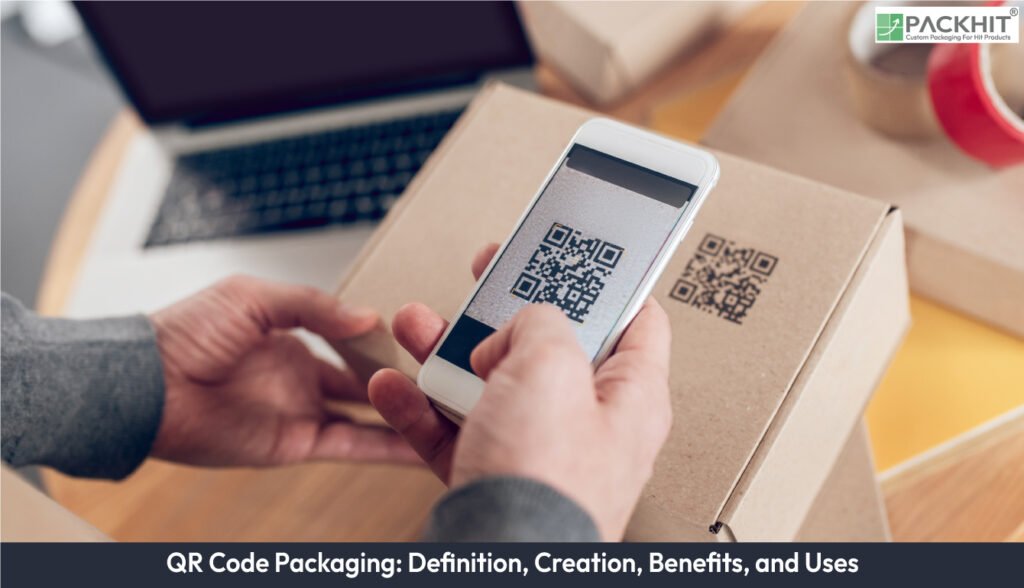
QR Code packaging brings digital connectivity into physical packs by linking printed symbols with online resources and operational systems. Packaging teams adopt the format to extend communication beyond limited label space while maintaining machine readability across retail and logistics environments. Effective use depends on deliberate choices around data intent, production setup and verification rather than the symbol alone. When integrated correctly, QR Code packaging supports engagement, control and information density without disrupting existing print workflows.
- What is QR Code Packaging?
- Why is QR Code Packaging Important?
- How to Create QR Code Packaging?
- 1. Select Code Type and Prepare Content
- 2. Generate Code and Configure Tooling
- 3. Print Integration and Verification
- 4. Deploy and Maintain
- What are the Benefits of QR Code Packaging?
- Stronger Marketing Response
- Clear Data Capture and Analytics
- Consistent Operational Efficiency
- Reliable Traceability and Authentication
- Stable Cost Control
- What are the Uses of QR Code Packaging?
- Product Information
- Promotions and Coupons
- Multimedia and Manuals
- App Launches
- WiFi Provisioning
- Digital Business Cards and Social Links
- Document Access
- Logistics and Identification
- How do QR Codes Promote Sustainability in Packaging?
- How is the Performance of QR Code Determined in Packaging?
What is QR Code Packaging?
QR code packaging uses a printed two‑dimensional code on the pack to connect the physical item with online data or services through a simple camera scan. A QR code appears as a square grid of black and white modules, and this layout sets the recognition pattern and error‑correction limits used by scanners. Black modules on a light surface create the contrast required for quick decoding, and the arrangement mirrors the principles seen in traditional barcodes, where clear separation between light and dark areas supports machine reading.
Why is QR Code Packaging Important?
QR code packaging is important because of turning a printed matrix of black and white squares into a direct scan point that connects the pack to verified product data, instructions, or checks through a smartphone camera. QR code packaging transforms static labels into scan-based gateways that connect consumers and handlers to digital content in real time. Marketing and engagement value increases because campaigns, product stories and promotions become directly accessible from the pack. Supply-chain control improves because the same symbol supports identification, tracking and delivery confirmation through system-read metadata. Information density advantages matter because two-dimensional matrices store larger ASCII-range payloads than one-dimensional barcodes while occupying less physical space, enabling use on small labels and industrial packaging.
How to Create QR Code Packaging?
Create QR code packaging using a repeatable sequence: determine use case and code type, prepare the destination resource, generate the code through a generator or API, validate scanning on the target substrate and integrate the code into production art and print workflow.
1. Select Code Type and Prepare Content
Choose static codes when the payload stays fixed. Choose dynamic codes if the destination changes or tracking data matters. Static codes store the final data in a square matrix of black and white modules. Dynamic codes store a redirect link that a server rewrites without a new print run. Prepare the destination before generation. Set the target URL, app link, PDF location or media file. Set JSON endpoints for supply‑chain tasks. Add UTM parameters for marketing scans. Add batch or lot identifiers for traceability. A QR code follows the same machine-readable structure as a traditional barcode, so clean data input improves decoding on the pack.
2. Generate Code and Configure Tooling
Use a QR code generator or an API to render the square matrix of black and white modules. Select an error‑correction level that matches expected print damage or abrasion on the packaging surface. A generator exports vector files or raster files for prepress. An API supports automated creation and tracking when large batches or integrated workflows run through production. Add scan analytics by creating server endpoints that record redirect events. Tracking records, scan counts and time data. Connect the generator to an analytics ingestion endpoint if structured logs are required. A QR code uses the same machine‑reading principle as a traditional barcode, so clean logging improves event accuracy.
3. Print Integration and Verification
Place the code where scanners capture it without blockages. Keep a clear, quiet zone around the modules and keep the orientation simple. Use inks and substrates that keep contrast stable across print runs. High contrast supports fast reading on cameras and 2D scanners, because the array of black and white squares follows the same recognition rule used in traditional barcodes. Set print targets that control tonal separation and run small tests on finished packs. Run pre‑production checks on the final material. Scan test panels with common smartphones and industrial readers. Check how the code reads at normal angles and distances. Increase code size, raise error correction, or move the code to a smoother label panel if the surface reflects light or has texture. These steps keep read rates stable across batches.
4. Deploy and Maintain
For dynamic codes, implement a maintenance workflow that updates redirect targets and monitors link health; for static codes, record the encoded payload and archival mapping between the printed identifier and the intended destination. Manufacturers generate and embed QR codes during packaging development and then hand off art and verification records to print suppliers as part of standard release documentation.
What are the Benefits of QR Code Packaging?
QR code packaging gives manufacturers a fast scan point for product data, promotions, manuals and tracking events because the printed matrix of black and white squares links the pack to a digital resource that a smartphone reads in less than a second.
Stronger Marketing Response
Stronger marketing response comes from direct scans on packaging that route consumers to targeted pages, such as discount claims or product landing pages. A QR code prints as an array of black and white squares, and this high‑contrast pattern triggers fast camera recognition on retail shelves. Scan events create a measurable action because each redirect records time, location and device type. Brands use this data to compare campaign variants if multiple layouts run at the same time. Manufacturers in the UK apply this behaviour to FMCG packs, gift boxes and food sleeves where rapid interaction increases the chance of promotion uptake.
Clear Data Capture and Analytics
Clear data capture and analytics arise when on‑pack scans register discrete events that map consumer behaviour across regions. A QR code stores a URL or structured string inside a fixed matrix, and scanners decode this pattern in less than a second. Each scan becomes an attribution signal if UTM parameters are attached to the link. Marketers compare A/B layouts, packaging colours or seasonal runs because scan logs carry identifiable patterns. This structure mirrors the logic used in traditional barcodes, where black‑white contrast dictates reading accuracy and event generation.
Consistent Operational Efficiency
Consistent operational efficiency results from replacing printed inserts with a single code that points to digital manuals, assembly guides or care instructions. A QR code condenses information into a compact symbol that prints on cartons, sleeves or bottle labels. Dynamic variants route users to updated content without new print runs. Workflows in manufacturing reduce material waste if digital files replace leaflets. This structure remains stable because the machine‑readable matrix maintains accuracy even on small packaging panels.
Reliable Traceability and Authentication
Reliable traceability and authentication derive from encoded serial numbers, batch identifiers or provenance data. A QR code acts as a machine‑readable identity tag in the same way that one‑dimensional barcodes document items in warehouses. Scanners decode the black-and-white matrix and send the payload to verification services. Authentication checks run against maintained databases that log origin, batch date and distribution step. Anti‑counterfeit workflows use the same scan event to confirm whether a pack appears in an unexpected location.
Stable Cost Control
Stable cost control occurs when dynamic redirects replace fixed printed information and reduce reprint cycles. Packaging changes frequently for seasonal promotions, legal text updates or ingredient revisions. Dynamic QR codes keep the printed symbol constant while servers rewrite the destination. Production teams in the UK avoid plate changes if the symbol remains valid across campaigns. Measurement remains accurate because redirect servers record event counts even when content changes through backend updates.
What are the Uses of QR Code Packaging?
Uses of QR code packaging cover consumer information, promotions, media access, authentication, and logistics tasks, and each scan triggers a defined action that routes the device to a local or server‑side endpoint. Operationally, a QR code produces a fixed event because the smartphone camera or 2D scanner decodes the pattern and loads the encoded destination. Operational behaviour depends on whether the code is dynamic or static, because dynamic codes redirect through a server while static codes retain a permanent payload. Consumers scan during purchase checks, and manufacturers integrate codes during design stages so that traceability and marketing tasks function once the pack enters distribution.
Product Information
Product information links give consumers direct access to specifications, ingredient lists, or origin data. Product information scans read the array of black and white squares and open a structured page that expands what the printed label cannot fit on small packs or multi‑panel cartons.
Promotions and Coupons
Promotions and coupons scans route users to timed discounts, loyalty forms, or campaign pages. Promotions and coupon codes record each event through redirect logs that capture time data, if UTM parameters sit inside the encoded URL.
Multimedia and Manuals
Multimedia and manuals links load how‑to videos, assembly files, or care guides. Multimedia and manual access rely on the same decoding principle used in traditional barcodes, because the smartphone camera reads the light–dark pattern and opens the referenced media file within one second.
App Launches
App launches rely on encoded deep‑link schemas that open registration flows or loyalty apps. App launches succeed on packaging with a limited print area, because the matrix stores the required payload without extra text or design real estate.
WiFi Provisioning
WiFi provisioning embeds SSID and key data so that a device joins a network automatically. WiFi provisioning works on product boxes used in workshops or retail demo areas, if the encoded string follows standard WiFi schema formats.
Digital Business Cards and Social Links
Digital business cards and social links scans import vCard fields or load social profiles. Digital business cards and social links support consistent formatting because vCard fields encode name, phone, and email without layout changes across devices.
Document Access
Document access codes open PDFs such as safety data sheets or certificates of analysis. Document access supports compliance workflows because regulated goods require on‑pack visibility of safety data, if printed text space remains limited.
Logistics and Identification
Logistics and identification scans confirm parcel handovers, route updates, or warehouse events. Logistics and identification codes support deterministic reads because the camera interprets the square modules in the same way scanners interpret one‑dimensional barcodes, with each scan mapped to a recorded event.
How do QR Codes Promote Sustainability in Packaging?
QR codes promote sustainability in packaging through material reduction, recycling guidance and supply-chain optimisation. QR codes replace printed manuals and inserts, lowering paper use and waste generation. Embedded disposal instructions and material details guide proper recycling and recovery processes. Supply-chain traceability improves efficiency because scanned codes track shipments, prevent overproduction and minimise product loss, supporting environmentally responsible packaging practices.
How is the Performance of QR Code Determined in Packaging?
The performance of QR Code is determined in packaging by print quality, data encoding and standard conformity. Visual clarity and contrast influence scan reliability because sharp module edges, accurate registration and a defined quiet zone improve decoding on packaging surfaces. The encoded payload structure affects functionality because URLs, media links, or credentials require correct character encoding for a direct device response. Classification and trademark compliance support consistency because QR Code operates as a standardised two-dimensional barcode system under Denso Wave Incorporated.