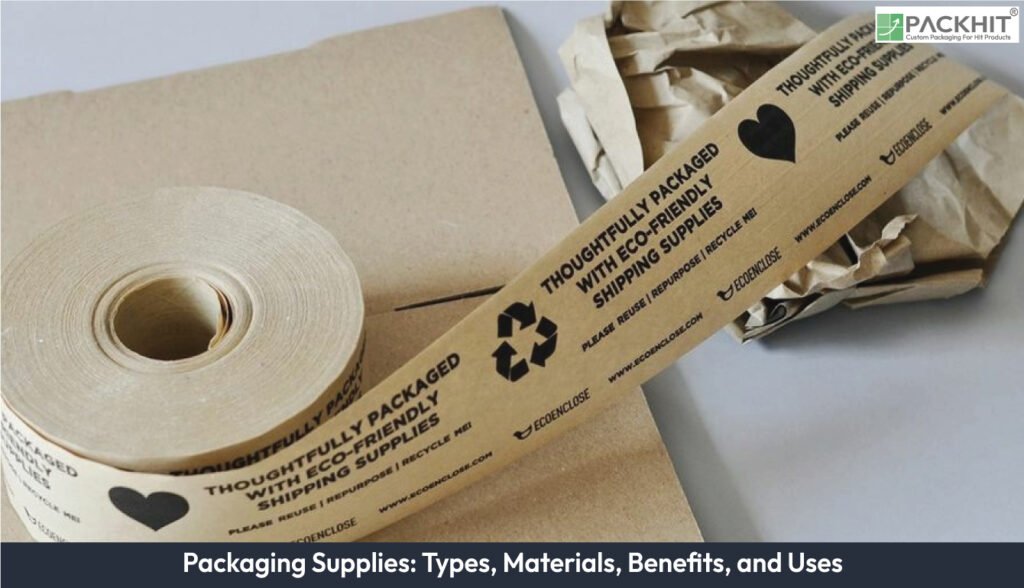
Packaging supplies are materials and consumables used to contain, protect, transport, and label products throughout storage and distribution. They include structural outer packaging, internal cushioning, flexible wraps, and sealing components that manage load stability and product safety. These supplies are classified by their structural role, protective function, and placement within the packaging system, supporting consistent specification across e-commerce, retail, and freight operations. Common types include corrugated boxes, pallets, foam inserts, stretch films, tapes, and labels. Materials range from paper-based corrugated board and moulded fibre to polymer films like polyethene and polypropylene, as well as hybrid laminated formats. Packaging supplies help reduce damage, improve operational efficiency, ensure regulatory compliance, and maintain shipment reliability across industries such as e-commerce fulfilment, retail distribution, and long-haul freight logistics.
- What are Packaging Supplies?
- What are the Types of Packaging Supplies?
- Structural and Containment Supplies
- Protective and Cushioning Supplies
- Flexible Films and Wrapping Materials
- Sealing, Fastening, and Labelling Supplies
- What Materials are Used in Packaging Supplies?
- What Benefits Do Packaging Supplies Provide?
- How are Packaging Supplies Used Across Industries?
What are Packaging Supplies?
Packaging supplies are materials and consumables that contain, protect, transport, and label products during storage and distribution. They include structural packaging, protective media, and sealing components that control movement, resist compression, and carry handling information. Selection depends on product weight, fragility, and shipping method.
What are the Types of Packaging Supplies?
Packaging supplies are classified by structural role, protection function, and position within the packaging system. This classification supports consistent specification across industries such as e‑commerce fulfilment, retail distribution, and freight forwarding.
Structural and Containment Supplies
Structural and containment supplies form the outer shell of a package and carry stacking and handling loads.
- Corrugated boxes: single-wall and double-wall cartons used for parcel shipping; flute profiles manage vertical compression during stacking.
- Rigid cartons: solid paperboard packs used for retail and short-haul distribution where shape retention matters.
- Poly mailers: lightweight plastic envelopes for apparel and soft goods; reduce dimensional weight in courier networks.
- Bulk containers: large-capacity bins and totes for industrial parts and high-volume handling.
- Pallets: wooden or plastic load bases that support unit loads in warehousing and long-distance freight.
Protective and Cushioning Supplies
Protective and cushioning supplies limit movement and absorb impact inside the package.
- Paper void fill: crumpled kraft paper that blocks space and restricts product shift.
- Foam inserts: shaped polyethene or polyurethane forms that distribute point loads around fragile items.
- Air cushions: inflatable pillows that absorb shock with low material weight.
- Loose-fill media: packing peanuts and similar fills that reduce vibration in irregular cartons.
Flexible Films and Wrapping Materials
Flexible films and wraps secure items, control moisture, and stabilise grouped loads.
- Stretch film: elastic wrap applied around pallet loads to hold cartons under radial tension.
- Shrink film: heat-activated film that contracts to create a tight, tamper-evident seal.
- Polyethene bags: clear or tinted bags for dust and moisture protection of individual items.
- Barrier films: multilayer sheets that limit moisture and oxygen transfer during storage.
Sealing, Fastening, and Labelling Supplies
Sealing, fastening, and labelling supplies keep packages closed and communicate handling data.
- Packaging tapes: pressure-sensitive and reinforced tapes that resist peel and shear forces.
- Strapping and banding: plastic or steel straps that bind cartons or pallet loads.
- Adhesives: liquid or hot-melt compounds used in carton closing and insert fixing.
- Labels and inserts: printed media carrying addresses, barcodes, hazard symbols, and handling instructions.
What Materials are Used in Packaging Supplies?
Packaging supplies use paper-based, polymer-based, and composite materials selected for strength, flexibility, barrier performance, and cost efficiency. Material choice determines recyclability, weight, and resistance to environmental stressors.
Paper and Fibre-based Materials
Corrugated board, solid paperboard, and moulded fibre originate from wood pulp and recycled fibres. Corrugated board combines linerboards and fluted mediums to balance rigidity and cushioning. Fibre-based materials dominate shipping cartons and protective inserts because they combine low mass with predictable compression strength.
Plastic and Polymer Materials
Polymers such as polyethene and polypropylene appear in films, mailers, air cushions, and stretch wrap. Their low permeability to moisture and high tear resistance suit long-distance shipping and variable climates. Thickness and formulation influence puncture resistance and elastic recovery.
Hybrid and Specialised Materials
Some supplies integrate multiple materials, for example, laminated films or reinforced cartons, to achieve combined barrier and structural performance. These formats appear in retail display packaging and point-of-purchase units where graphics, rigidity, and handling durability intersect.
What Benefits Do Packaging Supplies Provide?
Packaging supplies deliver three measurable benefits: product protection, operational efficiency, and information control. Each benefit ties directly to logistics performance indicators.
Damage Reduction
Proper cushioning and containment limit shock transfer and abrasion, lowering in-transit damage rates. Reduced breakage correlates with fewer returns and insurance claims, particularly for fragile or high-value goods.
Process Efficiency
Standardised materials shorten packing times and simplify inventory management. Bulk procurement, often conducted online, reduces unit cost variability and supports predictable replenishment cycles.
Communication and Compliance
Printed and adhesive elements convey handling instructions, hazard symbols, and tracking identifiers. This information layer supports regulatory compliance and traceability without altering the physical structure of the package.
How are Packaging Supplies Used Across Industries?
Packaging supplies adapt to sector-specific handling patterns and risk profiles. Use cases vary according to product sensitivity, distribution scale, and customer interaction.
E‑commerce and direct-to-consumer shipping
Lightweight cartons, mailers, and void fill dominate parcel shipments. Materials prioritise dimensional efficiency and protection against repeated handling in carrier networks. Online availability of supplies aligns with the decentralised nature of fulfilment operations.
Retail and point-of-purchase Distribution
Retail packaging integrates structural strength with printed graphics. High-graphic cartons and display units support merchandising while maintaining transport durability from the distribution centre to the store floor.
Warehousing and Freight Transport
Pallets, stretch wrap, and strapping stabilise bulk loads for mechanical handling. These supplies focus on load integrity under compression and vibration during long-haul movement.
Why are Packaging Supplies Important In Shipping And Logistics?
Packaging supplies determine shipment safety, cost control, and operational reliability across transport networks. Insufficient protection increases damage rates, while over-specification adds weight and material expense. The balance between these factors affects carrier fees, returns, and customer satisfaction metrics.
In e‑commerce fulfilment, packaging consistency supports automated picking and packing. Standardised carton sizes and materials reduce handling errors and improve stacking efficiency in vehicles. Where suppliers include complimentary packaging with expedited shipping, material costs shift into service pricing, altering procurement decisions for high-velocity shippers.