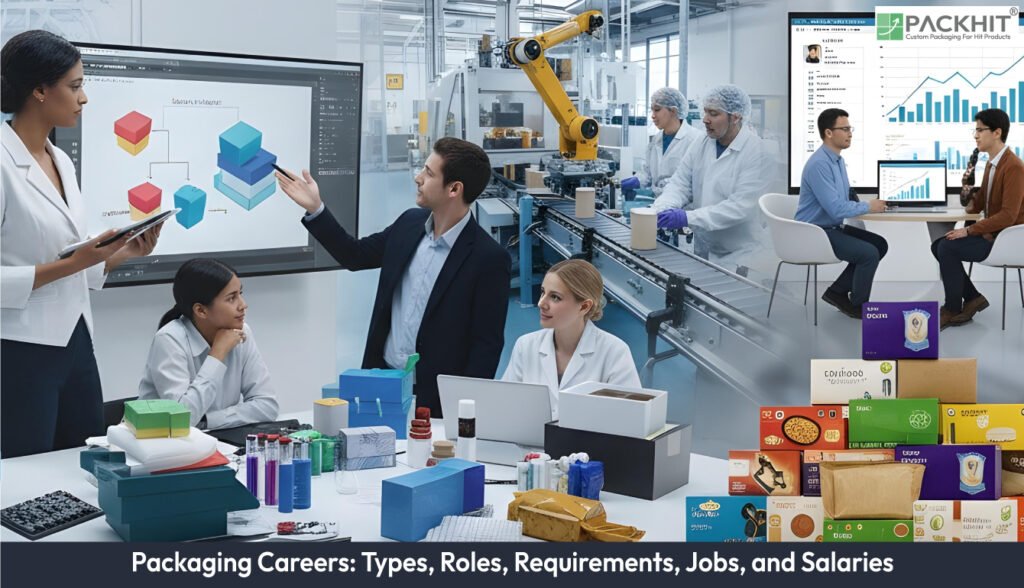
Packaging careers offer diverse opportunities across the lifecycle of product packaging, connecting manufacturing, logistics, marketing, and sustainability considerations. Professionals in this field engage with tasks ranging from machine operation and quality control to structural design, material selection, and regulatory compliance. Entry into these roles depends on practical skills, technical education, or specialised training, with higher-level positions requiring advanced qualifications and experience. Career paths extend from operational roles on the production floor to engineering, quality management, and commercial strategy, while compensation reflects responsibility, sector complexity, and technical expertise.
- What Defines a Packaging Career?
- How are Packaging Careers Structured Across the Industry?
- 1. Packaging Design and Development Roles
- 2. Manufacturing and Production Roles
- 3. Supply Chain, Logistics, and Operations Roles
- 4. Sales, Commercial, and Account Management Roles
- 5. Sustainability, Compliance, and Regulatory Roles
- What are the Entry Requirements for a Career in the Packaging Industry?
- What Job Roles are Included in Packaging Careers?
- What are Salary Ranges Across Packaging Careers?
- What is the Career Progression for Packaging Professionals?
What Defines a Packaging Career?
A packaging career is defined by professional involvement in the creation, specification, testing, manufacture, distribution, or commercial management of packaging used to contain, protect, transport, identify, and present products. The work exists within a recognised industrial sector that supports product distribution and consumer interaction, and operates as a functional component of supply chain management rather than a peripheral activity. Decisions made by packaging professionals affect storage efficiency, transport damage rates, regulatory acceptance, and purchasing behaviour at the point of sale.
How are Packaging Careers Structured Across the Industry?
Packaging careers cluster into several functional groupings, each aligned to a different stage of the product and supply chain lifecycle. Although titles vary by employer and region, the underlying responsibilities remain consistent across sectors such as food, healthcare, and consumer electronics.
1. Packaging Design and Development Roles
Design and development roles concentrate on the physical and visual specification of packaging. Packaging designers and structural packaging engineers define pack formats, select materials such as cardboard, plastic, glass, or aluminium, and test durability, moisture resistance, thermal insulation, and shock absorption. In food and pharmaceutical contexts, these roles also address shelf-life preservation, contamination prevention, and labelling clarity, including expiration date visibility and handling instructions.
Work includes prototyping and pre-production testing, where design assumptions are validated before large-scale manufacturing. Small dimensional adjustments made at this stage can materially alter storage density and transport costs downstream.
2. Manufacturing and Production Roles
Production-focused careers operate within packaging plants or contract manufacturing facilities. Job functions include machine operation, quality inspection, maintenance, and production supervision. Packaging technicians and operators manage forming, filling, sealing, printing, coating, and finishing processes, while quality roles verify appearance, functionality, and compliance with customer and retailer specifications.
The roles emphasise consistency, throughput, and defect reduction. Packaging must exit the line ready for distribution, which requires alignment between structural engineering, print accuracy, and material performance under real transport conditions.
3. Supply Chain, Logistics, and Operations Roles
Logistics-oriented packaging roles treat packaging as an integrated supply chain variable. Responsibilities include pallet design, transport compatibility, warehouse storage efficiency, and compliance with retailer handling standards. In e‑commerce and fulfilment environments, packaging planners also account for barcode placement, traceability requirements, and return-rate reduction.
Packaging is often overlooked in supply chain optimisation, yet small changes to pack geometry or material choice can alter transport utilisation and damage rates across high-volume distribution networks.
4. Sales, Commercial, and Account Management Roles
Commercial packaging careers sit between technical teams and customers. Sales engineers, account managers, and packaging consultants translate client requirements into manufacturable specifications while managing cost targets, lead times, and performance guarantees. In this context, packaging knowledge supports pricing discussions, sustainability claims, and regulatory assurances rather than physical production.
5. Sustainability, Compliance, and Regulatory Roles
Sustainability and compliance specialists focus on material sourcing, recyclability, waste reduction, and alignment with packaging waste regulations. Given that a substantial share of global plastic waste originates from packaging, these roles increasingly shape material substitution strategies, labelling standards, and supplier audits. Work frequently intersects with environmental reporting and retailer sustainability frameworks.
What are the Entry Requirements for a Career in the Packaging Industry?
Entry into a packaging career typically requires vocational training or apprenticeships for operational roles, a degree in packaging science, engineering, or materials for technical roles, plus role‑specific skills. Design, engineering, and technical management positions typically require formal education in packaging technology, mechanical engineering, materials science, industrial design, or a related discipline.
For analytical or regulatory roles, employers often expect familiarity with packaging legislation, quality systems, and material performance standards. Across most career paths, practical competence in problem diagnosis, process control, and cross-functional communication carries weight equal to academic credentials.
Skills Required Across Packaging Careers
Regardless of specialisation, packaging professionals rely on a shared skill set. Technical literacy supports the interpretation of material specifications and test data. Process awareness allows alignment between design intent and manufacturing reality. Regulatory awareness ensures packs meet retailer and legal requirements. In commercial roles, cost modelling and client communication form an additional core.
What Job Roles are Included in Packaging Careers?
Packaging careers include design, engineering, production, quality, supply chain, sales, and sustainability roles, covering jobs such as packaging designer, packaging engineer, packaging technician, quality assurance specialist, production supervisor, supply chain packaging analyst, sales engineer, and compliance officer.
- Packaging designer: Defines pack structure and graphics for products such as food cartons, cosmetic boxes, and retail-ready trays, with focus on material efficiency, shelf presentation, and print accuracy.
- Packaging engineer: Specifies materials, tolerances, and performance criteria for packs used in sectors such as food, pharmaceuticals, and electronics, including compression strength, barrier properties, and transport resistance.
- Packaging technician: Operates and monitors forming, filling, sealing, and labelling equipment on production lines, with responsibility for setup accuracy, fault diagnosis, and output consistency.
- Quality assurance specialist: Inspects packaging against functional and regulatory standards, covering seal integrity, print legibility, batch traceability, and contamination controls.
- Production supervisor: Coordinates packaging line staff, shift output, and machine availability, while tracking waste rates, downtime, and compliance with operating procedures.
- Supply chain packaging analyst: Assesses packaging dimensions and pallet configurations to reduce transport damage and improve warehouse density across distribution networks.
- Packaging sales engineer: Translates customer requirements into manufacturable packaging specifications, supporting pricing, lead-time planning, and technical clarification during commercial negotiations.
- Sustainability and compliance officer: Reviews material selection, recyclability, and labelling alignment with packaging waste regulations and retailer environmental standards.
- Packaging science graduate: Enters junior technical or development roles following formal education in packaging science with pathways into design, engineering, or quality functions.
What are Salary Ranges Across Packaging Careers?
Packaging job salaries in the UK vary widely by role, experience, and sector, with technical and managerial work earning more than production‑focused positions.
- Entry‑level and operational roles: Packaging technicians and junior operators typically earn around £23,000 to £33,000 per year, with averages near £28,000 for packaging technicians.
- Mid‑level technical roles: Specialists such as packaging specialists and mid‑career packaging professionals often fall in the £30,000 to £45,000 range. Packaging engineers average around £40,000–£46,000 per year.
- Design roles: Packaging designers typically earn in a similar mid‑range, often around £35,000 to £45,000, with higher pay possible in senior or agency roles.
- Management and senior technical roles: Packaging managers and senior engineering leads generally earn above £50,000, with common ranges up to £70,000 or more, and top earners exceeding this level in large organisations.
Salaries trend upward with responsibility, compliance accountability, and impact on cost or sustainability outcomes, making leadership and specialist positions more highly compensated than basic production roles.
What is the Career Progression for Packaging Professionals?
Packaging career progression follows a stepwise movement from hands‑on operational roles to technical ownership, commercial responsibility, or management accountability. Progress depends on technical competence, exposure to production systems, and responsibility for cost, compliance, or output.
- Entry‑level operational stage: Begins in roles such as packaging operator, junior packaging technician, or production assistant. Work focuses on machine setup, line monitoring, quality checks, and basic fault reporting. Typical experience range is 0-2 years.
- Skilled technician or junior technical stage: Progresses into packaging technician, quality technician, or junior packaging designer roles. Responsibilities include equipment adjustment, material testing, documentation, and supervising design or process changes. Typical experience range is 2-4 years.
- Independent technical contributor stage: Moves into packaging engineer, packaging designer, or quality assurance specialist positions. Work includes material specification, transport testing, supplier coordination, and compliance ownership for defined product ranges. Typical experience range is 4-7 years.
- Senior technical or supervisory stage: Advances to senior packaging engineer, production supervisor, or lead designer. Accountability expands to project approval, line performance targets, waste reduction, and mentoring junior staff. Typical experience range is 7-10 years.
- Management or specialist stage: Splits into packaging manager, operations manager, sustainability lead, or regulatory specialist roles. Focus shifts to budgeting, supplier strategy, audit readiness, and cross‑site standardisation. Experience often exceeds 10 years.
- Strategic or commercial leadership stage: Reaches head of packaging, technical director, or commercial account lead positions. Decision‑making affects product portfolios, capital investment, and long‑term material strategy across markets or regions.
Career movement is not linear in all cases. Designers often transfer into supply chain optimisation, engineers move into sales engineering or compliance, and production supervisors shift into plant or operations management as responsibility broadens.