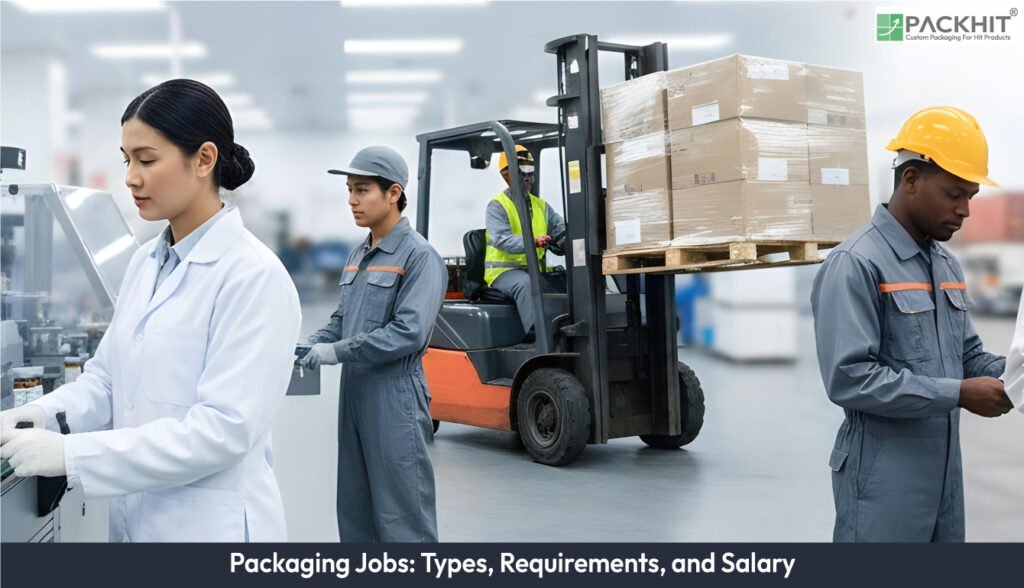
Packaging jobs are manufacturing and distribution roles responsible for preparing, protecting, and presenting packaging products through filling, sealing, labelling, and quality checking across multiple industries. Different packaging job types include hands-on packing and machine operation, as well as technical, quality, engineering, and supervisory positions within packaging departments. Qualification and skill requirements for packaging jobs vary by role level, combining basic education and on-the-job training for entry roles with technical certifications or degrees for advanced positions. UK salary levels for packaging jobs increase with technical responsibility, compliance exposure, and leadership scope, typically ranging from entry-level operational pay to higher earnings in engineering and supervisory roles.
What are the Different Types of Packaging Jobs?
The different types of packaging jobs cover operational, technical, quality-focused, and design-led roles that support how products are packed, protected, and prepared for sale across the manufacturing and distribution.
Packing Operative
Packing operative roles focus on manual or semi-automated packing tasks on production lines. Duties include filling containers, sealing packs, applying labels, and performing visual checks for defects. These roles are common in food processing, cosmetics manufacturing, and e-commerce fulfilment.
Packaging Machine Operator
Packaging machine operator positions involve running, adjusting, and monitoring automated packaging equipment. Responsibilities include setting machine parameters, clearing material jams, and reporting mechanical faults during shifts. Proper equipment operation increases production efficiency and reduces packaging errors. These roles are typical in high-volume sectors such as beverages, pharmaceuticals, and consumer goods.
Packaging Technician
Packaging technician roles focus on equipment support and process reliability within packaging lines. Tasks include preventative maintenance, part replacement, and performance checks against production targets. Technical expertise helps reduce downtime and maintain consistent pack quality. These positions exist in factories with complex or multi-stage packaging systems.
Quality Control Inspector
Quality control inspector positions assess packaged products against defined standards and specifications. Duties include sampling, weight checks, seal integrity verification, and documenting non-conformities. Quality oversight ensures product safety and regulatory compliance. These roles are particularly important in regulated industries such as food, medical, and pharmaceutical packaging.
Packaging Engineer
Packaging engineer roles focus on packaging design, material selection, and performance testing. Responsibilities include evaluating strength, shelf life, transport resistance, and regulatory compliance of packaging formats. Engineering input helps reduce material waste and product damage during distribution. These roles operate at design, development, and production planning levels.
Packaging Supervisor
Packaging supervisor roles manage teams, output schedules, and line performance within packaging departments. Responsibilities include shift planning, safety compliance, and coordination with production management. Supervisory oversight supports labour efficiency and consistent throughput. These roles act as a link between operational staff and senior manufacturing management.
What are the Qualifications and Skills Required for Packaging Jobs?
Packaging jobs require entry-level qualifications for operational roles and technical skills or degrees for advanced positions.
Qualifications
- Basic education: Completion of secondary education (e.g., GCSEs in English and Maths) to support reading labels, counting units, and completing production records.
- On-the-job training: Induction programs and supervised shift work to learn equipment operation and packing standards.
- Health and safety certifications: Certifications of Food Hygiene Level 2 or COSHH (Control of Substances Hazardous to Health) awareness are important in food, pharmaceutical, and chemical environments.
- Technical qualifications: NVQ (National Vocational Qualifications) Level 2 or 3 in manufacturing or engineering, relevant for machine operators and technicians.
- Advanced qualifications: Engineering or design degrees (e.g., Packaging Engineering, Industrial Design) for engineering, development, or technical roles.
Skills
- Communication skills: Effective shift handovers, reporting faults, and coordinating with team members.
- Manual dexterity: Accurate hand packing, sealing, and component placement to maintain speed and quality.
- Attention to detail: Ensuring label alignment, seal integrity, and defect detection to meet compliance standards.
- Basic mathematical skills: Counting units, checking weights, and verifying batch accuracy.
- Equipment awareness: Monitoring alarms, clearing jams, and handling automated or semi-automated machinery safely.
What is the Average Salary Range for Packaging Jobs?
The average salary range for packaging jobs in the UK sits between £20,000 and £48,000 per year, depending on role type, technical responsibility, and production environment. Entry-level operational roles cluster at the lower end, while engineering and supervisory roles track higher median and average pay levels.
The table below outlines common packaging roles, showing UK median salary and UK average annual salary figures to clarify earning differences across responsibility levels.
| Packaging Role | UK Median Salary (£) | UK Average Salary (£) |
|---|---|---|
| Packaging Operative | 22,000 | 24,500 |
| Packaging Machine Operator | 26,000 | 29,000 |
| Packaging Technician | 30,000 | 34,000 |
| Quality Control Inspector | 28,000 | 32,000 |
| Packaging Supervisor | 35,000 | 40,000 |
| Packaging Engineer | 42,000 | 48,000 |
This salary table shows how packaging job pay increases with technical skill, compliance responsibility, and production oversight. Median salaries reflect typical earnings, while average salaries account for overtime, shift premiums, and sector-specific demand across UK manufacturing.