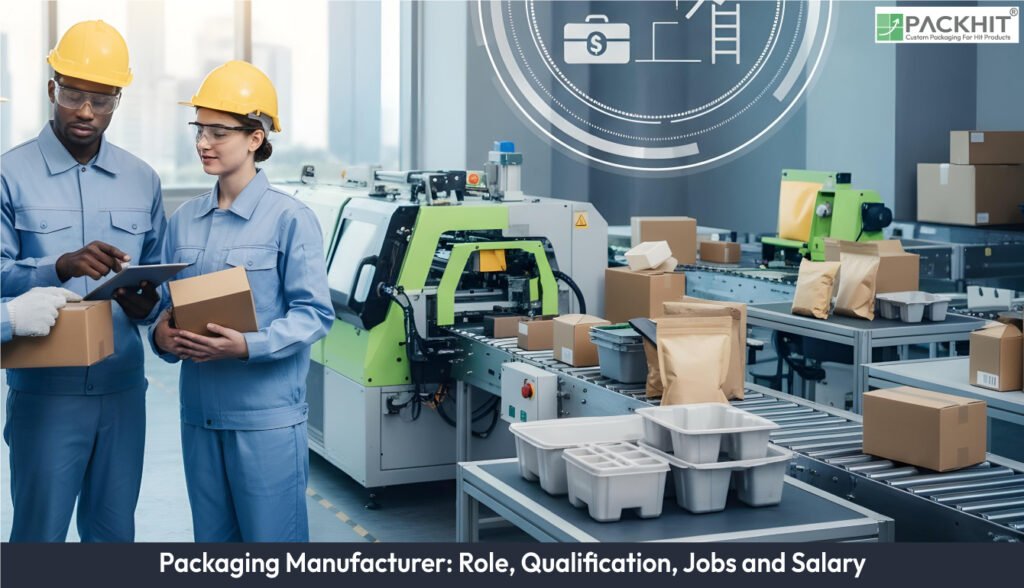
Packaging manufacturers operate in controlled industrial environments where raw materials are transformed into finished packaging through forming, printing, cutting, and assembly. The role of the packaging manufacturer combines material processing, structural conversion, quality control, and supply coordination to deliver compliant packaging at repeatable volumes. Manufacturing capabilities of the packaging manufacturer span format conversion, surface treatment, scalability, and process control, while experience and certifications strengthen reliability, regulatory compliance, and production stability. Revenue levels of the packaging manufacturer vary by scale and automation, and brand engagement follows a structured path from specification and sampling to approved production and long-term supply management.
- What is a Packaging Manufacturer?
- What is the Role of a Packaging Manufacturer?
- What are the Capabilities of a Packaging Manufacturer?
- Format Conversion and Structural Manufacturing
- Printing and Surface Treatment
- Quality Control and Compliance Management
- Production Scalability and Volume Control
- Tooling, Equipment, and Process Control
- Supply Coordination and Delivery Management
- How Experience Affects a Packaging Manufacturer’s Reliability?
- How Much Revenue Does a Packaging Manufacturer Typically Generate?
- How do Brands Engage with Packaging Manufacturers?
What is a Packaging Manufacturer?
A packaging manufacturer is a company that produces packaging materials and finished formats in-house using controlled industrial processes. It converts raw substrates, such as paperboard, corrugated fibreboard, plastics, or metals, into defined packaging formats at repeatable production volumes. Manufacturing activities include forming, printing, cutting, and assembly, all carried out under documented quality and regulatory controls. This production ownership separates a packaging manufacturer from businesses that only distribute packaging.
What is the Difference Between a Packaging Manufacturer and a Packaging Supplier?
A packaging manufacturer produces packaging in-house using its own materials, machinery, and quality controls, whereas a packaging supplier sources finished packaging from third-party manufacturers and resells it without direct control over production.
What is the Role of a Packaging Manufacturer?
A packaging manufacturer converts raw materials into finished packaging formats that protect products, support transport, and maintain regulatory compliance. The role centres on in-house production, covering material selection, tooling setup, and repeatable manufacturing at defined volumes. The packaging manufacturer controls how packaging is formed, printed, and assembled.
- Material processing: Transforming base materials, such as paper reels or plastic sheets, into usable packaging stock.
- Format conversion: Cutting, creasing, moulding, or sealing materials into specified packaging shapes.
- Quality control: Checking dimensions, tolerances, and finish against approved specifications.
- Supply coordination: Aligning manufacturing output with client production schedules and distribution plans.
What are the Capabilities of a Packaging Manufacturer?
The capabilities of a packaging manufacturer define the technical, operational, and control functions that allow packaging to be produced in-house at repeatable quality and volume. These capabilities determine which formats are converted and how packaging is delivered to meet regulatory, logistical, and performance requirements.
Format Conversion and Structural Manufacturing
Format conversion and structural manufacturing transform packaging materials into finished, functional pack formats. Packaging manufacturers controls cutting, creasing, folding, moulding, gluing, and sealing operations to meet specific structural and filling requirements. Precision tooling and forming systems control dimensional accuracy, strength, and repeatability. This capability enables the manufacture of cartons, trays, sleeves, flexible bags, and rigid packaging compatible with automated packing lines.
Printing and Surface Treatment
Printing and surface treatment deliver branded, protective, and functional packaging surfaces. Packaging manufacturers control flexographic, offset, or digital printing, along with varnishing, coating, embossing, and lamination. Controlled print workflows ensure colour consistency, sharp registration, and surface durability across production batches. These capabilities support brand presentation, product identification, and resistance to handling, moisture, and abrasion.
Quality Control and Compliance Management
Quality control and compliance management ensure packaging meets customer specifications, regulatory requirements, and end-use conditions. Packaging manufacturers manage food-contact compliance, material certifications, transport performance testing, and full batch traceability. In-process and final inspections verify dimensions, seal integrity, print quality, and surface condition. This capability reduces the risk of rejection, protects packed goods, and supports regulatory audits.
Production Scalability and Volume Control
Production scalability and volume control allow packaging manufacturers to adjust output without changing design or performance standards. Output control is achieved through machine capacity planning, line speed management, shift scheduling, and labour allocation. This capability supports pilot runs, seasonal demand increases, and long-term supply contracts using consistent tooling and processes. Scalable production ensures supply continuity during market or demand fluctuations.
Tooling, Equipment, and Process Control
Tooling, equipment, and process control maintain consistency and efficiency in packaging manufacturing. Manufacturers manage die and mould design, preventative maintenance, press calibration, and standardised setup parameters. Documented process settings ensure repeatable results between production runs and reduce setup variation. This capability limits material waste, improves yield, and minimises unplanned downtime.
Supply Coordination and Delivery Management
Supply coordination and delivery management integrate packaging production with customer filling and distribution schedules. Packaging manufacturers manage material availability, production sequencing, batching, palletisation, and transport coordination. Aligned manufacturing and logistics reduce storage requirements, prevent late deliveries, and support just-in-time supply models. This capability delivers predictable lead times and dependable packaging availability.
How Experience Affects a Packaging Manufacturer’s Reliability?
Experience plays a critical role in a packaging manufacturer’s reliability by strengthening process stability, quality control, and delivery performance over time. Manufacturers with extensive production history have refined their workflows through repeated use of the same materials, formats, and machinery, which significantly reduces setup errors, material waste, and dimensional inconsistencies. With experience comes stronger operational knowledge. Skilled teams can identify defects earlier, troubleshoot issues faster, and apply consistent quality checks at each production stage. This leads to lower scrap rates, fewer reworks, and more predictable output. Established manufacturers also develop accurate production planning, allowing them to meet lead times reliably even during high-volume or urgent orders. Industry familiarity further improves reliability by ensuring compliance with regulatory and safety standards, such as food-contact requirements, transport testing, and sustainability guidelines. Experienced manufacturers understand documentation, testing protocols, and audit expectations, which reduces the risk of rejected shipments or costly recalls. Over time, accumulated production data enables continuous process improvement. Experienced manufacturers can optimize machine settings, supplier selection, and inventory management, minimizing disruptions in raw material supply. As a result, they maintain consistent product quality under pressure and deliver stable performance across long-term partnerships.
How Certifications Support Reliability in Packaging Manufacturing?
Certifications formalise manufacturing experience by setting verified standards for process control, quality assurance, and regulatory compliance. They demonstrate that a packaging manufacturer’s reliability is supported by audited systems rather than informal practice.
- ISO 9001 (Quality Management): Confirms controlled production processes, documented procedures, corrective action systems, and consistent output across repeated runs.
- BRCGS Packaging Materials: Verifies food-contact safety, hygiene controls, traceability, and risk management for packaging used in regulated supply chains.
- ISO 22000 (Food Safety Management): Supports hazard analysis, contamination prevention, and controlled handling for food and beverage packaging applications.
- ISO 14001 (Environmental Management): Demonstrates structured control of waste, energy use, and material sourcing, supporting sustainability requirements without disrupting production.
- FSC® or PEFC™ Certification: Confirms responsible sourcing and chain-of-custody control for paper-based packaging materials.
- Sedex / SMETA Audits: Provide visibility into ethical sourcing, labour standards, and operational transparency within the supply chain.
How Much Revenue Does a Packaging Manufacturer Typically Generate?
Packaging manufacturers typically generate £2 million to over £700 million per year, depending on production scale, material focus, customer base, and geographic reach.
The table below explains typical annual revenue ranges for packaging manufacturers, grouped by business size and manufacturing capacity. The figures reflect common conditions in the UK and comparable industrial markets, where revenue links directly to throughput, automation level, and contract volume.
| Manufacturer Size | Annual Revenue Range | Primary Revenue Drivers | Typical Customer Types |
|---|---|---|---|
| Small-scale manufacturer | £2M–£10M | Short runs, limited machinery, manual conversion | Local brands, startups, niche producers |
| Mid-sized manufacturer | £10M–£75M | Automated lines, repeat contracts, material diversity | Regional brands, food producers, retail suppliers |
| Large-scale manufacturer | £75M–£700M+ | High-volume output, multi-site operations, long-term contracts | National brands, FMCG groups, industrial clients |
Revenue increases with production volume, machine uptime, and contract duration. Manufacturers producing packaging in-house at scale, such as corrugated board, paper-based packaging, or flexible films, generate higher turnover through repeat orders and long-term supply agreements. Smaller manufacturers rely more on short production runs and specialised formats, which limits total revenue but supports higher unit margins in some cases.
How do Brands Engage with Packaging Manufacturers?
Brands engage with packaging manufacturers through a structured process that begins with defining packaging specifications, material requirements, and regulatory compliance needs. They provide dielines, volume forecasts, and standards such as food-contact safety or transport regulations to confirm manufacturing capability. The engagement continues with sampling, tooling approval, and controlled production runs to validate packaging strength, fit, and production line compatibility. Ongoing coordination then covers delivery schedules, quality audits, and repeat orders as product volumes or packaging formats change.