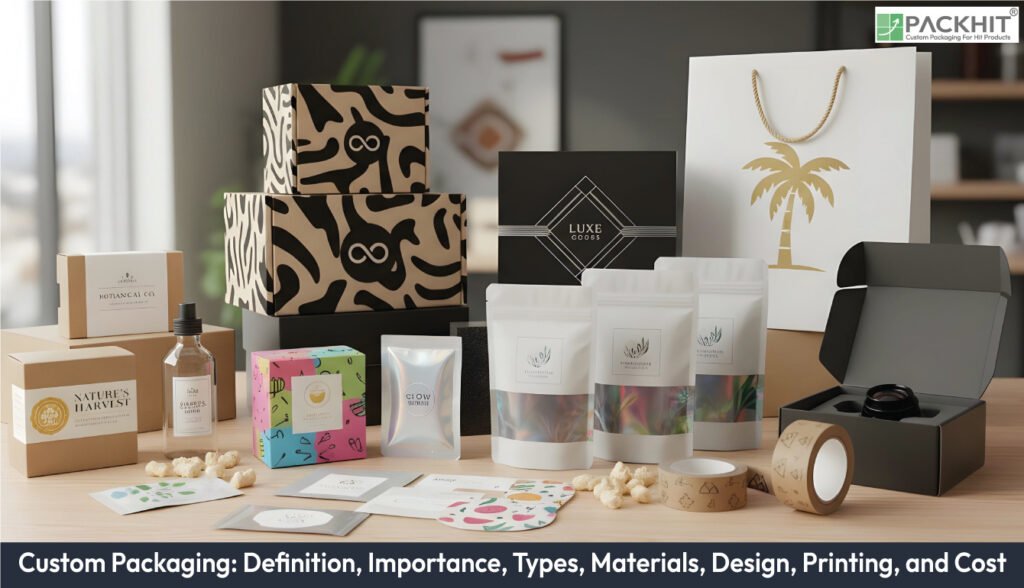
Custom packaging combines tailored structures, materials and graphics that fit product needs, strengthen branding and support efficient handling. Personalised packaging blends protection with visual appeal through thoughtful choices in format, materials, structural design and printing. Production decisions such as substrates, dielines, finishes and print methods shape durability, usability and appearance. The custom packaging cost depends on specifications, order size and manufacturing steps. A clear strategy across all elements helps create packaging that elevates brand presence and enhances product value.
- What is Custom Packaging?
- Why Does Custom Packaging Matter for Retailers and E‑commerce Businesses?
- Which Types of Custom Packaging are Commonly Used?
- Folding Cartons (Paperboard)
- Corrugated Boxes (Shipping and Secondary)
- Rigid Set-Up Boxes
- Flexible Packaging (Pouches, Sleeves, Films)
- Mailing Bags and E-Commerce Mailers
- Bottles, Tubes, and Closures
- Thermoformed Blisters and Clamshells
- Inserts, Trays, and Internal Protection
- Which Materials and Structures Affect Custom Packaging Performance?
- Paperboard
- Corrugated Board
- Molded Pulp
- PET Films
- PE and PP Films
- Multilayer Laminates
- Aluminium Foil Laminates and Speciality Coatings
- How to Make Custom Packaging?
- Which Printing and Finishing Methods are Used in Custom Packaging?
- Digital Printing
- Flexographic Printing
- Offset Printing
- Gravure Printing
- Screen Printing
- Finishing Processes
- How Much Does Custom Packaging Cost?
- How Do Design and Material Choices Affect Sustainability?
- Which Tests Ensure Quality and Performance of Custom Packaging?
- How to Choose a Custom Packaging Supplier and What an Order Should Include?
What is Custom Packaging?
Custom packaging is a product-specific enclosure designed with selected materials, structural forms, and graphic guidelines for a single SKU (Stock Keeping Unit). Materials include paperboard, corrugated board, chipboard, or laminated films based on strength, barrier, and print needs. Structure relies on dielines, scored folds, thermoformed cavities, and inserts like moulded pulp or foam trays. Branding uses CMYK or Pantone inks, coatings, foil, embossing, or cutouts to position logos, safety text, and decorations consistently. Customised packaging types, including gift boxes, perfume boxes, dispenser boxes, jar candle boxes, cannabis-compliant bags, and holiday mailers, are optimised for rigidity, shelf visibility, and shipping performance.
Why Does Custom Packaging Matter for Retailers and E‑commerce Businesses?
Custom packaging protects products, ensures compliance, reduces distribution costs, and enhances product visibility at the point of sale. Right-sized enclosures minimise transit damage and returns, improve pallet utilisation, and enable faster picking with standardised pack formats. Retail outlets focus on visual appeal and shelf fit, such as display-ready cartons and gift-ready rigid boxes. E‑commerce businesses prioritise compression strength and shipping efficiency, exemplified by corrugated mailers and padded polybags. Compliance requirements, including food contact safety, chemical inertness, and tamper evidence, guide material and process selections documented in supplier specifications.
Which Types of Custom Packaging are Commonly Used?
Custom packaging includes folding cartons, corrugated and rigid set-up boxes, flexible pouches, thermoformed blisters, and speciality formats like gift boxes, subscription boxes, dispenser boxes, apparel and candle boxes, perfume boxes, holiday packaging, and child-resistant packs.
Folding Cartons (Paperboard)
Folding cartons are die-cut and scored paperboard enclosures used for the primary packaging of consumer products. Common materials include solid bleached sulfate and coated recycled board with weights from 200 to 600 GSM. Structural variants include tuck-top, auto-lock bottom, and end-load designs. Printing is performed with sheet-fed offset, digital, or flexo methods, and closure uses tucking or adhesive. Folding cartons are widely applied for cosmetics, pharmaceuticals, and small retail items, providing precise folding tolerances and high-quality print surfaces.
Corrugated Boxes (Shipping and Secondary)
Corrugated boxes consist of fluted medium sandwiched between linerboards. They serve as secondary and transit packaging where stacking strength and cushioning are required. Flute profiles such as A, B, C, and E control cushioning and print surface quality. Thickness ranges from 1.5 mm to 5 mm, depending on construction. Single-wall, double-wall, and triple-wall configurations are chosen based on payload, pallet stacking, and handling needs. Applications include shipping cartons, e-commerce parcels, and bulk shipments.
Rigid Set-Up Boxes
Rigid boxes are pre-formed, non-collapsible containers made from chipboard and wrapped in paper, cloth, or laminated materials. Foam or die-cut inserts secure products. Rigif set-up boxes are used for premium presentation and dimensional stability. Common applications include luxury electronics, jewellery, and gift packaging. Tooling costs and minimum orders are higher than for folding cartons.
Flexible Packaging (Pouches, Sleeves, Films)
Flexible packaging includes laminated pouches, sleeves, and films that provide low-weight, barrier-protected enclosures. Materials combine PET, PE, and aluminium foil layers for moisture, oxygen, and light protection. Thickness ranges from 40 to 200 µm. Options include resealable zippers, spouts, and tear notches. Applications include snacks, pet food, powders, and single-serve products where shipping efficiency and shelf display are important.
Mailing Bags and E-Commerce Mailers
Polyethene mailers, padded polybags, and corrugated mailers protect products during transit. Bags offer lightweight shipping, water resistance, and structural support. Mailers are used for e-commerce shipments of small, fragile, or bulk items.
Bottles, Tubes, and Closures
Rigid or semi-rigid containers made from glass, PET, HDPE, or aluminium hold liquids, creams, or powders. Closure types include screw caps, pumps, and droppers. Material selection ensures chemical compatibility, barrier performance, and tamper evidence. Applications include beverages, personal care, cosmetics, and pharmaceuticals.
Thermoformed Blisters and Clamshells
Thermoformed plastic enclosures made from PET or PVC create cavities shaped to products for visibility and protection. Printed backing cards provide branding and closure. Thermoformed packs are suitable for small electronics, hardware, and consumer accessories. Polymer selection controls transparency, rigidity, and recyclability. Tamper evidence and precise fit are key functional features.
Inserts, Trays, and Internal Protection
Inserts and trays stabilise and protect products within packaging. Materials include moulded pulp, die-cut foam, and corrugated sheets. Selection is based on compression resistance, cushioning, and abrasion protection. Moulded pulp supports fragile or irregular items, foam stabilises delicate components, and custom-cut inserts improve product presentation while reducing movement during transport.
Which Materials and Structures Affect Custom Packaging Performance?
Material and structural choices determine barrier protection, mechanical strength, print quality, and end-of-life performance. Paperboards, corrugated boards, polymers, glass, and metals each provide distinct characteristics for specific applications. Coatings, laminates, and internal layers enhance durability, seal integrity, and barrier properties. Sustainability considerations guide material selection, adhesive choices, and mono-material construction to support recyclability. Materials that influence custom packaging performance in different ways are described below.
Paperboard
Paperboard provides stiffness and a printable surface for cartons and gift boxes. Grades such as SBS (solid bleached sulfate) and FBB (folding boxboard) vary in whiteness, print clarity, and sheet weight from 200 to 600 GSM. Folding cartons, tuck boxes, and dispenser boxes are formed via cutting, creasing, and glueing operations. Surface treatments such as aqueous coatings, UV varnishes, or laminates improve abrasion resistance and print quality. Recycled content can range from 30% to 100%, depending on FSC certification and visual requirements.
Corrugated Board
Corrugated cardboard consists of fluted medium between linerboards, offering compressive strength and cushioning for shipping and secondary packaging. Flute types such as A, B, C, or E control rigidity and printability, while single, double, and triple-wall constructions adjust stacking capacity and payload support. ECT and BCT values guide matching board grade to product weight and shipping needs. Corrugated cartons support flexographic and litho-laminated print, commonly used for e-commerce parcels, holiday shippers, and retail display boxes. Recovered fibres are often included to improve sustainability.
Molded Pulp
Moulded pulp forms fibre trays through slurry shaping and drying, providing shock absorption and product protection. Typical applications include electronics cradles, glassware sets, and candle subscription boxes. Moulded pulp uses recycled paper fibres and is compostable under industrial conditions. Custom-cut cavities hold irregular products securely and reduce the need for plastic inserts, supporting sustainability goals.
PET Films
Polyethene terephthalate films offer clear or metallised layers with barrier properties against oxygen and moisture. Thickness ranges from 25 to 200 micrometres. PET is used for blisters, retail trays, and branded inserts, often laminated for heat resistance, gloss retention, and high-barrier requirements. Applications include perfume atomisers, hardware packaging, and holiday treat pouches.
PE and PP Films
Polyethene and polypropylene films form flexible, sealable substrates for mailers, pouches, and liners. Films provide tear resistance, barrier performance, and compatibility with form-fill-seal machinery. Common uses include cannabis-compliant packaging, apparel mailers, and small consumer product bags. Recyclability depends on local mono-resin collection programs.
Multilayer Laminates
Multilayer laminates combine PET, PE, foil, and other materials to control vapour and oxygen transmission. Applications include snack pouches, powdered goods, and CBD candle packaging. Foil layers range from 6 to 20 micrometres to prevent aroma migration. Laminates enhance shelf life, barrier performance, and product freshness.
Aluminium Foil Laminates and Speciality Coatings
Aluminium foil laminates block light, moisture, and oxygen for high-barrier applications such as coffee, tea, and confectionery. Metallised films provide reflective surfaces for seasonal or premium packaging. Speciality coatings and adhesives, including water-based, UV varnish, and soft-touch finishes, control surface friction, seal reliability, and print durability. Sustainability metrics are addressed through recycled-content specifications and mono-material design where possible.
How to Make Custom Packaging?
To create custom packaging, follow the detailed process below:
- Define Your Brand Identity: Define your brand identity by fixing the colour codes, fonts, spacing rules, and logo placements that guide artwork on every SKU.
- Understand Your Product Requirements: Understand your product requirements by measuring the item, noting weight, and identifying fragile points that affect board grade or insert choice.
- Choose the Packaging Types: Choose the packaging types by matching format to product and transport, such as cartons, mailers, or pouches.
- Research Packaging Materials: Research packaging materials by comparing GSM, flute type, print response, recycled fibre levels, and UK recyclability.
- Choose the Packaging Style: Choose the packaging style by selecting a structural form that fits postal rules, stacking patterns, and stocked supplier templates.
- Determine the Packaging Size: Determine the packaging size by adding clearance for inserts and selecting dimensions that prevent waste and reduce shipping costs.
- Create the Design: Create the design by placing brand elements, mandatory text, codes, and warnings in consistent positions.
- Choose the Printing and Finishes: Choose the printing and finishes by matching print method and coatings to the substrate and artwork density.
- Prepare the Dieline: Prepare the dieline by marking cut lines, folds, bleed, glue panels, and safe zones using the vendor’s template.
- Review and Proof the Design: Review and proof the design by checking alignment, ink density, small text, and colour accuracy on the target material.
- Produce a Prototype: Produce a prototype to confirm strength, print clarity, and product fit during handling tests.
- Reliable Packaging Supplier: Reliable packaging supplier selection depends on print capability, die-cut quality, MOQs, lead times, and past work.
- Finalise and Start Production: Finalise and start production by confirming artwork, quantities, tooling, and finishing steps before plate creation.
- Perform Quality Control: Perform quality control by sampling units, checking crease strength, colour match, glue hold, and surface defects.
- Implement Storage and Shipping Solution: Implement storage and shipping solutions by stacking flat cartons, organising stock by SKU, and picking box sizes that match UK postal classes.
- Gather Customer Feedback and Improve: Gather customer feedback and improve by recording damage trends, adjusting inserts, and updating dielines before repeat runs.
Which Printing and Finishing Methods are Used in Custom Packaging?
Printing and finishing choices depend on run length, substrate type, and desired visual or tactile effects. Each method offers specific advantages for cartons, corrugated boxes, pouches, and rigid formats.
Digital Printing
Digital printing uses inkjet or toner systems for short runs, variable data, and rapid prototyping. Runs typically range from 50 to several thousand units. Suitable substrates include coated paperboard and some polymer films. Digital printing enables batch codes, UPCs, or limited-edition artwork without plates. Resolution usually spans 600–2400 dpi, depending on technology.
Flexographic Printing
Flexographic printing employs flexible polymer plates for medium-to-long runs on paper, film, and corrugated board. Ink laydown is controlled by plate relief and anilox volume. Applications include multi-colour retail cartons, e-commerce mailers, and kraft liners. Plate setup adds cost but achieves low unit prices for volumes exceeding 5,000 pieces.
Offset Printing
Offset printing provides high-resolution printing on sheet-fed paperboard for folding cartons requiring fine halftones and extended colour gamut. Plate setup favours medium-to-long runs. CMYK or Pantone inks are standard. Offset printing integrates cleanly with foil, embossing, and spot coating for premium boxes such as candle sleeves, gift boxes, or influencer packaging.
Gravure Printing
Gravure printing uses engraved cylinders for very long runs, especially on PET, foil, or multilayer films. Ink cell depth controls density for consistent heavy solids. Typical applications include high-barrier pouches, holiday treat bags, and CBD candle refill packaging. Gravure offers stable colour but has high upfront cylinder costs.
Screen Printing
Screen printing applies thick ink layers on rigid or non-flat surfaces, including metal tins, mugs, and ornament boxes. Speciality inks create opaque finishes on dark substrates. Runs are short, with drying profiles dependent on solvent or UV systems. Applications include luxury jewellery boxes, invitation boxes, and small rigid gift boxes.
Finishing Processes
Packaging finishes modify surface texture, gloss, and tactile effects. Lamination (matte or gloss) stabilises artwork, while aqueous or UV varnishes protect printed surfaces. Soft-touch coatings create low-sheen surfaces. Embossing raises logos or patterns, and foil stamping (hot or cold) adds metallic accents. Die-cut windows provide product visibility. Finishing increases unit cost based on tooling, station count, and offline handling requirements.
How Much Does Custom Packaging Cost?
Custom packaging cost typically ranges from £0.01 to over £20+ per unit. The custom packaging cost is influenced by several factors, including material type, box complexity, design, printing method, finishes, add-ons, order quantity, set-up fees, and logistics. Unit prices vary significantly depending on volume and setup requirements for corrugated boxes, folding cartons, poly mailers, pouches, rigid boxes, and labels.
Representative Cost Ranges
At around 1,000 units, typical per-unit costs are:
- Folding cartons: £0.10-£1.50, from simple mono-colour cartons to fully laminated, full-colour designs.
- Corrugated transit cartons: £0.30-£3.00, from small single-wall boxes to larger double-wall formats.
- Flexible pouches: £0.12-£0.60, from three-layer printed pouches to stand-up pouches with zippers.
- Rigid boxes: £1.00-£7.00, from shallow gift boxes to multi-component luxury sets.
Costs vary with size, material grammage, and finishing options.
Fixed and Variable Costs
Fixed costs include dies, cutting tools, print plates or cylinders, and initial proofs. Tooling costs, such as a steel-rule die, range from £150 to £1,200 depending on complexity and size. Variable costs cover substrate, ink, lamination, converting labour, and material waste. Logistics, including storage and freight, can exceed production costs for low-volume or bulky shipments.
Tooling Costs
Tooling costs are spread over the production scale. For example, a £1,000 tool for 100,000 units adds £0.01 per unit, but for 5,000 units, it adds £0.20 per unit. Higher volumes reduce the per-unit impact of tooling costs while balancing material expenses.
Impact of Finishing on Costs
Finishing increases per-unit cost: lamination adds 2-40 pence, foil stamping or embossing adds 6-80 pence, depending on coverage, run length, and supplier. Complex finishing or multi-step processes raise unit costs and may slightly extend lead times.
How Do Design and Material Choices Affect Sustainability?
Design and material choices affect custom packaging sustainability by shaping resource use and end-of-life recovery. Mono-material constructions, high recycled content, and reduced non-recyclable layers improve recyclability and circularity. Single-material films, uncoated paperboard, water-based adhesives, and modular inserts support reuse and multi-cycle applications. Recycled content targets of 30–80% fibre reduce virgin material while board grade and thickness maintain strength and print quality. Lightweighting lowers material use and shipping emissions but may affect barrier performance and product protection.
Which Tests Ensure Quality and Performance of Custom Packaging?
Pre-shipment testing should include compression, drop, vibration, seal integrity, and barrier measurements, as appropriate to the product. Quality and performance of custom packaging are verified through a series of mechanical, barrier, and visual tests.
- Perform compression tests to verify stacking strength for pallets and shelves.
- Conduct drop tests to assess impact resistance during transit.
- Run vibration tests to simulate movement and handling stresses.
- Test seal integrity and leaks for liquids and hygroscopic products.
- Measure barrier performance for oxygen and moisture-sensitive items.
- Check print and finishing durability to ensure graphics survive handling.
- Define sampling plans and acceptance criteria with procedures for rework or rejection.
How to Choose a Custom Packaging Supplier and What an Order Should Include?
Evaluate custom packaging suppliers based on technical capability, quality control, lead time, MOQ, compliance, and sustainability.
- Verify printing methods such as digital, flexography, and offset.
- Confirm converting and finishing equipment, including die-cutters, laminators, and embossing presses.
- Check quality control procedures like drop tests, seal integrity, and visual inspections.
- Ensure regulatory compliance for materials, food, or chemical contact.
- Verify sustainability credentials, including recycled content, FSC certification, or eco-friendly processes.
- Include a technical pack with product dimensions, dielines, Pantone/CMYK colours, material type and grammage, run length, tests, acceptance criteria, delivery milestones, and sample approvals.
- Choose stock packaging for low MOQ and immediate availability.
- Opt for wholesale custom orders to reduce unit cost, but consider a higher MOQ.
- Ensure dropship or fulfilment packaging fits operations, including tamper-evident seals or pre-printed packing lists.