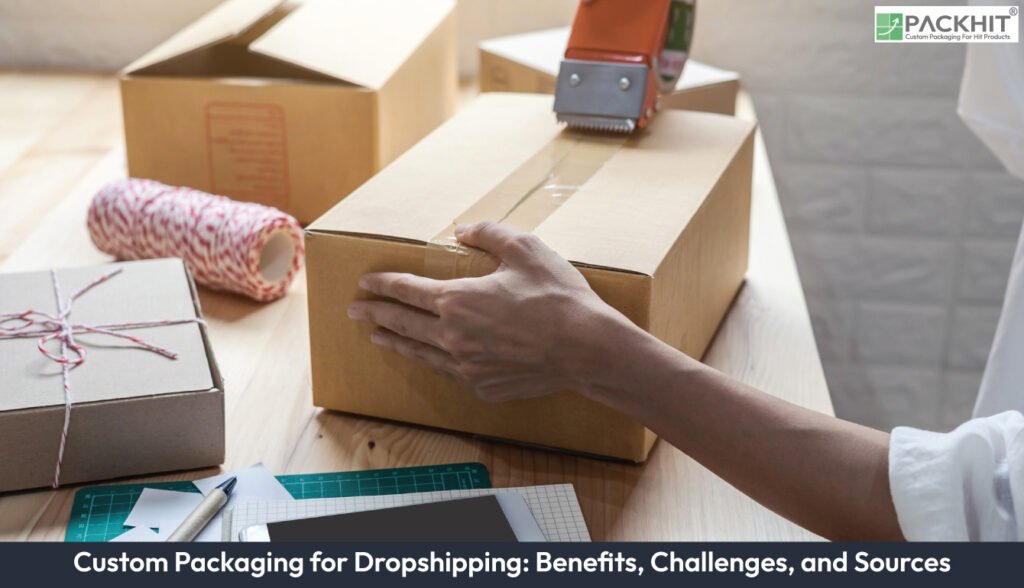
Custom packaging for dropshipping replaces plain supplier packs with branded boxes, mailers, labels and inserts that show a clear identity and keep the parcel consistent from dispatch to receipt. It forms a direct route to printed packaging in dropship workflows where the supplier applies the merchant’s artwork instead of generic substrates. Box choice depends on product size, protection level and courier method; common materials include folding cartons, rigid boxes, padded mailers, paperboard, corrugated board and printed tape. The main gains include stronger brand recall, cleaner parcel presentation, higher buyer trust, better protection and steadier cost patterns once quantities repeat. The main constraints include higher unit cost, MOQ brackets, slower production windows and tighter QC steps. Sourcing routes cover AliExpress sellers for micro tests, China factory-direct producers for bulk runs, on‑demand printers for short cycles and local converters or 3PL teams for quick domestic print work. To arrange custom packaging, merchants define specifications, send artwork, request quotations, check samples, agree on MOQ and QC terms and verify how the supplier loads branded packaging into the dropship process.
- What is Custom Packaging for Dropshipping?
- What are the Benefits of Custom Packaging for Dropshipping?
- What are the Main Challenges of Custom Packaging for Dropshipping?
- Where to Source Custom Packaging for Dropshipping?
- AliExpress Sellers
- China Factory‑direct Manufacturers
- On‑demand Printers
- Local Converters and 3PL Kitting
- How to Get Custom Packaging for Dropshipping?
What is Custom Packaging for Dropshipping?
Custom packaging for dropshipping is a service in which the supplier substitutes plain packaging with seller-specified, brand-printed substrates to be shipped directly to the end customer. It works as a service where the supplier swaps plain packs with printed packs that show a brand name or simple artwork. Printed parts include boxes, envelopes, and labels that show a clear identity, control how the product looks when opened, and add short messages on the pack surface. Common uses include basic product display, small promotional inserts, and plain shipping when merchants want no supplier marks. New production methods now include short print runs that support low volumes and paper or film materials that meet common eco rules.
How to Choose a Custom Box Style for Dropshipping?
Box style selection depends on product size, packing strength and courier limits. Pick a format that fits the item and controls damage risk while keeping postage low.
Common formats include folding cartons for electronics, rigid boxes for cosmetics, padded mailers for textiles and courier envelopes for flat items. Materials include paperboard, corrugated grades, and printed self‑adhesive labels, such as Kraft paperboard, single‑wall corrugated, and pressure‑sensitive labels. Low‑cost parts, such as printed labels or branded tape, cut minimum quantities and keep supplier steps simple.
What are the Benefits of Custom Packaging for Dropshipping?
The benefits of custom packaging for dropshipping include brand recognition, unboxing experience, customer loyalty, protection and fit, and scale economics.
Brand Recognition
Brand recognition in custom packaging for dropshipping increases recall through printed marks, colour sets, and consistent placement of the brand name and visual identifiers. It anchors the merchant identity on boxes, envelopes, and labels that replace supplier‑generic substrates, and it supports clear differentiation in crowded product categories where similar SKUs circulate through shared fulfilment channels.
Unboxing Experience
Unboxing experience in custom packaging for dropshipping depends on how printed wraps, inserts, and surface layouts guide the first visual contact. Photogenic pack panels, tight tissue folds, and card placement prompt customers to record short clips or photos for social feeds, if print consistency and substrate quality stay uniform across batches. Structured openings that reveal the product in two or three predictable steps support this behaviour and reduce clutter in small parcels.
Customer Loyalty
Customer loyalty in custom packaging for dropshipping grows when customers receive consistent printed packs that match earlier orders, because repeated visual cues anchor recognition and reduce doubt about product origin. Clear branding on cartons or labels cuts post‑delivery questions and encourages repeat sales when buyers trust the shipping presentation. Stable pack quality across batches supports this pattern if the supplier keeps colour and substrate variance within agreed tolerances.
Protection and Fit
Protection and fit in custom packaging for dropshipping come from substrates, dividers, and inserts that follow the product’s dimensions. It reduces transit abrasion through defined contact points and limits free movement inside the pack. Corrugated grades, card thickness, and inner spacing require quick checks with physical samples if the product shape varies across variants.
Scale Economics
Scale economics in custom packaging for dropshipping reduce per‑unit print cost once run sizes reach the process threshold for digital or plate‑based production. It distributes plate charges, setup work, and transit consolidation across larger volumes and keeps the cost structure predictable for repeat order cycles.
What are the Main Challenges of Custom Packaging for Dropshipping?
The most common challenges of custom packaging for dropshipping are mentioned below:
Unit‑cost Uplift
Unit‑cost uplift in custom packaging for dropshipping comes from print setup, substrate grade selection, and extra handling steps that exceed generic pack costs. It affects margin stability when print plates, colour changes, or carton strength vary across production runs.
Minimum Order Quantities (MOQ)
Minimum order quantities in custom packaging for dropshipping create cash‑flow pressure because suppliers require defined run sizes for printed substrates, examples include 200–500 folding cartons or 1,000 adhesive labels. It limits rapid SKU trials if the brand wants multiple pack formats.
Longer Lead Times
Longer lead times in custom packaging for dropshipping arise from artwork approval, plate creation, and drying or curing stages on printed substrates. It extends fulfilment calendars and complicates inventory rotation if the supplier batches multiple clients within a single print cycle.
Heightened Quality‑Control Exposure
Heightened quality‑control exposure in custom packaging for dropshipping stems from off‑site production, where the merchant does not verify colour match, board stiffness, or cut accuracy. It introduces transit‑damage risk if dielines vary or coatings fail during courier handling. Order samples and document acceptance criteria with clear defect thresholds before any bulk run.
Where to Source Custom Packaging for Dropshipping?
To source custom packaging for drop shipping, use four supply routes that appear in direct‑to‑customer fulfilment: AliExpress sellers, China factory‑direct manufacturers, on‑demand printers and local converters.
AliExpress Sellers
AliExpress sellers list custom packaging as an add‑on in individual stores, and AliExpress sellers use printed boxes, labels or simple inserts supplied through integrated dropship workflows. AliExpress sellers keep MOQ ranges inconsistent across stores, and samples show variance in colour density, dieline accuracy and board stiffness. AliExpress sellers suit micro‑volume tests, if merchants accept print variability and slower clarification cycles with store operators.
China Factory‑direct Manufacturers
China factory‑direct manufacturers print boxes, labels and mailers at scale, and China factory‑direct manufacturers cut per‑unit cost once print runs exceed typical process thresholds of 500–1,000 units. China factory‑direct manufacturers support defined substrates such as paperboard, corrugated grades and film‑based label stock, with tighter colour control than low‑volume sellers. China factory‑direct manufacturers add a longer transit time and impose plate charges if the artwork requires colour separation or revised dielines.
On‑demand Printers
On‑demand printers run digital presses for short batches, and on‑demand printers keep MOQ low for brands that introduce new SKUs or revise artwork frequently. On‑demand printers maintain consistent colour output across small quantities and reduce substrate waste by using digital queues. On‑demand printers raise per‑unit price once order sizes move beyond short‑run thresholds, if merchants compare against factory‑direct bulk pricing.
Local Converters and 3PL Kitting
Local converters and 3PL kitting teams apply branding near the dispatch point, and local converters and 3PL kitting processes minimise international transit by printing or applying labels, sleeves and wraps domestically. Local converters and 3PL kitting suit UK makers who prefer fast corrections, physical proofing and post‑production kitting before final dispatch. Local converters and 3PL kitting steps add handling cost if the fulfilment centre stores branded cartons or applies inserts on each order.
How to Get Custom Packaging for Dropshipping?
To get custom packaging for drop shipping procurement requires specification, sampling, evaluation, and contractual confirmation of MOQ, lead time and fulfilment terms.
- Define packaging specifications: dimensions, substrate, print colours, dieline and fit-for‑purpose testing.
- Supply artwork and technical files: vector logos, Pantone references and dielines in the supplier’s preferred format.
- Request written quotations: include unit price at defined quantities, tooling or plate charges and estimated lead time.
- Order one or more physical samples and inspect printing fidelity, substrate feel and dimensional fit in actual products; order a sample if a bulk order is planned.
- Negotiate MOQ, acceptable defect rates and blind shipping or invoice practices for dropship fulfilment.
- Confirm fulfilment integration: how orders are submitted, whether the supplier will pick from supplied packaging inventory or produce per order, and how returns are handled.