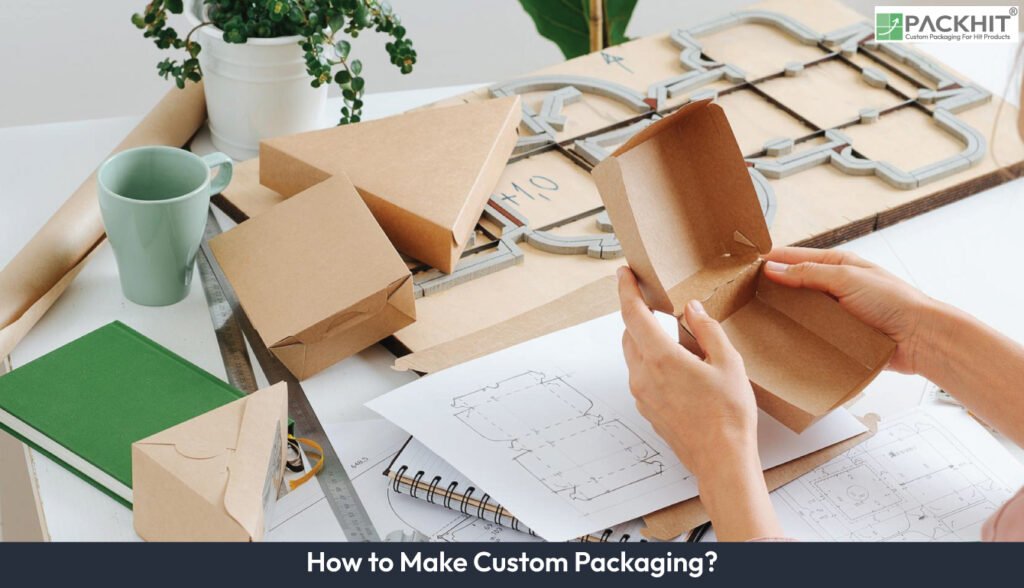
To make custom packaging, the process involves defining brand identity, understanding product requirements, selecting packaging materials, determining size and style, designing graphics and dielines, prototyping, testing, finalising production, choosing suppliers, performing quality control, and implementing storage, shipping, and feedback improvements. Industries use custom packaging strategically for various purposes, such as preserving freshness in food and beverage packaging, conveying luxury in cosmetics and beauty products, balancing protection with usability in electronics, and emphasising premium appeal in luxury gifts. Key design elements to make custom packaging include clear branding, readable information, accurate dimensions, materials-matched colours, and layouts optimised for the dieline.
- How to Create Custom Packaging?
- 1. Define Your Brand Identity
- 2. Understand Your Product Requirements
- 3. Choose the Packaging Types
- 4. Research Packaging Materials
- 5. Choose the Packaging Style
- 6. Determine the Packaging Size
- 7. Create the Design
- 8. Choose the Printing and Finishes
- 9. Prepare the Dieline
- 10. Review and Proof the Design
- 11. Produce a Prototype
- 12. Reliable Packaging Supplier
- 13. Finalise and Start Production
- 14. Perform Quality Control
- 15. Implement Storage and Shipping Solutions
- 16. Gather Customer Feedback and Improve
- How Do Various Industries Use Custom Packaging?
How to Create Custom Packaging?
To create custom packaging, follow the detailed process below:
- Define Your Brand Identity
- Understand Your Product Requirements
- Choose the Packaging Types
- Research Packaging Materials
- Choose the Packaging Style
- Determine the Packaging Size
- Create the Design
- Choose the Printing and Finishes
- Prepare the Dieline
- Review and Proof the Design
- Produce a Prototype
- Reliable Packaging Supplier
- Finalise and Start Production
- Perform Quality Control
- Implement Storage and Shipping Solutions
- Gather Customer Feedback and Improve
1. Define Your Brand Identity
Define your brand identity by fixing the visual and structural rules that guide every packaging choice. Keep this simple by choosing your main colours with exact codes, selecting clear fonts for headings and body text, and using consistent spacing on all packaging types. Add one repeated shape or line if it helps brand recognition. Show how the logo should appear on every SKU, including small labels or sleeves. These rules guide all artwork placement and future product updates.
2. Understand Your Product Requirements
Understand your product requirements by establishing fixed product measurements, recording item weight, and confirming handling limits. Write down the product’s exact size, weight, and any sensitive areas such as corners, surface points that rub during transit, and contact edges where inserts touch the product. Identify the product type (fragile, textile, cosmetic, electronic, etc.) to choose suitable inserts or supports. For food items, confirm UK-approved food-safe materials. This information helps you pick the right board grade, liners, mailers, or fillers.
3. Choose the Packaging Types
Choose the packaging types by determining the format best suited to the product and distribution method. Decide whether you need primary, secondary, or tertiary packaging. Pick based on protection levels, display needs, and courier rules.
4. Research Packaging Materials
Research packaging materials by comparing fibre strength, moisture resistance, print response, and recyclability. Look at the cardboard by GSM (Gram per square metre) or flute type. Check how inks behave on kraft, coated board, or plastic. Confirm recycled fibre percentages when using recycled kraft. For heavier materials like glass, check weight limits and shipping impact. Choose materials that meet UK recycling expectations.
5. Choose the Packaging Style
Choose the packaging style by linking structural form to usage. Pick mailer boxes for postal items, rigid boxes for heavier gifts, and sleeves or pouches for soft products. Use standard supplier templates to cut costs. Add windows or inserts only if they do not weaken the box. Avoid unusual shapes that raise courier costs or waste space by keeping panels straight and angles square. Match box geometry to stocked sizes such as standard mailer, carton, or unbranded accessories box formats. This keeps unit weight low and reduces empty volume.
6. Determine the Packaging Size
Determine the packaging size by measuring the product and adding allowances for inserts, padding, or protective layers. Use common-size templates where possible. Make sure the size supports neat stacking, cost-efficient shipping, and good shelf presence. Avoid oversized packaging to reduce waste and postage.
7. Create the Design
Create the design by positioning the core brand elements first. Place the logo following your spacing rules. Add all legal text, barcodes, batch numbers, and QR codes in a tidy, consistent block. Include INCI (International Nomenclature of Cosmetic Ingredients) lists for cosmetics, fibre labels for clothing, and compliance marks for electronics. Use fewer colour plates on corrugated board and keep text large enough to stay readable on small packs.
8. Choose the Printing and Finishes
Choose the printing and finishes by selecting suitable methods such as digital, offset, or flexographic printing. Pick finishes like foil, embossing, or matte/gloss lamination to improve the look and durability. Make sure each finish works properly with the chosen material. Confirm all finish choices early to avoid delays.
9. Prepare the Dieline
Prepare the dieline by mapping cut paths, fold lines, glue panels, and safe zones. Use the dielines supplied by your packaging vendor to avoid errors. Add a 3–5 mm bleed depending on the board type. Label folds and glue areas clearly. Make sure the artwork fits the structure and does not cross awkward crease lines.
10. Review and Proof the Design
Review and proof the design by checking alignment, colour values, and small print. Compare digital proofs to real printed samples because colours vary on different materials. Order a wet-proof for designs with fine details. Check Pantone accuracy across SKUs (stock keeping units). Move any design elements that are too close to the cut lines.
11. Produce a Prototype
Produce a prototype to test structural strength, printing clarity, and fit before approving full production. Test the packaging using the actual product. Check the strength for heavy items and the tear resistance for mailers. Weigh samples to ensure they fit within courier limits. Check print quality in neutral lighting. Adjust internal panels or inserts if the product moves.
12. Reliable Packaging Supplier
Select a packaging supplier based on experience, quality standards, and lead times. Make sure they can handle your materials, printing style, and finishes. Confirm minimum orders, tooling costs, and delivery options. Keep communication clear to ensure accurate production.
13. Finalise and Start Production
Finalise and start production by supplying confirmed artwork, dielines, quantities, and finishing selections. Confirm foil, varnish, lamination, or embossing before plates are made. Combine SKUs (Stock Keeping Units) with matching sizes to save on tooling. Check pallet quantities for storage planning.
14. Perform Quality Control
Perform quality control by checking samples from each batch. Look at crease quality, colour consistency, stiffness, and glue strength. Compare everything to the approved prototype. Remove any warped or badly printed units. Use tighter checks for cosmetics, electronics, and jewellery packaging.
15. Implement Storage and Shipping Solutions
Implement storage and shipping solutions by stacking units in dry, stable rooms. Keep cartons flat to avoid bending. Sort stock by SKU and expiry date. Check parcel sizes often because oversized boxes cost more to ship. Choose dimensions that fit common UK postal classes.
16. Gather Customer Feedback and Improve
Gather customer feedback and improve by tracking comments on strength, colour, tearing, or assembly. Review returns for damage patterns. Change material weight, insert size, or print settings if problems repeat. Update dielines and artwork before each reprint to keep quality consistent across all packaging types.
How Do Various Industries Use Custom Packaging?
Various industries use custom packaging to enhance protection, presentation, and usability, as outlined in the following categories:
- Food and Beverage: The food and beverage industries utilise custom packaging that controls freshness, limits contamination, and presents the product clearly. Brands often use pouches, trays, cartons, and jars that keep items safe and easy to store. Clear labels, simple print areas, and resealable openings help customers use the product correctly. Strong seals and sturdy materials also protect food during transport.
- Cosmetics and Beauty: The cosmetics and beauty industries utilise custom packaging to set product identity through surface texture, controlled colour use, and compact format. Bottles, tubes, and boxes are designed to look attractive and protect delicate items. Packaging includes clear ingredient lists, safety symbols, and shade details to guide customers. Secure closures help prevent spills and keep products safe inside shipping boxes or gift sets.
- Electronics: The electronics industries utilise custom packaging to reduce vibration, prevent denting, and group accessories in fixed compartments. Foam inserts, strong boxes, and organised trays keep devices steady and reduce damage. Instructions, setup guides, and warranty information are printed clearly on the packaging. Durable walls and tamper seals help products stay safe from factory to customer.
- Fashion and Apparel: The fashion and apparel industries utilise custom packaging that focuses on crease control, moisture limits, and visual consistency. Clothing boxes, mailers, and tissue paper keep garments neat and ready to wear. Shoe boxes, dust bags, and branded mailers improve the overall presentation. Standard sizes help brands ship items efficiently while keeping products protected.
- Pharmaceutical and Healthcare: Pharmaceutical and healthcare industries utilise custom packaging to control dosage clarity, hygiene, and safe storage. Blister packs, pill bottles, and medical kits keep items organised and easy to understand. Colour coding, bold text, and safety closures help users follow instructions properly. Sturdy cases are used for travel or frequent handling.
- E-commerce and Retail: E-commerce and retail industries utilise custom packaging to prevent transit damage and keep unboxing steps simple. Corrugated boxes, poly mailers, and padded envelopes protect items of all sizes. Brands often add small extras like thank-you cards or branded tissue to improve the unboxing experience. Flat and lightweight packaging helps reduce shipping costs and storage space.
How Much Does It Cost to Make Custom Packaging?
Custom packaging cost typically ranges from £0.01 to over £20+ per unit, depending on material, printing method, order volume, and add-ons.
How Does Custom Packaging Influence Brand Perception?
Custom packaging influences brand perception by signalling product care, material quality, and design precision.
What are the Key Design Elements for Custom Packaging?
The key design elements for custom packaging include clear branding, readable product information, accurate dimensions, material‑matched colours, and a layout that fits the dieline without crowding essential areas.