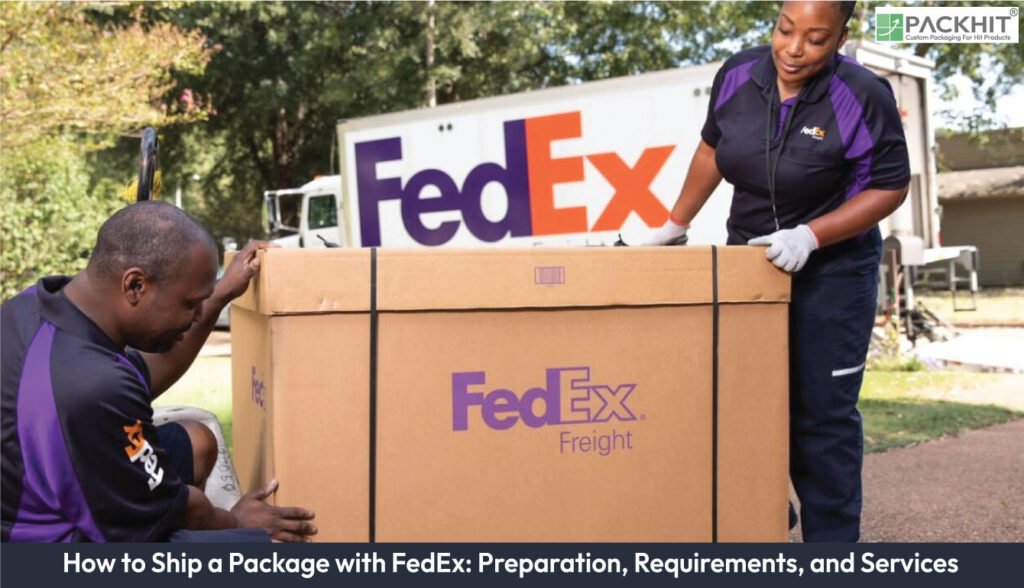
To ship a package with FedEx, it is important to follow the correct preparation, documentation, and shipping procedures to ensure the package moves safely through the carrier’s network. FedEx provides different shipping services for domestic and international deliveries, each with specific packaging requirements, weight limits, and delivery speeds. Proper packaging, accurate labelling, and selecting the right service help prevent delays, damage, and additional charges during transit.
The steps for preparing, shipping, and tracking a package with FedEx are given below.
- 1: Understand FedEx Services and Shipping Structure
- 2: Prepare the Package for FedEx Handling
- 3: Create Labels and Complete Required Documentation
- 4: Select the FedEx Shipping Service and Collection Method
- 5: Set Signature and Delivery Controls
- 6: Drop Off or Address the Package Correctly
- 7: Track the Shipment Through Delivery
- 8: Handle Claims and Post-Delivery Review
1: Understand FedEx Services and Shipping Structure
FedEx organises shipments into three main service families based on transport method and delivery speed. FedEx UK Ground handles parcels within the UK and EU up to 68 kg with multi-day transit. FedEx Express moves time-sensitive air shipments, including next-day and two-day options to major UK and international destinations. FedEx Freight transports palletised cargo exceeding parcel limits. Each service has its own pricing logic, delivery commitments, and eligibility for options such as signature confirmation and scheduled collections.
2: Prepare the Package for FedEx Handling
Packages must use rigid outer packaging that withstands conveyor compression and vertical stacking. Corrugated cardboard boxes with appropriate edge crush ratings are standard. Internal cushioning, such as moulded pulp inserts or polyethene foam, secures fragile items to prevent movement. FedEx Express also provides service-specific boxes, but third-party cartons are acceptable if they meet size and strength limits. Before labelling, measure the package’s weight and dimensions. FedEx calculates rates using the greater of actual or dimensional weight, with oversized thresholds triggering higher charges. Use pressure-sensitive plastic tape to seal seams, as paper tape, twine, or masking tape can fail automated sortation checks.
3: Create Labels and Complete Required Documentation
Generate a machine-readable shipping label using FedEx systems or integrated software. Labels include the sender and recipient addresses, service level, and a unique tracking number in barcode format. Automated hubs cannot reliably scan handwritten labels, so they are not accepted. For international shipments, attach customs documents such as a commercial invoice detailing contents, declared value, country of origin, and harmonised system codes. These details determine duties and clearance times. FedEx also supports Delivery Duty Paid (DDP) billing in selected countries, shifting duty and tax charges to the shipper.
4: Select the FedEx Shipping Service and Collection Method
Choose a service that matches delivery speed with cost tolerance. FedEx Express offers same-day, next-day, and two-day delivery options, while FedEx UK Ground serves residential and commercial addresses across the UK. Some services qualify for Saturday delivery without extra charges. Decide how the package will enter the FedEx network. On-demand collections carry a per-stop fee, whereas recurring Express collections avoid this cost. Drop-off options include FedEx Office, FedEx Ship Centres, and authorised retail partners, all of which enforce package size and weight limits.
5: Set Signature and Delivery Controls
Select a signature option to confirm receipt. Direct Signature Required ensures the package is released only to the named recipient or an authorised agent. Adult Signature Required verifies legal age at delivery. FedEx records signature status in tracking data upon delivery. Recipients can manage delivery through FedEx Delivery Manager, allowing holds, rescheduling, or rerouting if the service level and address qualify.
6: Drop Off or Address the Package Correctly
Use approved FedEx locations and valid addresses. FedEx operates FedEx Office and FedEx Ship Centre facilities in the UK and partners with retailers. Residential addresses are supported, but PO Boxes are not; a physical street address is required.
7: Track the Shipment Through Delivery
Track progress using the shipping label’s tracking number. Each scan logs location, timestamp, and handling events as the package moves through origin, transit hubs, customs, and final delivery. Tracking is available for Ground, Express, and international economy services. For bulk shipments, tracking by internal reference numbers or invoice numbers allows visibility even without direct tracking numbers, ensuring oversight of domestic and cross-border shipments.
8: Handle Claims and Post-Delivery Review
File damage claims within 60 days of delivery, including photos of damage and proof of declared value. Seasonal variations may affect on-time performance. For example, during the 2019 holiday peak, on-time delivery reached 68 per cent due to capacity strain. After delivery, review rates and service selection. FedEx rates have generally increased, often higher than Royal Mail for comparable parcels, reflecting faster, time-defined service with detailed tracking.