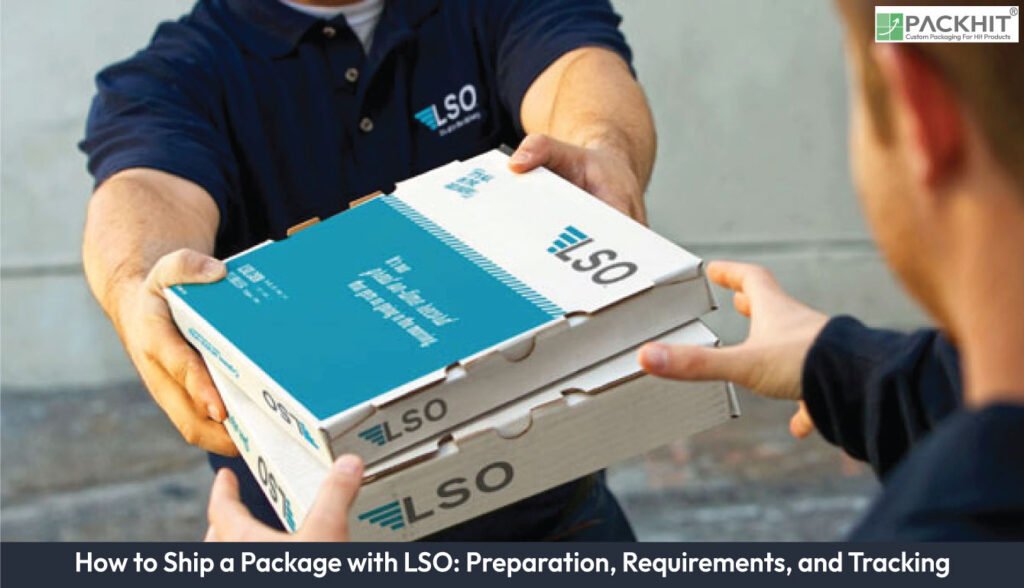
To ship a package with LSO (Lone Star Overnight), align packaging accuracy, service selection, and tracking visibility within a regional delivery network. LSO shipping follows a structured distribution process where parcel preparation standards and label accuracy determine routing acceptance and handling efficiency. Service selection affects delivery timing, cost balance, and coverage within defined regional zones. Shipment visibility is maintained through tracking systems that record scan events, status progression, and final delivery confirmation across the network.
- What is LSO (Lone Star Overnight)?
- What are the Steps for Preparing a Package for LSO Shipment?
- 1. Select appropriate packaging
- 2. Ensure proper protection
- 3. Maintain a flat outer surface
- 4. Avoid overpacking
- 5. Provide complete address details
- 6. Use printed labels
- 7. Measure and weigh accurately
- 8. Verify shipment data
- What are LSO Shipping Service Options and Delivery Times?
- Where Does LSO (Lone Star Overnight) Deliver?
- How Does LSO Shipment Tracking Work?
- How Does LSO Customer Support Help Resolve Shipment Issues?
- Why do Businesses Choose LSO for Regional Shipping?
- What are Operational Considerations Before Shipping with LSO?
What is LSO (Lone Star Overnight)?
LSO is a regional parcel carrier that transports packaged goods through a controlled depot network using ground and time-definite next-day services. Its operations focus on short- to mid-distance routes, where reduced handoffs and direct final-mile delivery limit transit variability and handling exposure.
How does LSO function as a shipping carrier?
LSO functions by linking physical parcel scans to a single digital shipment record across pickup, depot sorting, linehaul transfer, and local delivery. Barcode-driven tracking, API-connected data exchange, and region-specific routing maintain shipment visibility and service-level alignment within its delivery network.
What are the Steps for Preparing a Package for LSO Shipment?
Prepare an LSO (Lone Star Overnight) shipment by following the eight packaging and data-control steps that determine network acceptance, scan accuracy, and regional transit timing. Each step aligns the physical parcel with LSO’s barcode-driven tracking and API-connected shipment records.
1. Select appropriate packaging
Selecting appropriate packaging determines whether the parcel withstands automated sorting and regional ground transport. Corrugated cartons handle boxed goods, rigid mailers protect flat items such as documents or prints, and padded envelopes absorb shock for small components.
2. Ensure proper protection
Ensuring proper protection restricts internal movement during conveyor transfer and vehicle loading. Void fill, inserts, or foam blocks stabilise contents, reduce edge impact, and lower damage rates across short- to mid-distance routes.
3. Maintain a flat outer surface
Maintaining a flat outer surface keeps barcode labels readable by fixed-position scanners at depots. Flat panels prevent shadowing, label curl, and scan failure during intake, sorting, and outbound dispatch.
4. Avoid overpacking
Avoiding overpacking preserves the declared shape and volume used for routing and billing. Distorted cartons trigger manual handling, slow scan cycles, and weight or dimension reclassification within the LSO network.
5. Provide complete address details
Providing complete address details anchors the shipment to a valid regional delivery zone. Recipient name, street address, city, state, and postcode map the parcel to the correct depot and final-mile route.
6. Use printed labels
Using printed labels preserves machine readability across multiple scan points. Thermal or laser-printed barcodes resist smearing and support consistent data capture through API-linked tracking systems.
7. Measure and weigh accurately
Measuring and weighing accurately aligns the physical parcel with the digital shipment record. Matched data prevents billing adjustments and avoids exceptions caused by dimension or weight discrepancies.
8. Verify shipment data
Verifying shipment data confirms that service type, address fields, and package metrics match LSO coverage rules. Final checks reduce misrouting and maintain tracking continuity across the regional delivery network.
What are LSO Shipping Service Options and Delivery Times?
LSO offers shipping services based on delivery speed and cost:
- LSO Ground: Road-based delivery within regional areas, typically completed in 1–3 business days. Suitable for non-urgent shipments with a lower cost.
- LSO Priority Next Day: Expedited service with next-business-day delivery, using faster processing and dedicated transport schedules. Cut-off times apply.
- LSO Economy Next Day: Next-day delivery with flexible timing, offering a balance between speed and cost for less time-sensitive shipments.
Where Does LSO (Lone Star Overnight) Deliver?
LSO (Lone Star Overnight) delivers parcels within a defined regional network across selected U.S. states, focusing on metropolitan and high-density commercial zones. Coverage concentrates on short- and mid-range routes served directly by LSO depots, without postal or third-party carrier handoff.
How Does LSO Delivery Coverage Affect Shipping Service Selection?
LSO coverage determines which services apply, transit duration, and routing eligibility. Ground services operate between connected depots, while next-day options apply only to destinations within time-definite lane limits. Shipments outside coverage require a different carrier.
How Does LSO Shipment Tracking Work?
LSO tracking uses a unique tracking number to monitor parcel movement, record scan events, and provide delivery confirmation across the shipping network.
- Tracking number creation: A tracking number forms at label printing and links the parcel to a single digital shipment record in the LSO system. The record stores the origin address, destination address, selected service level, weight class, and billing reference. API connections pass this identifier to shipping software and return scan data in near real time.
- Scan event recording: Each physical handoff triggers a barcode scan that logs location, timestamp, and handling stage. Typical scan points include pickup confirmation, depot intake, outbound sort, linehaul transfer, and local route assignment, creating a chronological movement history.
- Status code mapping: Scan data converts into standard status labels that describe the delivery stage. “In transit” confirms network movement, “out for delivery” indicates assignment to a final-mile vehicle, and “delivered” records completion with date, time, and delivery location.
- Scan dependency factors: Tracking accuracy depends on clean barcode reads at every transfer. Wrinkled labels, curved surfaces, or low-contrast printing interrupt automated scans and delay visible status updates, even while the parcel continues through the network.
- Common tracking faults: Most errors originate from shipment data mismatches. Frequent causes include incomplete address fields, damaged or folded labels, duplicate tracking numbers, and declared weights or dimensions that differ from physical measurements and trigger manual handling.
- Delay and exception resolution: Delays are corrected by reviewing scan history and updating shipment data tied to the tracking number. Address edits, label reprints, and depot-level verification restore scan continuity and return tracking visibility within the LSO system.
How Does LSO Customer Support Help Resolve Shipment Issues?
LSO (Lone Star Overnight) customer support helps resolve shipment issues such as tracking problems, delivery exceptions, and address errors using the tracking number and shipment details. Support teams locate parcels within the network, correct address information before final delivery, and manage delays or failed delivery attempts. Early contact with support improves resolution speed and reduces the risk of misrouted or returned shipments.
Why do Businesses Choose LSO for Regional Shipping?
Businesses choose LSO for regional shipping due to consistent delivery times, reduced handling, and efficient integration with shipping systems. Shorter delivery routes improve transit speed and lower the risk of damage, especially for sensitive or retail products. Integration with platforms like ShipStation enables automated label creation and real-time tracking updates, reducing manual work and improving shipment accuracy.
What are Operational Considerations Before Shipping with LSO?
Shipping with LSO requires alignment between package preparation, service selection, and regional coverage. Parcels within supported zones and matching declared weight and dimensions move efficiently through the network. Mismatched shipment data or incorrect service choice can cause delays, making it important to follow packaging standards and coverage limits for reliable delivery and tracking.