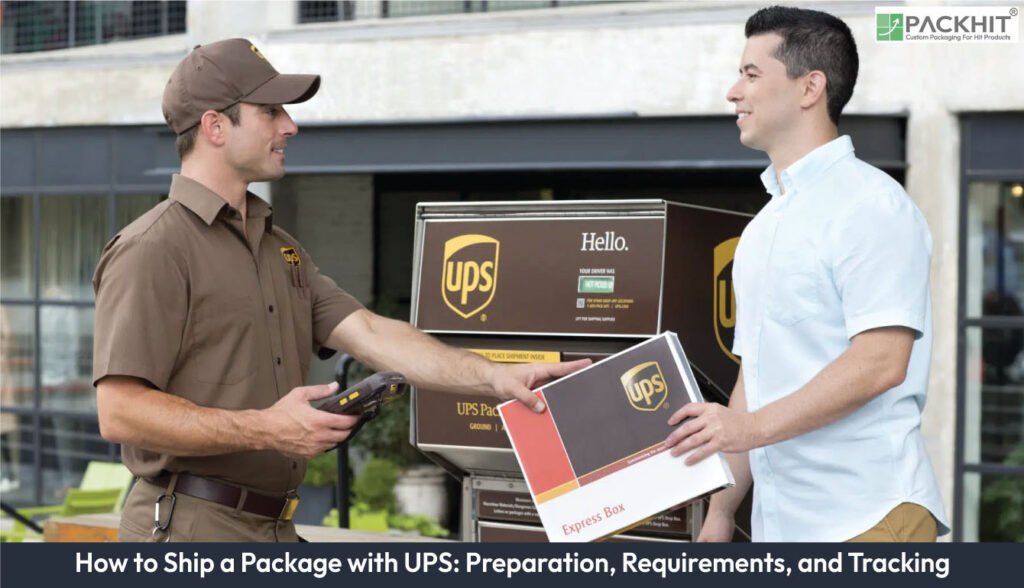
UPS shipping follows a structured workflow that connects packaging standards, service selection, and delivery monitoring within a defined logistics network. Proper parcel preparation, accurate measurement, and material strength determine handling compatibility and transport eligibility. Service requirements and documentation influence routing, pricing classification, and regulatory compliance across domestic and international shipments. Tracking systems maintain shipment visibility through scan events, status updates, and delivery confirmation within the carrier network.
- UPS as a Shipping Carrier
- What are the Steps for Preparing a Package for UPS Transport?
- 1. Selecting a Corrugated Carton for UPS Handling
- 2. Immobilising Contents Inside the Package
- 3. Sealing Carton Seams with Pressure-Sensitive Tape
- 4. Removing Residual Labels and Markings
- 5. Attaching the UPS Shipping Label to the Carton
- 6. Placing a Duplicate Address Label Inside the Package
- What are UPS’s Weight, Size, and Dimensional Constraints for Package Pricing?
- Which UPS Shipping Service Matches Transit Speed, Cost, and Documentation Requirements?
- What is a Shipping Label and What Documents are Required for Shipping?
- What are UPS Shipping Supplies, and When to Use Them?
- What are UPS Drop-Off, Pickup, and Handoff Options?
- How Does UPS Tracking Work?
- What are UPS Shipping Guidelines and Compliance Requirements?
- What is the Difference Between UPS and USPS for Parcel Shipping?
UPS as a Shipping Carrier
UPS operates as a global parcel carrier specialising in time-definite ground and air transportation. Its role in shipping workflows centres on standardised package handling, barcode-based tracking, and contractual service tiers that vary by speed, distance, and package characteristics. Each shipment enters a network of automated hubs where dimensional data, destination codes, and service levels control routing behaviour.
What are the Steps for Preparing a Package for UPS Transport?
To prepare a UPS package, select a rated corrugated carton, immobilise the contents with cushioning, seal all seams with pressure‑sensitive tape, remove any old markings, attach a UPS‑issued shipping label to the largest face, and place a duplicate address label inside the box.
1. Selecting a Corrugated Carton for UPS Handling
Selecting a corrugated carton establishes load tolerance and stacking resistance during UPS conveyor and hub processing. Single-wall cartons support lightweight items such as apparel or printed goods, while double-wall cartons support dense products such as metal components or liquid-filled containers.
2. Immobilising Contents Inside the Package
Immobilising contents prevents impact transfer during automated sorting and vehicle vibration. Cushioning materials fill void space and restrict movement, including air pillows for low-density items, foam inserts for precision parts, and paper fill for boxed retail products.
3. Sealing Carton Seams with Pressure-Sensitive Tape
Sealing carton seams secures structural integrity under compression and temperature variation. Pressure-sensitive plastic tape spans all top and bottom seams in an H-pattern, while string, masking tape, and paper tape remain excluded due to adhesion failure.
4. Removing Residual Labels and Markings
Removing residual labels eliminates scan conflicts during barcode reading. Exterior carton surfaces remain clear of prior shipping labels, hazardous markings, or handwritten notes that interfere with optical sorting systems.
5. Attaching the UPS Shipping Label to the Carton
Attaching the UPS shipping label activates tracking and routing logic at first scan. A UPS-issued label printed from an approved automated system adheres flat to the largest carton face, with barcodes unobstructed and aligned parallel to the package edge.
6. Placing a Duplicate Address Label Inside the Package
Placing a duplicate address label inside the package preserves delivery data if the exterior label detaches. The internal label displays complete recipient and return addresses, matching the external shipping record exactly.
What are UPS’s Weight, Size, and Dimensional Constraints for Package Pricing?
UPS calculates shipment charges using the greater of actual weight or dimensional weight, measured from the sealed package length, width, and height, and applies size and handling limits that trigger surcharges for oversized, overweight, or non-conveyable parcels. Actual weight records the package mass in kilograms, while dimensional weight converts cubic volume using a fixed divisor. Packages exceeding standard thresholds are classified as large or heavy packages, which adds handling fees and routing limits. Irregular formats, including cylindrical tubes or soft-sided mailers, require non-conveyable identification and clear labelling. Accurate measurement and secure attachment of a UPS-issued shipping label preserve scan accuracy and billing classification.
Which UPS Shipping Service Matches Transit Speed, Cost, and Documentation Requirements?
UPS service selection matches transit speed, distance, package limits, and documentation status. Each service tier applies a defined transport mode, cutoff schedule, and handling rule.
- UPS Ground: Road-based domestic transport within 1 to 5 business days, zone-rated by distance, with fixed daily cutoff times at regional hubs.
- UPS 3 Day Select: Deferred air service with a 3‑business‑day delivery commitment, used for cost-controlled shipments requiring date certainty.
- UPS 2nd Day Air: Air transport with delivery by the end of the second business day, routed through aviation hubs with priority sort lanes.
- UPS Next Day Air: Time-definite air service with morning or end‑of‑day delivery options, governed by flight departure schedules rather than mileage.
- UPS Standard (International): Cross‑border ground service within Europe, including customs clearance at destination entry points.
- UPS Worldwide Expedited: International air service with mid‑range transit times, including export filing and commercial invoice review.
- UPS Worldwide Express: Time‑definite international air service with priority customs processing and earlier delivery windows.
International services extend the transport chain through export documentation, commercial invoice validation, and destination‑country import controls. Transit estimates incorporate border inspection time, local delivery density, and partner carrier handoff rules. Secure attachment of a UPS‑issued shipping label and placement of a duplicate address label inside the package preserve routing continuity if exterior documentation detaches.
What is a Shipping Label and What Documents are Required for Shipping?
A shipping label is a printed document attached to a package that includes the sender and recipient addresses, service type, package weight, and a unique tracking number. Carriers like UPS generate shipping labels through online tools or integrated shipping software, and the label must be placed on a flat surface to ensure barcode scanning.
For international shipping, additional documentation is required. A commercial invoice lists the item description, declared value, country of origin, and harmonised system (HS) codes. Accurate and complete shipping documents are essential to avoid customs delays, extra charges, or shipment returns.
What are UPS Shipping Supplies, and When to Use Them?
UPS shipping supplies are pre-sized boxes, envelopes, and packs designed for specific service levels and shipping standards. They help ensure accurate sizing, smooth handling, and compatibility with automated sorting systems.
Custom packaging can also be used if it meets strength requirements for drops and stacking during transit.
What are UPS Drop-Off, Pickup, and Handoff Options?
UPS drop‑off, pickup, and handoff options include customer centre drop‑off, authorised access point handoff, and scheduled carrier pickup, each generating an initial scan that activates tracking once a UPS‑issued shipping label is securely attached and readable.
- Packages enter the UPS network through customer centres, authorised access points, or scheduled pickups.
- Each handoff generates an initial scan that activates tracking visibility.
- Missed scans usually indicate a delay in processing, not a lost shipment.
- High-volume shippers use scheduled pickups to consolidate parcels and reduce handling steps.
How Does UPS Tracking Work?
UPS tracking works through a unique tracking number assigned at label creation. Each scan updates the shipment’s location, timestamp, and delivery status, such as in transit, out for delivery, or delivered. Delays may occur due to weather conditions, incorrect address details, or customs holds, and may require sender or recipient action to resolve.
What are UPS Shipping Guidelines and Compliance Requirements?
UPS shipping guidelines and compliance requirements mandate secure attachment of a UPS‑issued shipping label from an approved system, clear and complete package documentation, and placement of a duplicate address label inside the carton to maintain tracking accuracy and routing continuity.
- Certain items, such as lithium batteries, liquids, and hazardous materials, require specific packaging, labelling, and documentation.
- Non-compliant shipments may be refused or removed from the shipping network.
- Declared value must be accurately recorded at the time of shipment creation.
- Damage claims depend on proper packaging and adherence to UPS guidelines, not only on declared value.
What is the Difference Between UPS and USPS for Parcel Shipping?
UPS and USPS differ in pricing models, service structure, and delivery precision. UPS focuses on commercial logistics with detailed tracking and dimensional pricing, while USPS offers cost-effective solutions for lightweight and flat-rate shipments.
| Feature | UPS | USPS |
|---|---|---|
| Pricing Model | Based on dimensional weight, distance, and service level. | Focuses on flat-rate pricing and lightweight mail categories. |
| Network Type | Privately operated logistics network. | Government-operated postal network. |
| Delivery Speed | Time-definite services with guaranteed delivery windows. | Varies by service, with less strict delivery guarantees. |
| Tracking Accuracy | High tracking granularity with frequent status updates. | Basic tracking with fewer updates in some services. |
| Best Use Case | Commercial shipping, heavy or time-sensitive parcels. | Lightweight packages, documents, and cost-effective shipping. |
| Cost Efficiency | Higher cost for premium and fast services. | More affordable for small, lightweight shipments. |
UPS is preferred for reliable, time-sensitive, and commercial shipments, while USPS is better suited for budget-friendly delivery of lightweight packages and mail.