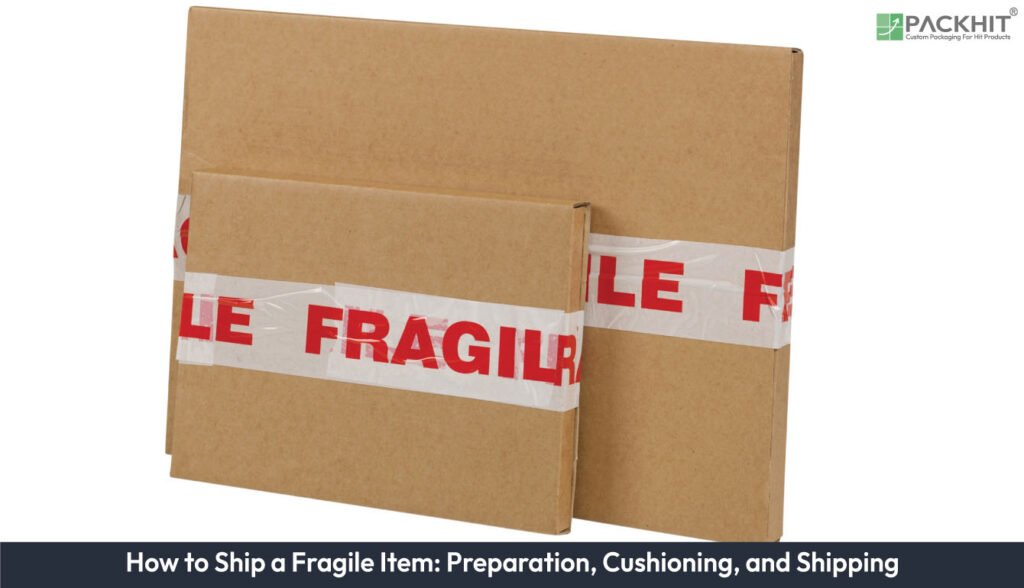
To ship a fragile item safely, proper packaging preparation, cushioning materials, and careful shipping practices are essential to prevent damage during transit. Fragile products such as glassware, ceramics, electronics, and decorative items are vulnerable to shock, vibration, and compression during handling and transportation. Using the correct box size, selecting protective cushioning materials, and securing items to prevent movement inside the package help reduce the risk of breakage.
The steps for preparing, cushioning, and shipping fragile items safely are given below.
- Choosing Between a Shipping Box or Mailer
- Selecting the Right Box Size for Fragile Items
- Avoid Overloading the Shipping Box
- Add Cushioning to the Bottom of the Box
- Prevent Movement Inside the Package
- Test Your Packaging Before Shipping
- Prioritise Packaging Before Labelling
- Eco-Friendly Packaging for Your Fragile Items
- Partner with a Sustainable Packaging Provider
- 1.Choosing Between a Shipping Box or Mailer
- 2. Selecting the Right Box Size for Fragile Items
- 3. Avoid Overloading the Shipping Box
- 4. Add Cushioning to the Bottom of the Box
- 5. Prevent Movement Inside the Package
- 6. Test Your Packaging Before Shipping
- 7. Prioritise Packaging Before Labelling
- 8. Eco-Friendly Packaging for Your Fragile Items
- 9. Partner with a Sustainable Packaging Provider
- Which Packaging Cushioning Materials Protect Fragile Items the Best During Shipping?
1.Choosing Between a Shipping Box or Mailer
Choosing the right outer packaging is the first step when shipping fragile items. For delicate products such as glassware, ceramics, electronics, or decorative items, a sturdy corrugated shipping box is usually the safest option. Boxes provide rigid protection and allow enough space for cushioning materials around the item. Mailers, such as padded envelopes, are better suited for lightweight items that are not extremely fragile. Always consider the level of protection your product needs before selecting the packaging type.
2. Selecting the Right Box Size for Fragile Items
Selecting the correct box size helps prevent damage during shipping. The box should be large enough to allow at least 2–3 inches of cushioning material on all sides of the item, but not so large that the product moves freely inside. A box that is too small will not provide enough padding, while an oversized box can allow items to shift and break. A properly sized box ensures stability and protection throughout the shipping process.
3. Avoid Overloading the Shipping Box
Overloading a box can weaken its structure and increase the risk of breakage. When shipping multiple fragile items, avoid packing them too tightly or exceeding the box’s weight capacity. Heavy boxes are more likely to be dropped or mishandled, which can lead to damage. If you have several fragile items, it is often safer to distribute them across multiple packages instead of forcing them into one box.
4. Add Cushioning to the Bottom of the Box
Before placing the item inside, add a protective layer at the bottom of the box. This cushioning layer absorbs shock if the package is dropped or placed roughly during transit. Materials such as bubble wrap, packing peanuts, crumpled kraft paper, or foam inserts work well for this purpose. A strong base layer creates a protective foundation for the item and reduces the risk of damage.
5. Prevent Movement Inside the Package
Movement inside the box is one of the most common causes of damage during shipping. After placing the fragile item in the centre of the box, fill all empty spaces with cushioning materials such as bubble wrap, foam sheets, air pillows, or packing paper. The goal is to keep the item securely in place so that it cannot shift when the box is shaken or tilted.
6. Test Your Packaging Before Shipping
Before sealing the box, perform a quick test to ensure your packaging is secure. Gently shake the box to check if the item moves inside. If you hear or feel movement, add more cushioning material until everything stays firmly in place. This simple step helps identify weak packaging before the item is shipped.
7. Prioritise Packaging Before Labelling
Proper packaging should always be the priority. While labels such as “Fragile” or “Handle With Care” can alert carriers, they do not guarantee careful handling. A well-packaged item should be able to withstand normal shipping conditions regardless of the label. Once the packaging is secure, apply clear and visible labels to inform handlers that the contents are delicate.
8. Eco-Friendly Packaging for Your Fragile Items
Sustainable packaging is becoming increasingly important for businesses and customers. Instead of traditional plastic materials, consider eco-friendly options such as recycled paper cushioning, biodegradable packing peanuts, corrugated inserts, or recyclable kraft paper. These materials provide reliable protection while reducing environmental impact.
9. Partner with a Sustainable Packaging Provider
Working with a sustainable packaging provider can help businesses ship fragile items responsibly. Partnering with a supplier focused on sustainability ensures that your fragile products are protected while supporting environmentally responsible shipping practices.
Which Packaging Cushioning Materials Protect Fragile Items the Best During Shipping?
Packaging cushioning materials protect fragile items by absorbing impact energy, restricting internal movement, and distributing vertical and lateral load pressure during transit. The five cushioning categories below cover lightweight, heavy, rigid, and irregular products.
- Bubble wrap cushioning: Air-filled cells compress on impact and rebound after force, reducing drop shock and vibration. Examples include glassware, ceramic mugs, electronics, and lab containers.
- Packing paper cushioning: Crumpled kraft paper fills void space and blocks lateral movement, spreading pressure across surfaces. Examples include framed artwork, wine bottles, books, and boxed accessories.
- Foam cushioning inserts: Closed-cell and polyethene foam resist compression under static load and maintain shape. Examples include instruments, metal components, medical devices, and industrial electronics.
- Air pillow cushioning: Inflated chambers form flexible barriers between items and box walls, absorbing low-to-moderate impacts. Examples include cosmetic containers, small appliances, and multi-item retail shipments.
- Moulded pulp cushioning: Shape-matched fibre trays cradle products at fixed contact points and limit movement. Examples include glass bottles, consumer electronics trays, and pharmaceutical packaging.
What factors affect the cost of shipping fragile items?
The cost of shipping fragile items depends on five measurable factors: package weight, dimensional size, cushioning material volume, carrier handling tier, and insurance level. Heavier packages increase base rates; oversized boxes trigger dimensional pricing; dense cushioning, such as foam inserts, adds weight; special handling raises carrier fees; declared value increases insurance charges.
What methods are used to test packaging for fragile items during shipping?
Packaging for fragile items is tested through controlled drop tests, vibration tests, compression tests, and internal movement checks to measure shock absorption, load resistance, and item stability during transit. Drop testing simulates falls from 18 to 36 inches; vibration testing replicates truck and conveyor movement; compression testing applies vertical weight to assess box collapse; internal shake testing confirms cushioning immobilises the item.