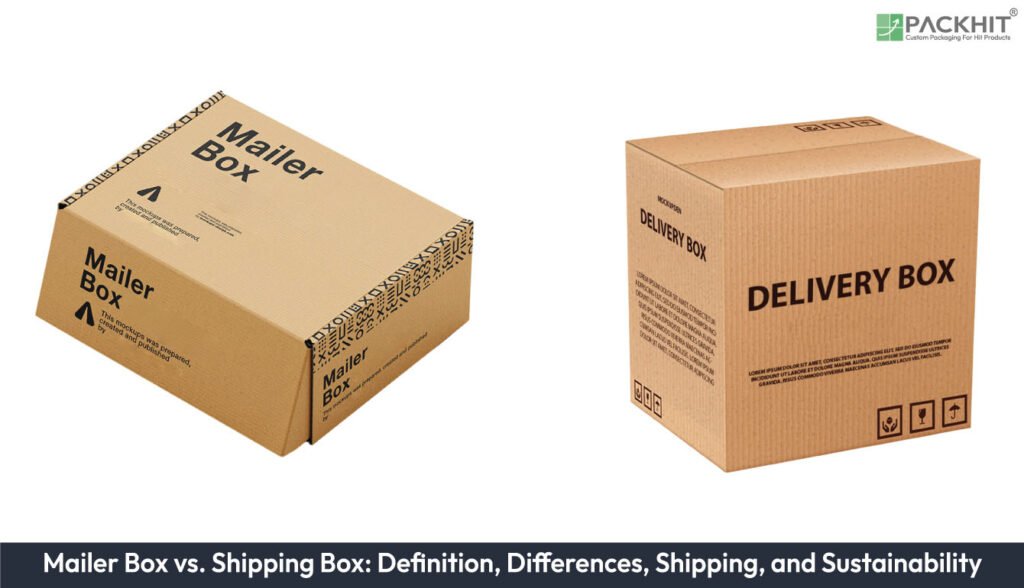
Mailer boxes and shipping boxes are two common types of corrugated packaging used in logistics and e-commerce to protect products during transport. A mailer box is a lightweight, self-locking box designed for direct-to-consumer parcel shipments, while a shipping box is a stronger corrugated container built to handle heavier loads and multi-stage distribution. The differences between them involve structural design, closure method, load-bearing capacity, shipping environment, branding potential, and reuse capability. Understanding how these boxes perform during shipping and their sustainability impact helps businesses choose the most suitable packaging solution for their products and distribution needs.
- What is a Mailer Box?
- What is a Shipping Box?
- What are the Differences Between Mailer Box and a Shipping Box?
- Structural Design
- Closure Method
- Load-Bearing Capacity
- Shipping Environment
- Weight and Dimensional Efficiency
- Branding and Presentation Surface
- Reuse and Return Handling
- How do Mailer and Shipping Boxes Behave During Shipping?
- Performance in Transit
- Weight, Dimensional Pricing, and Logistics Costs
- Damage Rates and Return Handling
- What are the Sustainability Implications of Mailer Boxes and Shipping Boxes?
- How to Choose Between a Mailer Box or Shipping Box for Your Packaging Needs?
What is a Mailer Box?
A mailer box is a self-locking corrugated paperboard box that folds from a single die-cut blank and closes without external tape, using interlocking tabs and panels to secure the contents. The structure prioritises low material weight, flat-pack storage, and quick manual assembly, which suits direct-to-consumer parcel shipping of single items such as cosmetics, books, electronics, accessories, and subscription goods. A common example is a branded E‑flute mailer box used by a UK cosmetics brand to ship one 250 g skincare product through Royal Mail small parcel service.
What is a Shipping Box?
A shipping box is a corrugated fibreboard container built for load-bearing transport, using slotted panels and tape-sealed flaps to protect goods across multiple handling stages. The structure relies on vertical panel strength, measured by edge crush resistance, and uniform rectangular geometry to support stacking, palletisation, and automated handling during domestic and international distribution. A common example is a regular slotted container used to ship 20 kg cartons of bottled beverages or multi-unit electronics, sealed with two parallel tape runs and stacked five layers high on a standard UK pallet.
What are the Differences Between Mailer Box and a Shipping Box?
The differences between a mailer box and a shipping box relate to structure, closure method, load capacity, shipping context, cost behaviour, branding surface, and reuse potential.
Structural Design
Structural design separates mailer boxes and shipping boxes by geometry and panel function. Mailer boxes use die-cut, fold-over panels with locking tabs, while shipping boxes use slotted panels with parallel walls built for vertical compression.
Closure Method
The closure method defines how each box secures its contents. Mailer boxes close through interlocking tabs and friction folds, whereas shipping boxes rely on pressure-sensitive tape applied across top and bottom flaps.
Load-Bearing Capacity
Load-bearing capacity differs due to wall orientation and material use. Mailer boxes tolerate light top loads, typically under 10 kg, while shipping boxes resist stacking forces exceeding 20 kg through edge crush strength.
Shipping Environment
The shipping environment determines functional performance. Mailer boxes operate in single-parcel networks, including courier and postal systems, while shipping boxes operate in palletised freight, cross-docking, and warehouse stacking.
Weight and Dimensional Efficiency
Weight and dimensional efficiency vary by material volume. Mailer boxes use less corrugated board per unit, reducing parcel weight, while shipping boxes add mass but stabilise multi-item or bulk shipments.
Branding and Presentation Surface
Branding and presentation surface differ in visual priority. Mailer boxes expose interior and exterior panels for printing, inserts, and colour coverage, while shipping boxes limit print to exterior identifiers such as labels and handling marks.
Reuse and Return Handling
Reuse and return handling separate lifecycle behaviour. Shipping boxes maintain shape after opening and resealing, allowing multiple transport cycles, while mailer boxes deform at locking points and rarely survive reuse.
How do Mailer and Shipping Boxes Behave During Shipping?
Mailer and shipping boxes behave differently during shipping due to structural limits, closure systems, and handling exposure. Mailer boxes move through single-parcel courier flows with limited stacking, while shipping boxes pass through palletised freight, sorting hubs, and repeated loading, where compression, vibration, and resealing matter.
Performance in Transit
Mailer boxes are designed to function efficiently in parcel networks that involve only one or two handling cycles. Their reduced weight lowers postage costs, and their compact shape helps avoid dimensional surcharges. However, the risk of damage increases if boxes are stacked more than three layers high or if shipments go through cross-docking or multiple transfer points.
Shipping boxes, in contrast, remain stable throughout extended transit. They are built to withstand pallet stacking, long-distance freight, and mixed-load environments that impose compressive and vibrational forces. Additionally, the use of tape closures acts as tamper evidence during customs inspections or hub handling.
Weight, Dimensional Pricing, and Logistics Costs
The choice of box also affects shipping costs. Mailer boxes are lighter per unit volume, often 15–30% lighter than equivalent shipping boxes, which benefits small-format shipments and reduces shipping fees. Shipping boxes are heavier, but they can consolidate multiple items, reducing the need for secondary packaging such as outer cartons or shrink wrap.
Damage Rates and Return Handling
Protection during shipping and the ability to handle returns are other major differences. Single-item shipments in mailer boxes generally experience low surface abrasion but are more prone to corner crushing. Shipping boxes are less likely to suffer crush damage, provided that the space inside the box is properly filled. For returns, shipping boxes are preferred because resealing preserves their structural integrity, making them suitable for multiple shipping cycles.
What are the Sustainability Implications of Mailer Boxes and Shipping Boxes?
Sustainability implications of mailer boxes and shipping boxes differ due to material use, manufacturing waste, reuse rates, and recycling behaviour. Both box types rely on paper-based corrugated board, typically containing 60%–90% recycled fibre, including old corrugated containers and mixed paper pulp. Mailer boxes consume less fibre per unit, which reduces pulping energy and water use per shipment. Die-cut manufacturing, however, produces offcuts averaging 8%–15% of board input, increasing mill-side waste unless recovered internally.
Shipping boxes consume more fibre because of thicker flute profiles and higher edge crush targets, often ECT 32 or above. That material cost is offset by reuse. A standard single-wall shipping box completes two to three shipping cycles before fibre fatigue reduces compression strength. Mailer boxes deform at locking tabs and tear strips during the first opening, which limits reuse beyond a single delivery.
Recyclability and Waste Streams
Recyclability of mailer boxes and shipping boxes depends on coatings, adhesives, and contamination. Mailer boxes frequently include aqueous coatings, digital ink saturation, or interior graphics, which reduce fibre recovery rates and require additional screening during pulping. Shipping boxes remain largely uncoated and printed with limited flexographic ink, allowing direct entry into standard cardboard recycling streams. Tape residue and paper labels reduce yield by a small margin but remain within normal mill tolerances.
Carbon Intensity Per Shipment
Carbon intensity per shipment varies by transit distance, handling cycles, and box mass. Short-haul parcel delivery favours mailer boxes because lower weight reduces fuel use per unit. Long-haul or consolidated freight favours shipping boxes, where higher compression strength reduces damage, re-shipping, and product loss. Per-unit emissions align more closely with logistics patterns than with the box category alone.
How to Choose Between a Mailer Box or Shipping Box for Your Packaging Needs?
Choosing the right type of box depends on several factors, including product weight, shipment structure, handling cycles, and return expectations. If you are shipping single-item parcels under 10 kilograms along short courier routes and want a strong presentation for your customer, a mailer box is the best choice. Mailer boxes are ideal when branding visibility and low dimensional weight are important. If you are shipping multiple items, palletized loads, or packages that travel long distances through one or more distribution hubs, a shipping box is the better option. Shipping boxes provide higher compression strength, allow resealing, and can be reused over two to three transport cycles, making them suitable for heavier or bulk shipments.