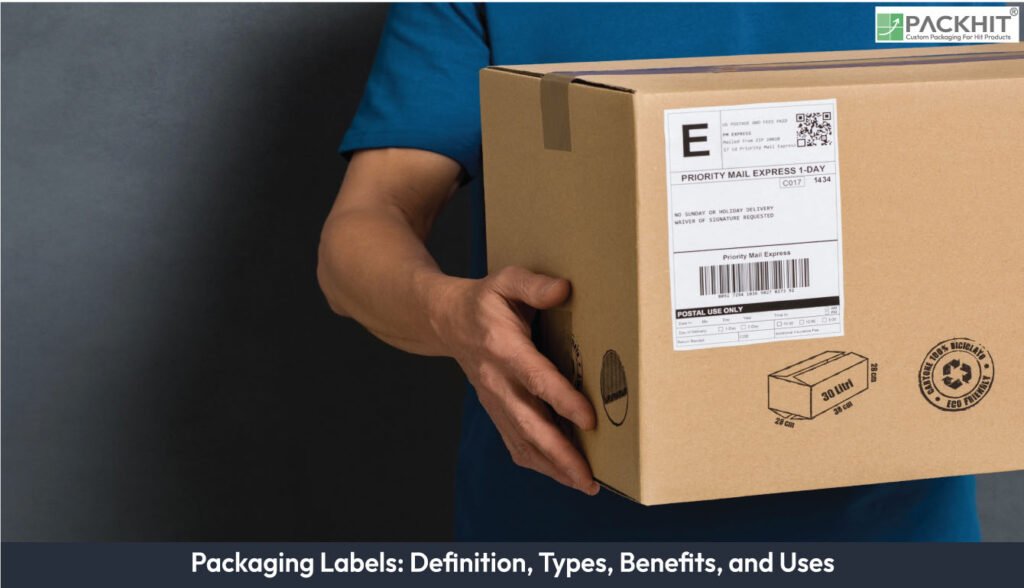
Packaging labels identify products, carry regulatory data, and guide handling across manufacturing, storage, transport, retail, and e-commerce. They attach fixed text, barcodes, or digital elements to packages so goods move as traceable units. The multiple benefits of labels include accurate identification, safer handling, regulatory alignment, durable information retention, and consistent brand recognition. The types of labels include paper, vinyl, clear, film, paperboard, and metalized or foil labels that match surface conditions and environmental exposure. Uses of labels span production control, warehousing, shipping, retail display, food safety, chemical hazard marking, and pharmaceutical traceability, with some labels linking physical packages to digital records through scannable or embedded technology.
What are Packaging Labels?
Packaging labels are printed or encoded identifiers fixed to packaging surfaces that communicate product identity, handling instructions, and regulatory data. They link a physical package to logistics systems through readable text, barcodes, or embedded chips, allowing goods to be identified, tracked, and sorted during storage, shipping, and retail handling.
Why are Packaging Labels Important?
Packaging labels are important because they give each package a clear identity, compliance status, and handling context at every supply chain stage. They turn unmarked packaging into traceable units by carrying fixed data such as product name, SKU, and batch code, plus machine-readable elements like barcodes or QR codes.
What are the Types of Packaging Labels?
Packaging labels fall into six primary material-based types, each defined by surface compatibility, print behavior, and environmental resistance. The following are the types of packaging labels:
- Paper labels: Paper labels use paper made from wood pulp and stick to cartons, jars, and retail boxes. These labels carry printed text and barcodes. Common uses include ingredient lists and price labels on products stored in dry, indoor areas.
- Vinyl labels: Vinyl labels use PVC plastic film and attach to bottles and flexible packages. The material resists water and surface rubbing. Typical uses include cosmetic bottles and household cleaning products that are exposed to moisture.
- Clear labels: Clear labels use transparent plastic film and sit directly on glass or plastic containers. The package remains visible under the label. Common examples include beverage bottles and food jars where the product’s appearance stays visible.
- Film labels: Film labels use polypropylene or polyester sheets and stay intact under cold, heat, and friction. These labels appear on frozen food packs and chemical containers that face rough handling.
- Paperboard labels: Paperboard labels use thick paper stock and keep their shape on rigid packaging. These labels appear as hang tags or folded labels on boxed consumer goods such as electronics and apparel.
- Metalized or foil labels: Metalized or foil labels use aluminum-coated layers that block light and air. These labels appear on pharmaceutical packaging and specialty food containers where product protection matters.
What Benefits do Packaging Labels Provide?
Packaging labels provide operational control, risk reduction, and information persistence across product lifecycles. These benefits appear as measurable effects during manufacturing, warehousing, transportation, and retail handling, where labeled packages move as identifiable and regulated units.
Identification Accuracy
Labels establish identification accuracy by fixing product data directly onto each package. Printed labels display product names, SKUs, batch codes, and machine-readable barcodes. Paper labels appear on cartons and retail boxes, while film and vinyl labels adhere to bottles and flexible packs. This direct attachment links physical units to inventory systems, reducing pick errors, shipment mismatches, and stock variance in warehouses and fulfillment centers.
Handling Safety
Labels improve handling safety by signaling risk and handling limits before physical contact. Warning labels mark fragile items, temperature ranges, and regulated contents using standardized icons and text. Vinyl and film labels resist moisture and abrasion during transit, keeping safety instructions legible. Early visibility lowers breakage rates and limits worker exposure to chemical, pharmaceutical, and biohazard materials.
Regulatory Alignment
Labels support regulatory alignment by carrying mandated information at the package level. Required data includes contents, net weight, country of origin, allergen statements, and safety symbols. Paperboard and foil labels are common on boxed goods and medical packaging where permanence matters. Consistent placement reduces inspection delays, recall frequency, and penalties tied to labeling violations.
Durability of Information
Labels preserve information durability by protecting print from environmental stress. Film labels use polypropylene or polyester to resist moisture, abrasion, and UV exposure. Metalized and foil labels add barrier properties for light- and oxygen-sensitive products. These material choices prevent ink fade and barcode failure during long-distance shipping and extended storage cycles.
Brand Recognition
Labels maintain brand recognition by repeating visual identifiers across all package formats. Color standards, logos, and typography remain consistent on paper, clear, and vinyl labels. This repetition supports fast product recognition on retail shelves, inside cartons, and in direct-to-consumer deliveries, even when packaging sizes or materials change.
Advanced label technologies extend these benefits through digital interaction. NFC labels embed a near-field communication chip inside the label structure. When scanned by a smartphone, the label supports identity checks, loyalty access, or incentive distribution, while recording interaction data. Static print remains unchanged, but the label connects the package to a live digital record.
Where are Packaging Labels Used?
Packaging labels are used at every point where a packaged product is identified, stored, moved, sold, or regulated. Their placement corresponds to the information required at each operational stage, from internal production control to consumer-facing disclosure.
The uses of packaging labels are detailed below:
Manufacturing
Packaging labels identify work-in-progress units during manufacturing. Labels carry batch numbers, production dates, and process codes, for example, inkjet-printed paper labels on cartons or film labels on molded containers. This data supports traceability and process control on assembly and filling lines.
Warehousing
In warehousing, labels control storage and retrieval. Pallet labels and case labels display SKU codes, quantities, and location markers, commonly using paper or film materials with barcode printing. Scannable labels connect physical inventory to warehouse management systems and reduce picking errors.
Transportation and Shipping
During transportation, shipping labels communicate routing, carrier identifiers, and handling limits. Examples include adhesive paper labels on corrugated boxes and vinyl labels on reusable totes. Clear placement supports automated sorting and reduces misrouting during transit.
Retail
Retail packaging labels present pricing, branding, and legally required product information. Paper labels appear on boxed goods, while clear and vinyl labels sit on bottles and jars. Consistent labeling supports shelf identification, checkout scanning, and regulatory inspection.
E-commerce and Direct-to-Consumer
E-commerce operations rely on mailing and return labels to link digital orders with physical parcels. Thermal paper labels display addresses, tracking numbers, and return codes. These labels synchronize fulfillment data across shipping platforms and carrier networks.
Food Packaging
Food packaging labels disclose nutritional facts, ingredient lists, and allergen statements. Paper and film labels are common on cartons, pouches, and jars. Label permanence and legibility support food safety audits and consumer compliance.
Chemical and Industrial
Chemical packaging applies hazard and handling labels that follow safety classification systems. Vinyl and film labels resist moisture and abrasion on drums and containers. Visible warnings reduce handling risk during storage and transport.
Pharmaceutical and Medical
Pharmaceutical distribution uses labels to control identification and dosage accuracy. Labels include lot numbers, expiration dates, and regulatory symbols, often printed on foil or paperboard materials. Accurate labeling limits dispensing errors and supports recall control.