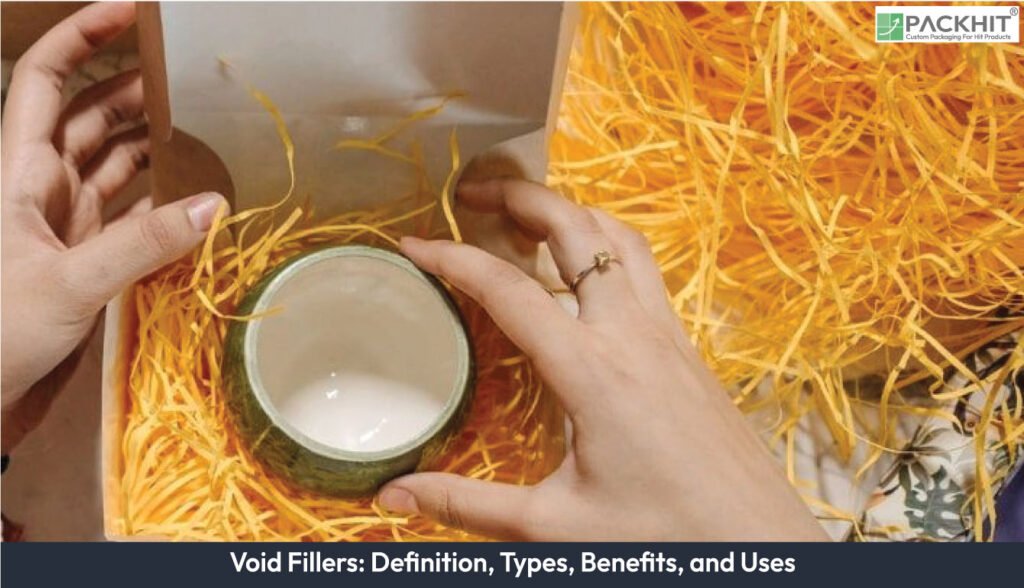
Void fillers are packaging materials used to occupy space inside shipping cartons to stabilise products and reduce movement during handling, storage, and transportation. Void fillers function by bracing items within the box, absorbing shock, vibration, and compression forces that occur during parcel and freight distribution. Common types of void fillers include paper-based fillers, air pillows, foam fillers, molded inserts, and specialty materials designed for specific requirements such as anti-static or thermal protection. The benefits of void fillers include improving load stability, reducing damage rates, and supporting cost-efficient and sustainable packaging practices. Void fillers play a key role in and use for protecting products across e-commerce, retail, manufacturing, and logistics operations.
What are Void Fillers?
Void fillers are packaging materials that occupy empty space inside a shipping container to restrict product movement and absorb mechanical stress. Void fillers work by bracing items within the box, reducing shock transfer, vibration, and surface contact during handling and transport. Common forms include paper fillers such as crumpled kraft paper, air-based fillers such as inflatable pillows, and foam-based fillers such as loose-fill peanuts, each selected based on product weight, fragility, and transit duration. By stabilizing internal volume, void fillers maintain carton shape under compression, limit abrasion between items, and lower damage rates in parcel, pallet, and freight shipments.
Why are Void Fillers Important in Packaging?
Void fillers are important in packaging because they control internal movement, absorb transit shock, and maintain load stability inside shipping containers. By occupying unused volume, void fillers reduce impact transfer caused by drops, vibration, and compression during handling and transportation. Movement restriction limits surface abrasion, corner damage, and part-to-part collision. Examples include glass items, electronic assemblies, and coated products. Structural support from void fillers also preserves carton integrity under stacking pressure, reducing box deformation in palletized and parcel shipments. In regulated and long-distance distribution, material-specific fillers. Examples include anti-static foam and thermal inserts, which protect products from electrostatic discharge and temperature fluctuation, maintaining functional and cosmetic quality through delivery.
What are the Types of Void Fillers?
The commonly used types of void fillers include paper-based fillers, air-based fillers, foam-based fillers, molded inserts, and specialty fillers for regulated products. Each type controls internal movement using different material properties, compression behavior, and recovery characteristics.
Paper Void Fillers
Paper void fillers occupy empty carton space using compressed or crumpled paper fibers that resist lateral movement and absorb low-to-moderate impact. Paper void fillers include kraft paper, shredded paper, and die-cut paper pads. Examples include void fill rolls used in e-commerce cartons and interleaved paper for glassware separation.
Air Pillows and Inflatable Fillers
Air pillows and inflatable fillers stabilize products by creating sealed air chambers that absorb shock through controlled compression. Air pillows and inflatable fillers include polyethylene air pillows and inflatable bubble sheets. Examples include lightweight fillers used for cosmetics, boxed electronics, and multi-item parcel shipments.
Foam-Based Void Fillers
Foam-based void fillers cushion products using cellular plastic structures that compress under load and recover shape after impact. Foam-based void fillers include expanded polystyrene peanuts, polyethylene foam, and biodegradable corn starch peanuts. Examples include cushioning for fragile components and irregular-shaped items.
Molded Inserts and Formed Cushions
Molded inserts and formed cushions restrict movement by matching the product geometry and supporting load points inside the box. Molded inserts and formed cushions include molded pulp trays and thermoformed plastic inserts. Examples include packaging for appliances, medical devices, and precision instruments.
Specialty Void Fillers
Specialty void fillers protect products with specific handling or regulatory requirements using material-specific properties beyond mechanical cushioning. Specialty void fillers include anti-static foam, thermal liners, and insulated bubble wrap. Examples include electronic components sensitive to electrostatic discharge and temperature-controlled pharmaceutical shipments.
What are the Benefits of Using Void Fillers?
The benefits of using void fillers include damage reduction, load stability, cost control, material efficiency, regulatory protection, and sustainability support across shipping and storage operations.
- Damage reduction: Limits product movement inside cartons, reducing shock, vibration, and surface abrasion. Examples include glass containers, coated metal parts, and electronic assemblies.
- Load stability: Maintains internal balance during handling and stacking, preventing corner collapse and carton deformation in palletized and parcel shipments.
- Cost control: Lowers replacement, return, and reshipment rates by reducing in-transit damage. Examples include e-commerce fulfillment and distributor-to-retailer shipping.
- Material efficiency: Fills only unused volume rather than increasing box size, reducing corrugate usage and dimensional weight charges.
- Product-specific protection: Supports special requirements through material selection, examples include anti-static fillers for circuit boards and insulated fillers for temperature-sensitive goods.
- Sustainability alignment: Supports waste reduction through recyclable and biodegradable options, examples include kraft paper fillers and corn starch foam peanuts.
- Reuse and recycling potential: Allows secondary use or recycling of fillers when intact. Examples include air pillows reused in warehouses and foam peanuts collected for recycling programs.
- Operational consistency: Improves packing accuracy through controlled fill density, supported by manual and automated dispensing systems in high-volume packaging lines.
What are the Common Uses of Void Fillers?
The common uses of void fillers include movement restriction, impact absorption, surface protection, load stabilization, thermal control, and electrostatic protection across shipping and storage operations.
- Movement restriction: Fills unused carton volume to limit internal product shift during handling and transit. Examples include multi-item e-commerce orders and boxed retail goods.
- Impact absorption: Cushion products against drops and vibration by dissipating mechanical energy. Examples include glass containers, ceramic items, and fragile assemblies.
- Surface protection: Separates products to prevent scuffing, scratching, and finish damage. Examples include coated metal parts, painted components, and consumer electronics housings.
- Load stabilization: Supports consistent weight distribution inside cartons to resist compression and stacking forces. Examples include palletized shipments and long-distance freight cartons.
- Thermal control: Maintains temperature range by filling air gaps that allow heat transfer. Examples include insulated liners with paper fillers and thermal bubble wrap for pharmaceuticals.
- Electrostatic protection: Reduces electrostatic discharge risk by isolating sensitive components with dissipative materials. Examples include anti-static foam and anti-static air pillows for circuit boards.
- Irregular-shape bracing: Conforms around non-uniform products to prevent rotation and edge contact. Examples include automotive parts, hardware kits, and molded consumer goods.
- Return and reuse support: Preserves product condition during reverse logistics by reusing intact fillers. Examples include air pillows and foam peanuts in retail return cycles.