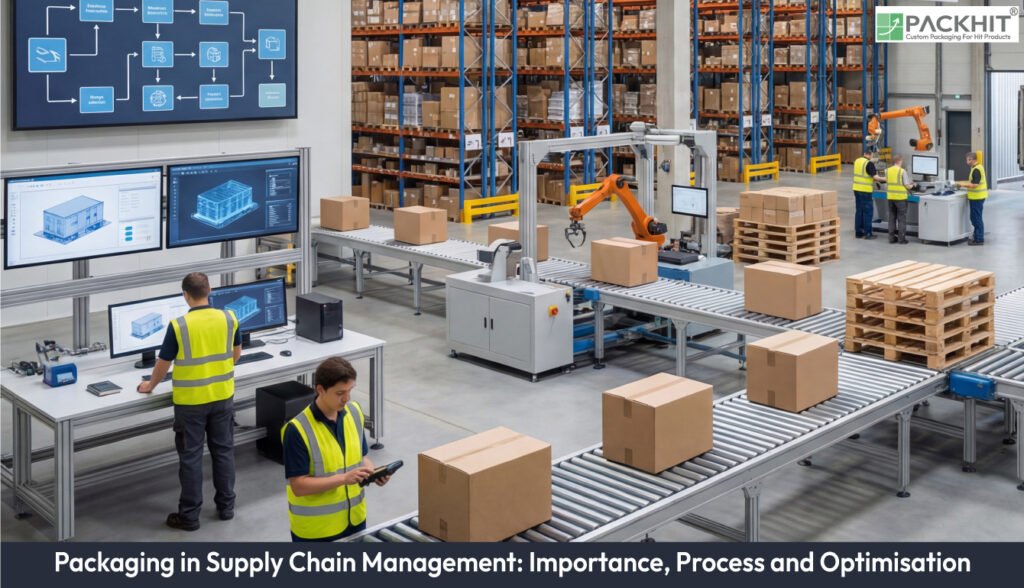
Packaging in supply chain management includes how packaging design, sourcing, conversion, storage, and distribution are coordinated across suppliers to maintain flow, compliance, and availability. The importance of packaging supply chain management lies in protecting production continuity, regulatory accuracy, and product integrity across multiple handovers. The packaging supply chain process outlines structured steps from specification definition through sourcing, conversion, storage, transport, and validation. Tools and agents in packaging supply chains enable control through systems like CAD, ERP, WMS, and coordinated supplier roles that maintain accuracy and timing. Packaging supply chain optimisation focuses on stabilising flows, aligning data, managing inventory, tracking transport, and coordinating cross-functional planning. Measuring optimisation outcomes relies on tracking defects, availability, transport damage, lead-time variance, inventory accuracy, and compliance performance. Sustainability influences packaging supply chains by changing material choices, sourcing patterns, energy use, reuse models, and transport efficiency. Common risks in packaging supply chain management include data errors, material shortages, conversion defects, inventory inaccuracy, transport delays, damage, and compliance failures.
- What is Supply Chain Management for Packaging?
- Why is Supply Chain Management for Packaging Important?
- What is the Process of Supply Chain Management for Packaging?
- 1.Define Packaging Requirements and Structural Specifications
- 2. Source Raw Materials and Conversion Capacity
- 3. Produce and Convert Packaging Components
- 4. Store Packaging Items and Control Inventory Accuracy
- 5. Transport Packaging to Filling or Packing Sites
- 6. Validate Quality, Labelling and Regulatory Data
- 7. Coordinate Cross‑functional Planning and Supplier Communication
- What is the Role of Tools and Agents in Supply Chain Management for Packaging?
- How Can Packaging Supply Chains Be Optimised?
- 1.Map Packaging Flows and Supplier Tiers
- 2. Align Specifications and Artwork Data Across Systems
- 3. Plan Procurement and Capacity Against Demand Swings
- 4. Control Inventory and Storage Conditions
- 5. Track Transport and Supplier Movements
- 6. Quality and Regulatory Statements
- 7. Coordinate Cross‑functional Communication
- How to Measure Optimisation Outcomes of Supply Chain Management for Packaging?
- What are the Common Risks in Packaging Supply Chain Management?
What is Supply Chain Management for Packaging?
Supply chain management for packaging coordinates design, sourcing, conversion, storage and distribution across the companies that create and move packaging. It links material suppliers, converters and brand teams through cross‑functional workflows that keep packs available for production. It keeps packaging compliant with labelling rules and protective requirements, if disruptions occur across suppliers or transport lanes. It maintains product flow by aligning packaging inputs with demand so delays, damage and rework are reduced across the chain.
Why is Supply Chain Management for Packaging Important?
Supply chain management for packaging is important because it keeps packaging materials, formats and specifications aligned with production demand, regulatory requirements and product‑handling risks. The process links raw‑material suppliers, converters and brand teams through coordinated planning, which reduces late deliveries, short shipments and structural mismatches that create downtime on filling lines. This coordination limits small but frequent disruptions such as delayed board grades or missing closures, which cause product damage or returns if packaging protection is compromised across transport stages. It also maintains labelling accuracy across artwork cycles, if regulatory statements or ingredient disclosures change during procurement or conversion.
This management discipline matters for manufacturers because packaging passes through several companies before it reaches a packing line, and each transfer introduces timing, quality and compliance risks. Cross‑functional control across those companies reduces errors in printing, dimensional fit and protective performance, if supplier lead‑times shift or transport delays occur. It also protects the continuity of finished goods flow by keeping critical packaging items available during seasonal peaks or raw material shortages. For UK producers, this stability supports predictable fulfilment, limits product loss and holds brand integrity across the full supply chain from source to consumer.
What is the Process of Supply Chain Management for Packaging?
The process of supply chain management in packaging coordinates design, sourcing, conversion, storage and distribution across linked suppliers and brand functions. It connects raw‑material providers, converters and production teams through controlled steps that keep packaging compliant, available and structurally correct, if supplier delays or transport bottlenecks occur.
- Define Packaging Requirements and Structural Specifications
- Source Raw Materials and Conversion Capacity
- Produce and Convert Packaging Components
- Store Packaging Items and Control Inventory Accuracy
- Transport Packaging to Filling or Packing Sites
- Validate Quality, Labelling and Regulatory Data
- Coordinate Cross‑functional Planning and Supplier Communication
1.Define Packaging Requirements and Structural Specifications
Define packaging requirements and structural specifications by setting functional protection levels, dimensional constraints and regulatory statements that apply across the supply chain. This step links design engineers, artwork teams and production groups through CAD files and specification sheets that converters use when preparing dies, printing plates and colour profiles. It reduces misprints and structural mismatches if artwork cycles or labelling rules change late.
2. Source Raw Materials and Conversion Capacity
Source raw materials and conversion capacity through procurement decisions that align polymer grades, board weight and print substrate with demand forecasts. Procurement teams negotiate lead times with tier‑one and tier‑two suppliers of board, resin and inks, if upstream deliveries fluctuate. Accurate sourcing reduces short shipments and late deliveries that create stoppages on UK filling lines.
3. Produce and Convert Packaging Components
Produce and convert packaging components by cutting, printing and forming substrates according to CAD drawings and approved artwork. Converters run printing presses, die‑cutters and forming machines using purchase orders linked to ERP plans. Accurate CAD‑to‑tool transfer reduces trial runs and avoids material loss if tooling tolerances drift or inks vary across batches.
4. Store Packaging Items and Control Inventory Accuracy
Store packaging items and control inventory accuracy in warehouses that use WMS scans to maintain counts for cartons, closures and labels. Barcodes or RFID tags support traceability for each batch. Inventory accuracy protects production continuity if demand spikes or upstream transport delays restrict inbound volume.
5. Transport Packaging to Filling or Packing Sites
Transport packaging to filling or packing sites through scheduled carrier movements that link converters with brand warehouses or co-packers. Scanned events in TMS records track location and status, if port congestion or driver shortages slow transit. Timely transport protects production flow and reduces emergency freight.
6. Validate Quality, Labelling and Regulatory Data
Validate quality, labelling and regulatory data through checks that confirm machine fit, print clarity and statement accuracy. Dimensional checks, ink-density tests and ingredient disclosure verification occur before use on a packing line. Validation limits product returns and compliance failures if labelling rules or artwork change mid-cycle.
7. Coordinate Cross‑functional Planning and Supplier Communication
Coordinate cross‑functional planning and supplier communication through integrated S&OP, artwork approval and BOM control. This coordination links marketing calendars, procurement forecasts and converter schedules so that launches or seasonal peaks do not create stockouts. Consistent communication reduces error rates across the network of companies that form the packaging supply chain.
What is the Role of Tools and Agents in Supply Chain Management for Packaging?
The role of tools and agents in supply chain management for packaging includes how digital systems and coordinating parties keep packaging flows controlled across design, sourcing and distribution phases. Tools such as CAD, ERP, WMS and track‑and‑trace identifiers maintain specification accuracy, stock counts and shipment records, if supplier lead‑times shift or transport lanes delay packaging. Agents such as procurement teams, converters and artwork coordinators manage cross‑functional links across the network of companies that form the packaging supply chain described by Douglas Lambert. These agents align raw‑material sourcing, regulatory statements and production sequences so that packaging moves through the chain without small disruptions that cause damaged goods or late deliveries. The combined use of tools and agents supports consistent planning, reduces misprints and structural mismatches, and protects finished‑goods flow for UK manufacturers that depend on accurate and timely packaging availability.
How Can Packaging Supply Chains Be Optimised?
Packaging supply chains can be optimised by applying structured controls that stabilise packaging flow across design, sourcing, conversion, storage and transport. These controls reduce late deliveries, damaged packs and artwork errors if small disruptions occur across supplier tiers.
- Map Packaging Flows and Supplier Tiers
- Align Specifications and Artwork Data Across Systems
- Plan Procurement and Capacity Against Demand Swings
- Control Inventory and Storage Conditions
- Track Transport and Supplier Movements
- Check Quality and Regulatory Statements
- Coordinate Cross‑functional Communication
1.Map Packaging Flows and Supplier Tiers
Map packaging flows and supplier tiers by documenting how substrates move from tier‑two raw‑material providers to converters and then to UK production sites. This mapping identifies long‑lead components, such as caps or coated boards, if raw‑material shortages or shipping holds occur across ports.
2. Align Specifications and Artwork Data Across Systems
Align specifications and artwork data across systems by linking CAD files, colour profiles and labelling statements inside PLM and ERP records. This connection removes mismatches between design intent and converter tooling if late artwork edits or regulatory updates change print content.
3. Plan Procurement and Capacity Against Demand Swings
Plan procurement and capacity against demand swings by matching polymer grades, board weights and print‑run volumes with forecasted output for each SKU group. This planning limits shortages across seasonal peaks, if suppliers alter lead times or reduce allocations across constrained materials.
4. Control Inventory and Storage Conditions
Control inventory and storage conditions by recording pallet counts, batch codes and age using WMS scans. Accurate counts reduce stoppages on packing lines, if inbound shipments slow or packaging items such as cartons or closures rise in consumption during promotions.
5. Track Transport and Supplier Movements
Track transport and supplier movements by scanning barcodes or RFID tags at departure and receipt. These scans show where delays form across carrier legs, if congestion or staff shortages slow traffic between converter warehouses and UK filling sites.
6. Quality and Regulatory Statements
Check quality and regulatory statements through dimensional checks, ink‑density checks and text‑verification routines. These checks prevent misprints, weak creases or incorrect disclosures if artwork cycles move faster than conversion schedules.
7. Coordinate Cross‑functional Communication
Coordinate cross‑functional communication by linking procurement, artwork, quality and converter scheduling into common planning calls. This coordination reduces small but frequent eerrorssuch as missing die‑changes or outdated ingredient lists, if supplier communication drops during peak volume.
How to Measure Optimisation Outcomes of Supply Chain Management for Packaging?
Measure optimisation outcomes of supply chain management for packaging starts by tracking quantifiable shifts in packaging accuracy, availability and compliance across design, sourcing, conversion, storage and transport stages. Organisations gain clearer signals of performance if they monitor process stability, supplier behaviour and product‑handling results.
- Track defect rates across print, crease and dimension checks, because declining faults show stronger control of CAD data, artwork files and converter tooling.
- Assess on‑time packaging availability against planned production dates, because stable arrival times reduce line stoppages if upstream transport slows.
- Record transport damage cases for cartons, bottles or pouches, because fewer damaged units indicate that packaging strength matches real supply‑chain loads.
- Measure artwork‑change accuracy by logging misprints or labelling corrections, because fewer edits signal consistent regulatory data transfer between PLM, ERP and converters.
- Monitor supplier lead‑time variance across board, resin and closure categories, because lower variance stabilises UK production during seasonal peaks.
- Compare inventory‑count accuracy from WMS scans against physical checks, because better alignment limits stockouts if inbound packaging moves late.
- Evaluate compliance‑check pass rates for statements such as ingredients or recycling marks, because high pass rates show controlled cross‑functional approval cycles.
How Does Sustainability Affect Packaging Supply Chain Optimisation?
Sustainability affects packaging supply chain optimisation by shifting material choices, sourcing patterns and waste controls across supplier tiers. Lower‑impact substrates such as recycled board or rPET change lead times and conversion constraints if upstream availability fluctuates. Energy‑reduction targets push converters to adjust print formats and curing steps that alter throughput. Reuse targets alter palletisation and transport density, which changes cost and flow stability across UK production sites.
What are the Common Risks in Packaging Supply Chain Management?
The common risks in packaging supply chain management arise across design, sourcing, conversion, storage and transport stages, because each stage depends on timely inputs, accurate data and controlled product handling.
- Design‑data errors across specifications cause mismatches in CAD files, colour profiles or labelling statements, if late edits move faster than converter approvals.
- Artwork‑cycle delays across regulatory updates create misprints or text omissions if ingredient disclosures or recycling marks update after plate production.
- Raw‑material shortages across the board, resin and ink grades extend lead times, if tier‑two suppliers restrict allocations during constrained periods.
- Conversion defects across print, crease and forming steps reduce structural integrity for cartons, pouches or bottles, if tooling drift or ink‑density variance occurs mid‑run.
- Inventory inaccuracy across warehouse checks causes stockouts or over‑ordering if WMS scans fail to align with physical pallet counts.
- Transport delays across carrier legs slow the arrival of cartons, closures or labels, if port congestion or driver shortages disrupt scheduled movements.
- Damage incidents across handling and stacking rise when pallet loads shift or corrugated strength is misaligned with real supply‑chain compression forces.
- Compliance failures across labelling and declaration checks occur if updated statements do not match what converters print during high‑volume cycles.
- Supplier‑communication gaps across multi‑tier networks create late shipments or outdated files if cross‑functional updates do not reach converters or raw‑material providers.