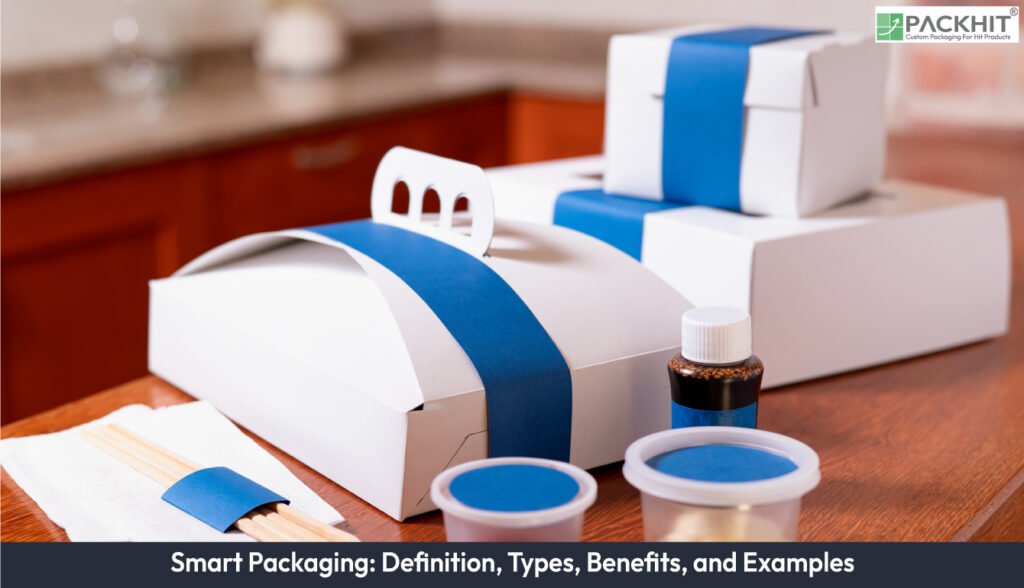
Smart packaging uses digital identifiers, sensors, and sometimes active components to go beyond protection by tracking condition, identity, and movement while linking each pack to supply-chain and consumer data. It differs from active packaging, which changes internal conditions, and intelligent packaging, which only monitors them, by combining both functions with QR codes, RFID, or NFC. Its core characteristics include digital identification, sensing, data logging, authentication, and consumer interaction, seen in examples such as freshness indicators, cold-chain pharmaceutical packs, RFID logistics tracking, and NFC-enabled products. Smart packaging works through sensing, signal flow, data processing, and physical or electronic mechanisms that convert readings into usable insights. It is implemented through active, intelligent, or hybrid systems ranging from low-cost QR labels to fully connected IoT containers. The benefits span safety, logistics efficiency, marketing engagement, sustainability, and anti-counterfeiting, with measurable economic impact and strong growth projections.
- What is Smart Packaging?
- What is the Difference Between Active Packaging, Intelligent Packaging and Smart Packaging?
- What are the Characteristics of Smart Packaging?
- What are the Examples of Smart Packaging?
- How Does Smart Packaging Work?
- 1. Sensing Functions
- 2. Signal Flow and Identity Links
- 3. Processing and Communication Steps
- 4. Physical and Electronic Mechanisms
- What are the Different Types of Smart Packaging?
- What are the Benefits of Smart Packaging?
- Safety and Quality
- Logistics and Operational Efficiency
- Marketing, Consumer Information and Engagement
- Sustainability and Waste Reduction
- Security and Anti‑counterfeiting
- Economic Impact and Measurable Revenue
- How Should Businesses Adopt Smart Packaging?
- How Does Smart Packaging Interact with Sustainability Goals?
What is Smart Packaging?
Smart packaging uses digital tools and sensing parts to do more than contain or protect a product. It tracks product state, shows product data, and links each pack to supply‑chain records. It works through three roles. It gives consumer information through QR codes or NFC tags that show nutrition, instructions or sourcing. It measures conditions through sensors that read temperature, humidity or gas levels. It records identity and movement through RFID tags or IoT links. These functions apply to simple QR labels and to packs that carry printed circuits, sensors or other connected parts.
What is the Difference Between Active Packaging, Intelligent Packaging and Smart Packaging?
Active packaging changes the internal pack conditions through oxygen absorbers or moisture regulators, for example, iron‑based scavengers in snack packs. Intelligent packaging reads temperature or freshness data through sensors, for example, colour‑shift inks on fish packs. Smart packaging combines both behaviours with digital IDs such as QR Codes, RFID tags or NFC chips, for example, a dairy pack that logs chill‑chain history and shows freshness through a printed indicator.
What are the Characteristics of Smart Packaging?
Smart packaging relies on clear, functional traits that help a pack sense, identify, record and authenticate product data. The list below shows the core characteristics of smart packaging:
- Digital identification: links each pack to online data through QR Codes, RFID tags or NFC chips used in retail and logistics.
- Visual indicators: use colour‑changing inks or small printed displays to show spoilage, handling issues or time‑temperature history.
- Data logging: stores measurements inside the tag or sends them to cloud dashboards for supply‑chain checks.
- Authentication: uses serial numbers, holograms or cryptographic IDs to reduce counterfeit risk in items such as cosmetics or supplements.
- Consumer interaction: connects the pack with a phone tap or scan, if brands share instructions, ingredient data or recycling steps.
What are the Examples of Smart Packaging?
The examples of smart packaging include physical packaging with digital tools such as QR Codes, RFID tags, NFC chips or printed sensors, that are detailed below:
- Freshness indicator on food wrappers uses colour‑shift ink or a printed sensor that reacts to metabolite levels such as volatile amines. The indicator shows spoilage risk in a simple visual form.
- Temperature‑monitoring pharmaceutical packs use small digital sensors that log °C changes and record cold‑chain history for vaccines and biologics, if these items need strict storage.
- RFID‑tagged pallet and box tracking uses passive or active RFID tags such as UHF tags to show live warehouse or transit location. The tags give clear identity records for logistics teams.
- NFC‑enabled bottles use short‑range NFC chips that open provenance pages, instructions or authentication checks when a consumer taps the pack with a phone.
- QR‑driven content links place QR codes on labels and route scans to recipes, ingredient sources or storage guidance. QR Codes act as low‑cost digital identifiers if brands need broad consumer access without electronics.
- Oxygen‑absorber active inserts use iron‑based scavengers to lower O₂ levels inside sealed food packaging. This slows spoilage and lengthens shelf life.
- Printed electronic displays place thin displays on surfaces that show temperature, pH or moisture level in real time. Printed circuits provide the signal path.
- Tamper‑evident authentication features use serial numbers, holograms or cryptographic tags that confirm authenticity at point of sale, if counterfeits pose risk for a product group.
- IoT cold‑chain boxes use connected sensors in reusable containers to send telemetry to logistics dashboards. Temperature and humidity streams guide routing decisions.
- Smart recycling labels use machine‑readable markings or digital watermarks to show disposal rules and material separation steps. The labels improve clarity for recycling systems.
How Does Smart Packaging Work?
Smart packaging works through measurable sensing, structured data capture, and short‑ or long‑range communication that ties each pack to supply‑chain or consumer systems. Sensors read temperature, humidity or gas levels; tags store these readings or pass them to receivers; cloud or app interfaces interpret the data for routing, freshness checks or authenticity queries.
1. Sensing Functions
Sensing functions collect product or environment variables through chemical, optical or electronic elements placed inside or on the pack. Printed inks register colour shifts when metabolites rise; micro‑sensors record temperature or humidity across transport legs; passive strips track cumulative exposure through time–temperature responses. These sensing functions supply quantifiable evidence of spoilage risk, handling mistakes or micro‑environment drift.
2. Signal Flow and Identity Links
Signal flow and identity links organise measurements into traceable records. RFID tags log item identity for warehouse scanners; NFC chips pass small datasets to smartphones for consumer checks; QR Codes open detailed instructions or sourcing pages when scanned. IoT gateways forward telemetry from sensor‑equipped containers to cloud systems that compute shelf‑life estimates, if sensor streams show temperature variance. Signal flow and identity links remove manual status checks and reduce routing errors.
3. Processing and Communication Steps
Processing and communication steps convert raw readings into usable outputs. On‑pack circuits store measurements, update visual patches or power thin displays; BLE, RFID or NFC components pass data across short distances; long‑range modules pass data to cloud platforms. Processing and communication steps support automated expiry flags, cold‑chain confirmation and authentication checks for goods that require traceability.
4. Physical and Electronic Mechanisms
Physical and electronic mechanisms combine passive identifiers, wireless chips, chemical elements and printed conductors. Barcodes and QR Codes supply machine‑readable IDs; RFID or BLE tags support repeated scans; printed circuits carry signals to displays; humidity or gas sensors output analogue or digital readings. Physical and electronic mechanisms in active packaging include oxygen absorbers and moisture regulators that modify conditions, if perishable goods require micro‑environment control. Physical and electronic mechanisms in intelligent formats prioritise readings, traceability and consumer access to data.
What are the Different Types of Smart Packaging?
Two principal categories are in common use: active packaging, which interacts with the package contents to preserve quality, and intelligent packaging, which monitors condition and provides information or authentication. Hybrid systems combine both approaches.
Active Packaging
Active packaging changes the internal atmosphere and acts directly on the product. It extends shelf life and protects quality. Oxygen scavengers, such as iron‑based absorbers, cut oxygen levels. Moisture regulators, such as desiccant sachets, keep humidity stable. Antimicrobial coatings slow microbial growth. Modified‑atmosphere packaging systems hold preset gas mixes. These parts reduce spoilage for perishable goods. Smart IDs, such as QR Codes or NFC tags, link each pack to digital records if brands track batch data or condition history.
Intelligent Packaging
Intelligent packaging reads product conditions and reports clear status data without changing the product or its environment. It uses sensors and indicators such as temperature loggers or freshness inks. It uses identification tags such as RFID or NFC for track‑and‑trace checks. It uses scannable links such as QR codes or augmented‑reality markers that connect physical packs to digital records. These parts give provenance data, expiry updates and authenticity checks for consumers and supply‑chain teams, if each pack requires fast verification.
What are the Benefits of Smart Packaging?
Smart packaging produces measurable gains across five domains: product safety and quality, supply‑chain efficiency, brand and marketing performance, sustainability outcomes and security/anti‑counterfeiting. Those gains translate into operational savings and commercial revenue when applied to appropriate product classes.
Safety and Quality
Condition checks use temperature, humidity and light readings to flag items that cross safe limits. These checks cut the risk of foodborne illness or degraded medicines. Freshness inks and time–temperature strips give clear discard points and keep flavour and nutritional levels stable during handling, and QR Codes, RFID tags or NFC chips add fast status access through simple scans.
Logistics and Operational Efficiency
Real‑time tracking through QR Codes, RFID tags or NFC chips reduces lost stock and misrouted goods. Continuous traceability limits shrinkage and mismanagement. Routing choices based on sensor data shorten travel time and lower landed cost. Operations teams report tighter storage control and fewer damaged items during transport.
Marketing, Consumer Information and Engagement
Digital identifiers and AR/QR experiences provide consumers with sourcing, instructions and promotional content, while personalised packaging elements support loyalty programmes and differentiation at the point of sale. Interactivity increases direct consumer contact and data capture for marketing analytics.
Sustainability and Waste Reduction
Sustainability and waste reduction rely on clear data and low‑impact design. Accurate freshness data limits premature disposal, because sensors record temperature, humidity or gas shifts that show real spoilage risk. Targeted active parts, such as oxygen absorbers or moisture regulators, slow degradation if perishable goods face unstable conditions. Recyclable substrates and digital recycling labels keep material use low. Net environmental impact depends on device lifespan and the disposal route for tags, printed circuits or NFC/RFID parts.
Security and Anti‑counterfeiting
Security and anti‑counterfeiting depend on serialised IDs and traceable records. Serialisation gives each pack a unique code; holograms and cryptographic tags block tampering attempts; QR, RFID and NFC elements maintain track‑and‑trace logs, if products move through multiple handlers. These steps protect brand integrity and reduce counterfeit risk for sectors such as cosmetics, supplements and electronics.
Economic Impact and Measurable Revenue
Economic impact comes from tighter control of waste, stock and handling errors. Targeted deployments produce faster returns because smart IDs and sensors cut spoilage and shrinkage in temperature‑sensitive categories. Reported combined net revenue from improved design plus active and intelligent packaging stands at about £3.07 billion (US$4.13 billion). Market projections point toward growth near £51.2 billion (US$68.99 billion), if adoption continues in food, pharma and logistics. Pilots that track temperature or humidity changes usually show early operational gains.
How Should Businesses Adopt Smart Packaging?
Businesses adopt smart packaging through short, staged steps that match product risk and operational limits. Start with packs that lose quality fast or require strict control. Use test runs with clear metrics. Work with packaging and technology teams. Plan disposal early, if electronics or inks stay on the pack.
Here is how businesses can adopt smart packaging:
- Select the target use case: Pick high‑value items with fast spoilage or theft risk, for example, fresh produce or vaccines.
- Define metrics: Set KPIs such as spoilage reduction, shrinkage reduction, inventory accuracy or scan rates.
- Choose a technology stack: Use QR or NFC for low‑cost links, RFID for inventory, and sensors for temperature or humidity checks.
- Partner with experts: Work with packaging engineers and IoT teams for safe integration and regulatory review, if food contact or data rules apply.
- Design for disposal: Pick recyclable parts or removable electronics. Add smart recycling labels for clearer sorting.
- Educate users: Give simple steps for scanning, reading data and disposal. Clear guidance improves adoption.
How Does Smart Packaging Interact with Sustainability Goals?
Smart packaging supports sustainability goals by cutting product waste, reducing material use and improving recycling accuracy. It tracks freshness through QR Codes, RFID tags or NFC chips, if perishable goods require condition checks. It limits oversized packaging through data‑driven measurements and guides disposal through smart recycling labels or digital watermarks that help sorting systems.