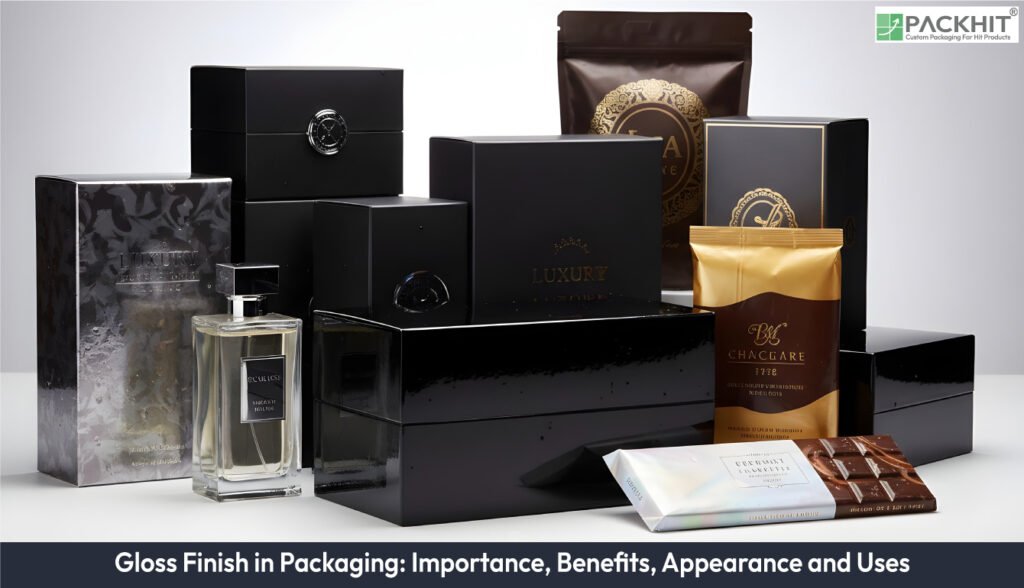
Gloss finish in packaging is a reflective surface that lifts colour strength, tightens graphic detail, and adds a coated barrier that slows moisture pickup on cartons, sleeves and labels across cosmetics, electronics and food categories. Gloss finish is important because it sharpens colour clarity in retail aisles, increases printed‑panel protection during handling, and maintains a clean outer surface, if glare does not obscure small text. The benefits of gloss finish in packaging include colour density, reduced fibre visibility and improved shelf‑edge visibility through brighter panels. The uses of gloss finish include cosmetic cartons, electronics sleeves, snack outers and display labels where saturated graphics and moisture‑control layers keep surfaces stable during storage and cold‑chain movement. Gloss finish in packaging differs from matte finish through its reflective surface, stronger colour density and higher fingerprint visibility, while matte finish controls glare on text sections.
- What is a Gloss Finish?
- Why is Gloss Finish Important in Packaging?
- What are the Benefits of Gloss Finish in Packaging?
- Enhanced Visual Appeal
- Durability and Protection
- Colour Vibrancy
- Brand Recognition Support
- Perceived Product Quality
- How Does a Gloss Finish Look on Packaging?
- What are the Uses of Gloss Finish in Packaging?
What is a Gloss Finish?
A gloss finish is a clear coating placed on printed packaging surfaces to create a bright, reflective look that sharpens colour and makes graphics stand out. This finish adds a protective layer that reduces moisture uptake and surface wear during storage or transit. Manufacturers apply it through varnish, lamination or UV‑coating on cartons, labels and sleeves in sectors such as cosmetics, electronics and food packaging. For example, it is commonly used on perfume boxes, phone accessory packs, and snack cartons.
Why is Gloss Finish Important in Packaging?
Gloss finish is important because it gives packaging a bright surface that strengthens colour clarity and helps products stand out in crowded retail aisles. It adds a moisture‑resistant layer that slows wear during handling or storage. Gloss finish increases brand recognition by sharpening graphics used in cosmetics, electronics and food packs. Gloss finish also supports a clean presentation, although glare and fingerprint marks may appear under strong lighting.
What are the Benefits of Gloss Finish in Packaging?
The benefits of gloss finish in packaging are improvements in colour strength, surface resistance and shelf‑edge visibility across cartons, sleeves and labels used in cosmetics, electronics and food products.
Enhanced Visual Appeal
Enhanced visual appeal describes the brighter colour fields and sharper printed edges that arise when the gloss layer increases surface reflectivity on packs such as perfume boxes and snack cartons.
Durability and Protection
Durability and protection refer to the moisture‑resistant barrier and abrasion control that the gloss coat adds to paperboard and label stock during transport or retail handling.
Colour Vibrancy
Colour vibrancy covers the higher saturation levels that occur when the gloss surface reduces diffuse reflection and stabilises photographic graphics on electronics sleeves and cosmetic cartons.
Brand Recognition Support
Brand recognition support reflects the clearer logos and consistent tints that the gloss layer maintains on sectors that depend on precise colour cues, such as cosmetics and premium food categories.
Perceived Product Quality
Perceived product quality references the shinier finish that consumers associate with freshness in food packs or refinement in electronics cartons, if strong shelf lighting reaches the coated surface.
How Does a Gloss Finish Look on Packaging?
The glossy finish on packaging appears as a smooth, reflective surface that sharpens printed colour, increases light bounce, and gives cartons, sleeves, and labels a brighter visual field. It creates a surface that looks coated and dense, especially on colour‑rich graphics.
- Reflective shine that intensifies colour blocks on items such as perfume cartons or snack sleeves
- Sharp edge definition that supports photographic graphics on electronic boxes
- Smooth surface that shows a coated layer with reduced fibre visibility on paperboard
- Moisture‑resistant appearance that keeps printed areas stable during chilled‑chain transport
- Clean visual tone that supports branding on cosmetics, food and retail display packs
- Visible light glare on dark panels, if strong lighting hits the surface directly
- Fingerprint visibility on high‑ink areas. For example, on dense blacks or deep blues
What are the Uses of Gloss Finish in Packaging?
The uses of gloss finish focus on improving product visibility, protecting printed surfaces, and supporting category-specific branding across cartons, sleeves, and labels.
Cosmetics Packaging
Cosmetics packaging uses gloss finish to create saturated colour blocks on perfume cartons, mascara sleeves and skincare boxes; the gloss layer sharpens decorative graphics that rely on precise tonal contrast.
Electronics Packaging
Electronics packaging uses gloss finish to stabilise photographic images printed on phone‑accessory boxes, speaker sleeves and wearable‑tech cartons; the reflective coat reduces surface scuff during transport.
Food Packaging
Food packaging uses gloss finish to highlight colour‑rich graphics on snack cartons, confectionery sleeves and chilled‑food outers; the moisture‑resistant coat slows fibre swell during cold‑chain handling.
Retail Display Packaging
Retail display packaging uses gloss finish to produce sharp edges on promotional labels, seasonal sleeves and header cards; the increased shine pulls attention in multi‑brand aisles.
What is the Difference between Gloss and Matte Finish?
The difference between the gloss and matte finishes is defined through their surface behaviour, light response, colour density, and handling traits. The table below compares gloss and matte finishes used on cartons, sleeves and labels in UK manufacturing, where print clarity, readability and moisture control guide finish selection.
| Comparison Point | Gloss Finish | Matte Finish | Example |
|---|---|---|---|
| 1. Surface Reflection | Reflects light and creates bright highlights on colour blocks. | Diffuses light and creates a flat, non-reflective surface. | Perfume carton (gloss) vs. organic tea box (matte). |
| 2. Colour Strength | Boosts colour density on photographic graphics. | Softens colour intensity and reduces contrast. | Electronics sleeve with photo print (gloss) vs. book-style tech manual box (matte). |
| 3. Handling Marks | Shows fingerprints on dark areas if touched repeatedly. | Hides fingerprints and surface smudges. | Snack multipack outer (gloss) vs. stationery box (matte). |
| 4. Readability | It can produce glare that affects small text blocks under strong lighting. | Improves text clarity because light scatter remains even. | Gloss health supplement box vs. matte ingredients panel on a cereal box. |
| 5. Moisture Response | Adds a coated layer that slows moisture pickup on cartons. | Absorbs light moisture faster because coating levels are lower. | Chilled‑food sleeve (gloss) vs. dry bakery carton (matte). |
This table shows how gloss finish supports colour density and surface protection, while matte finish supports readability and reduced handling marks. Manufacturers select one or mix both on a single pack if legibility and graphic strength require it.
Why Choose Gloss Finish for Packaging?
Choose gloss finish for packaging because it strengthens colour density on printed panels, adds a coated barrier that slows moisture uptake, and sharpens graphics that rely on high contrast. This surface treatment supports product visibility in cosmetics, electronics and food categories. It also maintains a clean look on cartons and sleeves, if lighting angles do not cause glare on text blocks.