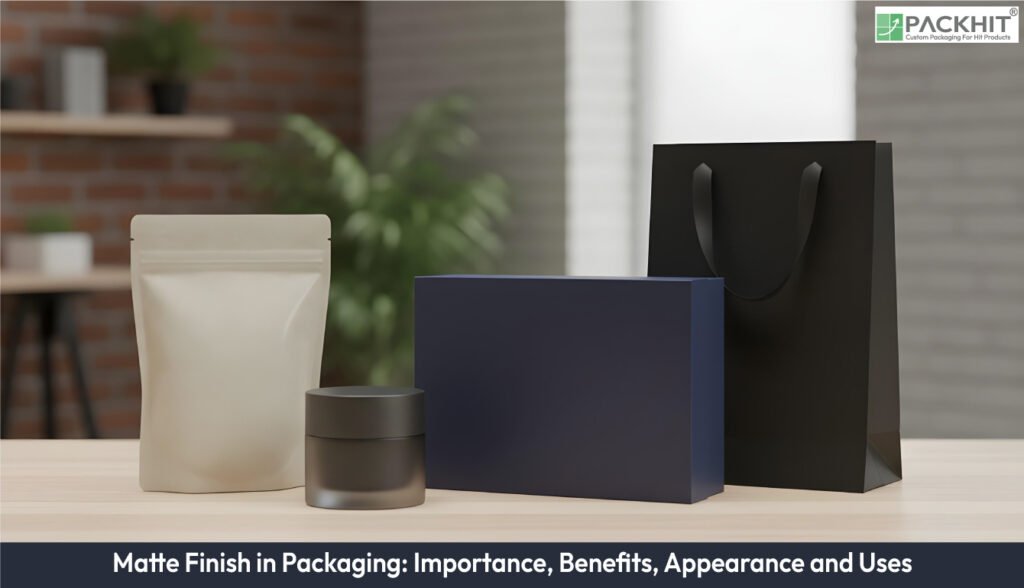
Matte finish in packaging creates a non-reflective, light-diffusing surface that produces a soft visual tone and velvety tactile feel across cartons, sleeves and rigid boxes. Matte finish improves packaging performance by reducing glare, stabilising colour under retail lighting, enhancing touch perception and supporting clear typography and photography. Matte finish delivers practical benefits such as scratch masking, subdued branding control and consistent appearance across handling, transport and shelf display. Matte finish is widely used across cosmetics, food, supplements and premium goods to manage light behaviour and reinforce restrained brand aesthetics.
- What is Matte Finish in Packaging?
- Why is Matte Finish Important for Packaging?
- What are the Benefits of Matte Finish in Packaging?
- Glare Reduction for Stable Colour Visibility
- Soft-touch Surface for Tactile Signalling
- Subdued Visual Tone for Restrained Branding
- Scratch Masking on Printed Areas
- What is the Appearance of Matte Finish in Packaging?
- What are the Uses of Matte Finish in Packaging?
- Light-Diffusing Surfaces for Cartons
- Soft-Touch Panels for Rigid Boxes
- Glare-Control Layers for Pouches and Sleeves
- Scratch-Masking Coats for Shipping and Retail Boxes
- Why Choose Matte Rather than Glossy Finish?
What is Matte Finish in Packaging?
Matte finish in packaging is a non-reflective surface coating that diffuses light and produces a flat, low‑glare appearance. This type of finish uses a matte coating that behaves like the matte layer on printed photos, so the substrate shows a soft, velvety touch and muted visual tone. The matte finish controls surface light behaviour and texture. It breaks up specular reflection, so printed colours read in a steady way across different viewing angles. Common examples include cartons for cosmetics such as face serums, rigid boxes for limited‑run confectionery, and wraps for artisanal food products. The following table summarises the main visual and tactile characteristics of a matte finish and the practical effect each characteristic creates on a package.
| Characteristic | Typical value | Effect on packaging |
|---|---|---|
| Look | Matte (high degree) | Subdued appearance; glare reduction |
| Reflectivity | Low / Non-reflective | Diffuses incident light; reduces specular highlights |
| Texture | Soft-touch / Smooth | Increases tactile feedback; signals higher perceived quality |
| Primary function | Packaging finish | Controls aesthetic language and brand alignment |
The above table shows the physical attributes that shape how matte packaging behaves on certain packaging.
Why is Matte Finish Important for Packaging?
Matte finish is important because it cuts glare, controls light scatter and creates a low‑reflection surface that keeps printed colour stable under store lighting. This behaviour comes from the diffusing layer inside a matte coating, which breaks up directional light and prevents harsh hotspots on cartons and sleeves. Brands use this finish to stabilise product visibility on shelves with mixed lighting, and to keep typography clear in photography or online listings. The matte finish also matters for touch as it forms a velvety or soft surface, similar to matte photo stock, so the package signals a more controlled tactile response during unboxing. This physical cue helps packaging boxes for cosmetics, artisanal food and limited‑run goods maintain a consistent feel across units if the substrate and coating match during production.
What are the Benefits of Matte Finish in Packaging?
The benefits of matte finish in packaging in commercial product lines come from its light‑diffusing coating, soft tactile profile and controlled colour behaviour under retail lighting.
Glare Reduction for Stable Colour Visibility
Glare reduction for stable colour visibility occurs because a matte coating diffuses incident light and breaks up reflection. This behaviour keeps colour fields steady under fluorescent or spot lighting and keeps typography readable on cartons for cosmetics and food items.
Soft-touch Surface for Tactile Signalling
Soft-touch surface for tactile signalling comes from the velvety layer that forms during matte coating. This texture produces a muted grip cue and creates a consistent hand feel across units if the same substrate and coating weight are used in production.
Subdued Visual Tone for Restrained Branding
Subdued visual tone for restrained branding follows from the flat, low-shine surface. This look supports packaging lines that avoid specular highlights. For example, limited-run confectionery sleeves or natural-product cartons that rely on quiet visual framing.
Scratch Masking on Printed Areas
Scratch masking on printed areas happens as the matte layer visually softens surface scuffs. This effect hides minor handling marks on transport cartons and retail boxes if the packaging line uses consistent coating thickness.
What is the Appearance of Matte Finish in Packaging?
The appearance of a matte finish in packaging features a soft, velvety tactile surface and a diffused, low-reflectivity visual field that remains stable under mixed lighting conditions on cartons, sleeves, and rigid boxes. This behaviour results from the matte coating layer, which breaks up directional light and forms a fine micro-texture that reduces surface shine and alters how fingers perceive the substrate during handling.
The table below sets out how matte packaging behaves when touched and viewed under direct or ambient light.
| Appearance aspect | Observed behaviour | Effect on packaging |
|---|---|---|
| Touch texture | Velvety and low‑slip surface | Creates controlled tactile feedback during unboxing for cosmetics boxes, artisanal food cartons and gift packaging |
| Surface grain | Fine micro‑texture from the diffusing layer | Reduces finger‑mark visibility on rigid boxes and sleeves |
| Light response | Diffuse scatter with no direct reflection | Keeps printed colour fields steady under spotlights and store LEDs |
| Glare behaviour | Low‑glare surface with muted highlights | Avoids hotspots during product photography for e‑commerce listings and catalogue shoots |
| Colour perception | Even tone across viewing angles | Maintains typography clarity on cartons for skincare, confectionery and supplements |
This table describes the appearance traits of matte finish based on touch response and light behaviour in packaging.
What are the Uses of Matte Finish in Packaging?
The uses of matte finish in packaging are text control, light diffusion, tactile signalling, and brand alignment across cartons, sleeves, pouches and rigid boxes in cosmetics, food, and supplements.
Light-Diffusing Surfaces for Cartons
Light‑diffusing surfaces for cartons break up specular reflection and steady colour fields under mixed retail lighting, so cartons for cosmetics, supplements and small electronics maintain readable typography and controlled visual tone.
Soft-Touch Panels for Rigid Boxes
Soft‑touch panels for rigid boxes come from the velvety layer formed by matte coating, so premium confectionery boxes, fragrance boxes and gift boxes create a muted tactile cue during unboxing.
Glare-Control Layers for Pouches and Sleeves
Glare‑control layers for pouches and sleeves scatter directional light and prevent hotspots on printed graphics, so snack sleeves, artisanal food wraps and supplement pouches retain stable imagery in photography and in-store lighting.
Scratch-Masking Coats for Shipping and Retail Boxes
Scratch‑masking coats for shipping and retail boxes soften the visibility of minor handling marks, so printed areas on mid‑run and high‑run packaging maintain a uniform appearance through packing and shelf placement.
Why Choose Matte Rather than Glossy Finish?
Choose matte rather than glossy finish because the matte coating diffuses light, creates a non‑reflective surface and steadies printed colour under store LEDs. This behaviour reduces glare on skincare cartons, confectionery sleeves and supplement boxes, so text stays readable at close range. The coating forms a velvety layer that changes how fingertips register the substrate, which helps brands create quiet tactile cues during unboxing. Glossy layers show sharper reflections that shift colour at different angles, while matte breaks up that reflection through its diffusing particles. Matte also masks minor scuffs on transport and retail boxes if the coating weight stays consistent across production. These physical traits suit product lines that rely on muted graphics, soft colour fields or controlled photography where glossy hotspots distort detail.