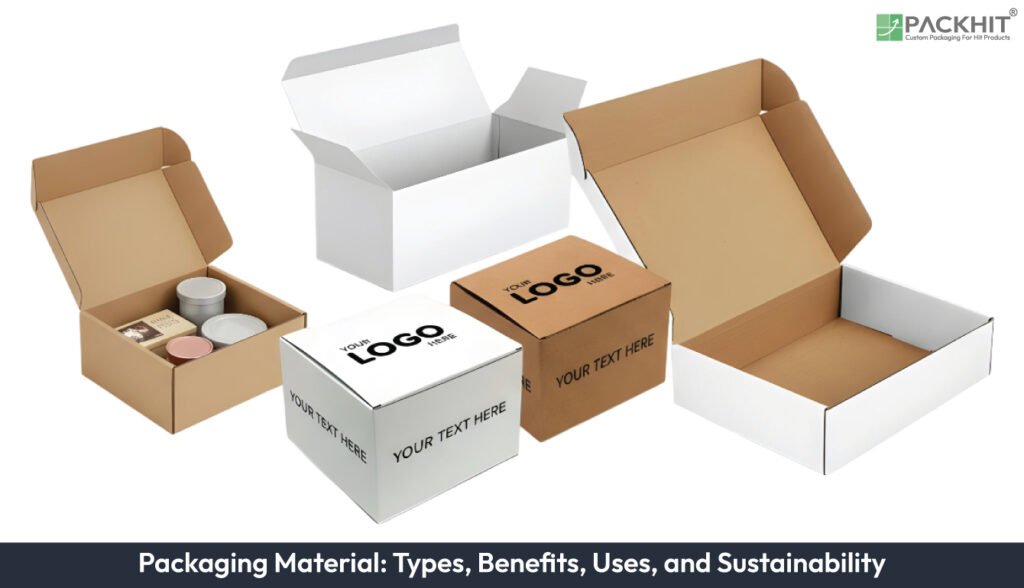
Packaging materials determine product protection, shelf-life, and brand presentation while supporting sustainable practices and efficient transport. Different packaging materials are selected based on performance, recyclability, and structural integrity. Material choice influences cushioning, barrier properties, and overall durability, ensuring products remain safe and visually appealing for different industrial needs. Strategic selection balances functionality, cost, and sustainability to achieve effective, responsible, and high-quality packaging outcomes.
- What is Packaging Material?
- What Types of Packaging Materials are Commonly Used in Product Packaging?
- Paper-Based Packaging Materials
- Sustainable Packaging Materials
- Edible Packaging Materials
- Plant-Origin Packaging Materials
- Plastic Packaging
- Metal Packaging
- Glass Packaging
- What are the Main Benefits of Packaging Materials?
- Secured Products During Transport and Storage
- Extended Shelf Life of Products
- Enhanced Brand Presentation
- Refined Eco-Friendly Practices
- Optimised Transport and Packaging Efficiency
- Improved Consumer Convenience and Usability
- What Types of Packaging Materials Are Used Across Different Industries?
- Which Packaging Materials are Used for Sustainable Packaging?
- What Material Properties Affect Packaging Design, Cost, and Sustainability?
- How Should Packaging Material Selection be Organised for a Product?
What is Packaging Material?
Packaging material is the physical substrate that forms the containment, protection, and presentation of a product during handling, transit, and storage. Packaging material creates walls that set internal clearances and external dimensions, which control how the product moves inside the box. Packaging material manages display requirements. Packaging material selection affects distribution performance because fibre strength and calliper influence compression resistance during stacking.
What Types of Packaging Materials are Commonly Used in Product Packaging?
Common packaging materials include paper-based materials, sustainable options, plastics, metals and glass. Packaging material is selected to meet protection needs, distribution demands and brand specifications. Paper boards give predictable shape control, plastics keep packs lightweight and moisture resistant, metals hold barrier strength through temperature shifts, and glass preserves sensitive formulas and flavours.
The following are the common types of packaging materials:
Paper-Based Packaging Materials
Paper-based packaging material, such as kraft paper, cardboard, corrugated fiberboard, rigid board, paperboard, card stock, and buxboard, form an adaptable material group for packaging. Paper-based material packaging remains within budget and brand standards when distribution patterns or return processes shift.
- Kraft Paper: Kraft paper strong, tear-resistant paper made through the kraft pulping process, frequently used for bags, wraps, and environmentally conscious applications.
- Cardboard: Cardboard is a thick sheet material produced from compressed pulp, suitable for lightweight boxes and general product packaging.
- Corrugated Fiberboard: Corrugated fiberboard is a multilayer structure built with a fluted core and two outer liners, delivering excellent stacking strength for transport and protective packaging.
- Paperboard: Paperboard is a smooth, single-layer board ideal for folding cartons, cosmetic sleeves, and printed consumer goods.
- Chipboard: Chipboard is a recycled paperboard made from compressed fibre layers that supports folding cartons, backing cards, and inner components.
- Cardstock: Cardstock is a heavier paper with higher GSM, valued for tags, inserts, and small packaging formats where rigidity and print clarity are needed.
- Buxboard: Buxboard is a recycled board known for its rustic appearance and durability, often used for economical retail boxes and custom-printed packaging.
- Rigid Material: Rigid board is a dense, non-folding board wrapped with speciality paper, selected for premium boxes and gift packaging due to its structural integrity and luxurious finish.
Sustainable Packaging Materials
Eco-friendly packaging materials aim to reduce the ecological footprint by prioritising compostability, biodegradable design, and renewable feedstocks.
- Moulded Pulp: Moulded pulp is formed from recycled paper fibres and is commonly shaped into trays, inserts, and food containers that naturally break down.
- Mushroom Packaging: Mushroom packaging uses mycelium combined with agricultural residue to create a shock-absorbent, fully biodegradable material suitable for protective packaging.
- Bioplastics: Bioplastics are derived from plants such as cornstarch or sugarcane, offering reduced dependence on petroleum-based polymers.
Edible Packaging Materials
Edible packaging materials combine protection with consumability, cutting waste while maintaining food safety. Biodegradable formats rely on natural, food-grade substances.
- Seaweed Films: Thin, dissolvable layers suitable for small servings like condiments or seasoning packets.
- Rice Paper: Delicate, edible sheet commonly used for confectionery wraps and certain ready-to-eat food products.
- Gelatin Films: Protein-based wrappers that dissolve in water, ideal for portion-controlled food or supplement packaging.
Plant-Origin Packaging Materials
Plant-based packaging material turns agricultural resources into biodegradable and compostable packaging structures.
- Cornstarch Material: Created through fermentation of corn sugars, used to make compostable bags, trays, and containers.
- Bagasse (Sugarcane Fibre): A fibrous byproduct of sugarcane refining, moulded into plates, trays, and packaging that degrades naturally.
- Bamboo Fibre: A fast-growing, durable resource used to produce rigid containers and sustainable alternatives to plastic or foam.
Plastic Packaging
Plastics remain widespread due to durability, clarity, and barrier protection. Materials like polyethene, polypropylene, and PET (Polyethene Terephthalate) serve in pouches, bottles, and rigid containers, although environmental impact drives increasing innovation in recycling and compostable alternatives.
Metal Packaging
Metals such as aluminium and steel provide strong barrier performance against moisture, oxygen, light, temperature shifts, and physical stress. Metallic containers are valued for long shelf life, tamper resistance, and high recyclability, commonly used in food, beverage, and industrial packaging.
Glass Packaging
Glass stands out for its purity, premium feel, and ability to preserve product taste and stability. It is frequently used for beverages, gourmet foods, cosmetics, and pharmaceuticals, where chemical inertness and aesthetics are priorities.
What are the Main Benefits of Packaging Materials?
Packaging materials play a critical role in protecting products, supporting branding, and improving logistics efficiency. The main benefits of packaging materials include:
Secured Products During Transport and Storage
Packaging materials safeguard products from damage, moisture, and contamination during shipping, handling, and storage. Corrugated board and plastic clamshells offer strength and impact resistance, ensuring the safe transit of fragile items.
Extended Shelf Life of Products
Effective packaging preserves freshness, flavour, and quality, particularly for food, beverages, and sensitive goods. Barrier films and coated boards control moisture and oxygen exposure, maintaining shelf life for cereals, snacks, and perishable items.
Enhanced Brand Presentation
High-quality packaging supports printing, design, and premium aesthetics, helping products stand out on retail shelves. Paperboard and coated boards offer smooth, printable surfaces that retain colour accuracy and enhance visual appeal for branding.
Refined Eco-Friendly Practices
Recyclable, compostable, or mono-material packaging reduces environmental impact and aligns with green initiatives. Kraft paper, moulded pulp, and mono-material constructions simplify recycling and reduce waste while supporting circular economy goals.
Optimised Transport and Packaging Efficiency
Smart packaging design minimises void space, lowers shipping costs, and improves handling efficiency. Rigid boxes, corrugated inserts, and tailored carton geometry reduce filler use and improve stackability during distribution. Moulded pulp provides cushioning. Absorbs shocks, secures products, and prevents lateral movement without complex tooling.
Improved Consumer Convenience and Usability
User-friendly packaging ensures easy opening, storage, portion control, and an overall better product experience. Cardstock inserts, plastic clamshells, and flexible pouches provide easy access, protection, and organised presentation for consumers.
What Types of Packaging Materials Are Used Across Different Industries?
Packaging materials are used in various industries, including food and beverage, retail, e-commerce, electronics, luxury goods, pharmaceuticals, and cosmetics, to protect products, facilitate transportation and storage, enhance branding, display information, and ensure safety and hygiene standards.
- Food and Beverage Industry: The food and beverage industry needs glass, paperboard, and biodegradable materials to preserve freshness, extend shelf life, and support eco-friendly disposal, ensuring product safety and quality.
- Retail Industry: The retail industry utilises paperboard, kraft paper, corrugated fiberboard, and fabric to enhance product presentation and brand identity, providing premium unboxing experiences while maintaining reliable protection.
- E-commerce Industry: The e-commerce industry requires corrugated cardboard, bubble wrap, foam inserts, and stretch films to safeguard products during transit, reduce shipping damage, and improve handling efficiency.
- Electronics Industry: The electronics industry employs packaging materials like rigid plastics, foam inserts, and corrugated cardboard to protect delicate components from static, shock, and moisture, ensuring functionality during shipping and storage.
- Luxury Goods Industry: The luxury goods industry depends on rigid boxes, speciality papers, and foils to deliver high-end presentation and secure protection, creating an exceptional unboxing experience for premium products.
- Pharmaceutical and Healthcare Industry: The pharmaceutical industry utilises blister packs, glass, high-barrier films, and tamper-evident labels to maintain sterility, dosage accuracy, and regulatory compliance while protecting sensitive medical products.
- Cosmetics and Personal Care Industry: The Cosmetics industry uses glass, acrylic, metal tins, and plastic tubes to combine protection with luxury presentation, reflecting brand prestige and attracting consumers.
Which Packaging Materials are Used for Sustainable Packaging?
Paper-based substrates (kraft paper, corrugated cardboard, paperboard) are commonly used for recyclable or compostable packaging designed to fit established recycling systems. Mono-materials and fewer laminates boost recycling, while low-barrier coatings and water-based inks aid material recovery. Internal cushioning parts influence sustainability. Parts designed from the same material family simplify sorting and recycling (examples: corrugated inserts, kraft paper fillers).
Manufacturing and Design Impacts on Sustainable Packaging
Manufacturing and design choices directly affect packaging sustainability. Die-cutting dense board and forming thin plastic films influence energy use, material efficiency, and transit durability. Composite packs combining paper and polymers improve print quality but complicate disposal. Packaging is optimised by factoring in transport, returns, and damage to improve efficiency for common products like cereals, footwear, and household goods. Using cushioning from the same material family simplifies sorting in packaging. Reducing layers, increasing recycled content, and optimising pack geometry lowers waste and transport damage while maintaining strength.
What Material Properties Affect Packaging Design, Cost, and Sustainability?
Material properties play a key role in determining packaging design, cost, and sustainability. For cost, the choice of substrate, its weight, and construction complexity directly influence the unit price and total landed cost. In terms of design, mechanical strength, durability, box dimensions, and alignment with brand identity govern the protective performance, allowing flexibility in packaging structure. Regarding sustainability, factors such as material chemistry, end-of-life options, recycled content, and laminations affect the recyclability and environmental friendliness of the packaging.
How Should Packaging Material Selection be Organised for a Product?
Select packaging material primarily based on the product’s characteristics, including size, weight, fragility, and shelf-life requirements. Evaluate performance, cost, and environmental impact, prioritising recyclable or compostable options where possible. Design box geometry and wall thickness for protection and efficiency, using higher board grammage for heavy or high-impact items. Conduct mechanical testing on prototypes to ensure compression and drop resistance, then finalise the supplier and run pilot production. Consider branding needs as part of the material choice process by selecting substrates and internal supports that reflect the brand while protecting the product.