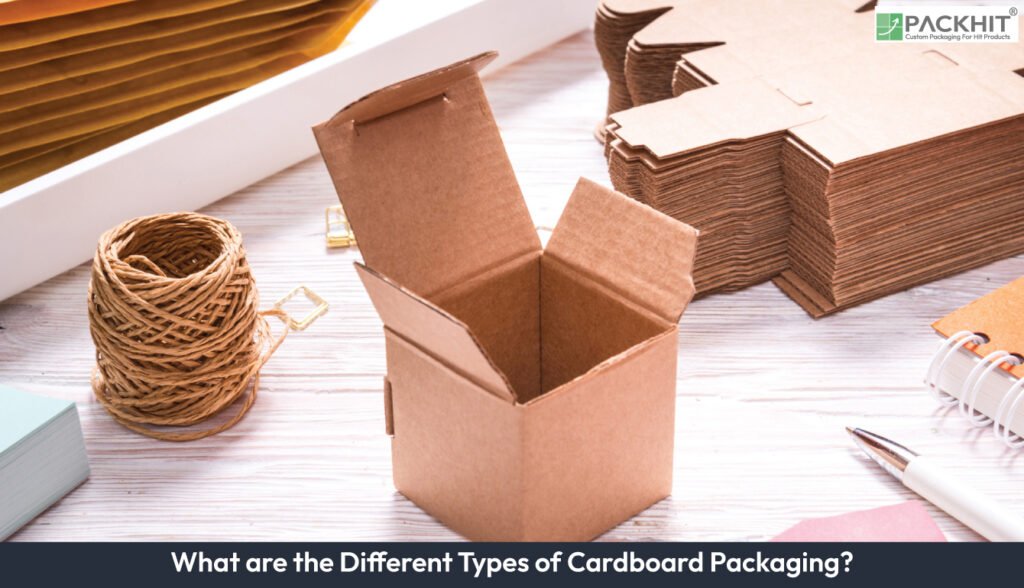
Different types of cardboard packaging are single-ply paperboard, corrugated cardboard, folding cartons, greyboard, chipboard, honeycomb cardboard, waxed cardboard, and coated or laminated boards. Each type is engineered for specific applications, balancing strength, durability, weight, and printability. Cardboard is made by layering and pressing paper fibres into rigid structures, offering protection, cushioning, and support for products during storage, shipping, and handling. Its versatility makes it suitable for retail packaging, industrial use, food and beverage containers, and custom product displays. Additionally, cardboard is highly recyclable and eco-friendly, with options available for moisture resistance, enhanced print surfaces, or reinforced structural performance, allowing businesses to optimise both sustainability and product safety.
- What is Cardboard Packaging?
- What are the Main Types of Cardboard Packaging?
- Paperboard (Single-Ply Cardboard)
- Corrugated Cardboard
- Folding Cartons
- Greyboard
- Chipboard
- Honeycomb Cardboard
- Waxed Cardboard
- Coated / Laminated Cardboard
- Comparison of Cardboard Grades by Thickness, Grammage, and Recyclability
- What is the Manufacturing Process of Cardboard Packaging?
- How Does the Weather Affect the Cardboard Packaging?
- Is Cardboard Considered Sustainable Packaging?
- How to Choose the Right Cardboard Packaging for Your Business?
What is Cardboard Packaging?
Cardboard packaging is a thick, paper-based packaging made by pressing and layering paper pulp into a lightweight and durable structure. Cardboard’s strength makes it ideal for creating boxes, inserts, and protective packaging used across a wide range of industries such as retail and pharmaceutical. Common examples of cardboard packaging include mailing boxes for apparel, sleeves for cosmetics, dividers for glass jars, and protective wraps made from single-face corrugated board.
What are the Main Types of Cardboard Packaging?
The main types of cardboard packaging are listed below:
- Paperboard (Single-Ply Cardboard)
- Corrugated Cardboard
- Folding Cartons
- Greyboard
- Chipboard
- Honeycomb Cardboard
- Waxed Cardboard
- Coated / Laminated Cardboard
Paperboard (Single-Ply Cardboard)
Paperboard is a single-layer board made from pressed cellulose fibres. It is smooth, thin, and lightweight, offering moderate stiffness and good printability for graphics. Typical thickness ranges from 0.2 mm to 0.5 mm, and weights are usually between 200 g/m² and 400 g/m². Paperboard is commonly printed using offset, digital, or flexographic techniques, and can be coated or laminated for added durability. Common uses include cereal boxes, tissue boxes, shoe box lids, and lightweight food packaging.
Corrugated Cardboard
Corrugated cardboard is a multi-layered board consisting of a fluted corrugating medium sandwiched between two flat linerboards. The flutes provide cushioning, rigidity, and shock absorption, making it ideal for protective packaging. Single-wall, double-wall, and triple-wall constructions vary in strength and load-bearing capacity. Corrugated cardboard, also known as corrugated fiberboard, is classified according to packaging flute profiles: A, B, C, D, E, and F. Typical thickness ranges from 3 mm to 12 mm, and it is widely used for shipping boxes, moving boxes, and industrial packaging.
Folding Cartons
Folding cartons are made from paperboard or chipboard, cut, scored, and folded into boxes without additional adhesives for many designs. They are lightweight, easy to assemble, and provide excellent print surfaces for branding and graphics. Thickness usually ranges from 0.3 mm to 1.5 mm, with weights between 200 g/m² and 400 g/m². Common uses include cereal boxes, pharmaceutical packaging, cosmetic cartons, and food product boxes.
Greyboard
Greyboard is a dense, single-layer cardboard made from recycled paper fibres. It offers excellent dimensional stability, stiffness, and a flat surface suitable for printing or laminating. Thickness typically ranges from 1 mm to 3 mm, with weights around 400 g/m² to 1000 g/m². Greyboard is commonly used for book covers, rigid boxes, packaging inserts, and backing boards.
Chipboard
Chipboard is a single-layer paperboard made from reclaimed fibres, compressed into a smooth, uniform sheet. It has lower density and bending strength than greyboard, but remains suitable for light to medium packaging. Thickness usually ranges from 0.5 mm to 2 mm, with weights between 250 g/m² and 800 g/m². Printers can apply coatings, laminates, or UV finishes to enhance surface durability. Common uses include cereal boxes, shoe boxes, cosmetic cartons, and inner partitions for bundled products.
Honeycomb Cardboard
Honeycomb cardboard has a core made of hexagonal cells between two linerboards, giving it a high strength-to-weight ratio. It is rigid, lightweight, and highly crush-resistant. Thickness varies depending on the cell size and number of layers. Common uses include furniture panels, pallets, large packaging, and industrial inserts.
Waxed Cardboard
Waxed cardboard is coated with a thin layer of wax to provide moisture and grease resistance. It is often made from single- or multi-layer boards and retains the strength of standard cardboard while adding water repellency. Typical thickness ranges from 2 mm to 5 mm, and weights vary depending on the base board. Common uses include food packaging, deli wraps, beverage trays, and moisture-sensitive product containers.
Coated / Laminated Cardboard
Coated or laminated cardboard has an additional surface layer of paper, plastic, or polymer, improving print quality, durability, and barrier properties. It can be made from paperboard, chipboard, or corrugated cardboard, depending on the required strength. Typical thickness ranges from 0.5 mm to 4 mm, and weights depend on the base board and coating type. Common uses include premium retail packaging, gift boxes, product sleeves, and printed display cartons.
Comparison of Cardboard Grades by Thickness, Grammage, and Recyclability
The table below groups major cardboard grades by thickness, grammage, and recyclability. It gives manufacturers a quick way to compare board strength levels and fibre composition, because cardboard covers multiple engineered paper types, from single‑ply sheets to corrugated structures.
| Types of Cardboard | Typical Thickness (mm) | Weight / Grammage (g/m²) | Recyclable |
|---|---|---|---|
| Paperboard (Single-Ply) | 0.2mm – 0.5mm | 200g/m² – 400g/m² | Yes |
| Corrugated Cardboard | 3mm – 12mm | 300g/m² – 1000g/m²(varies) | Yes |
| Folding Cartons | 0.3mm – 1.5mm | 200g/m² – 400g/m² | Yes |
| Greyboard | 1mm – 3mm | 400g/m² – 1000g/m² | Yes |
| Chipboard | 0.5mm – 2mm | 250g/m² – 800g/m² | Yes |
| Honeycomb Cardboard | Varies (depends on cell size/layers) | 300g/m² – 1200g/m² (varies) | Yes |
| Waxed Cardboard | 2mm – 5mm | 300g/m² – 800g/m² | No |
| Coated / Laminated Cardboard | 0.5mm – 4mm | 300g/m² – 1000g/m² (varies) | No |
Cardboard grades in the table show variation in fibre density, engineered layering, and surface treatments, which create clear differences in strength, weight, and recycling performance. The pattern reflects how cardboard spans single‑ply sheets, corrugated structures, and barrier‑coated boards.
What is the Manufacturing Process of Cardboard Packaging?
The manufacturing process of cardboard includes several stages, listed below:
- Pulp Formation: Mills blend recycled fibres with water; examples include OCC grades and mixed paper.
- Sheet Formation: Machines press the pulp into continuous sheets and remove moisture through heated cylinders.
- Drying Procedure: Dryers stabilise sheet density and flatten the web.
- Liner and Medium Preparation: Plants cut, wind or corrugate sheets for later bonding.
- Corrugation: Machines shape the medium into flutes and bond it to liners with starch adhesives.
- Conversion: Operators cut, crease or print board into blanks for boxes, sleeves or partitions.
- Finishing: Facilities apply coatings, laminates or grease‑resistant layers if print durability or moisture exposure occurs.
How Does the Weather Affect the Cardboard Packaging?
Weather affects cardboard packaging by reducing its strength and mechanical performance when exposed to moisture or high humidity. Water causes the fibres to swell, weakens the bonds between them, and softens the starch adhesive, which can lower edge-crush and compressive strength. Even small increases in humidity make cardboard more prone to flattening under long-term loads. Treatments such as wax coatings, polyethene layers, or fluorinated barriers can improve water resistance, although they may complicate recycling.
Is Cardboard Considered Sustainable Packaging?
Yes, cardboard is generally considered a sustainable packaging material compared to many plastics or fossil-based alternatives. It is made from renewable fibres, is widely recyclable, and is biodegradable when free from persistent contaminants. Using recycled fibres reduces the demand for virgin pulp, although fibres can only be recycled about four to seven times before losing strength.
How to Choose the Right Cardboard Packaging for Your Business?
Choose the right cardboard packaging for your business by first considering your product’s weight, fragility, stacking requirements, and exposure conditions. For light cushioning or protective wrapping, single-face cardboard works well, such as inner protective layers. Single-wall cardboard is ideal for general shipping and retail cartons, like apparel or small appliances. Double-wall cardboard provides extra strength for heavier or fragile products, such as glassware or medium machinery, while triple-wall cardboard is suitable for very heavy, palletised loads, including industrial components. Also, consider liner grammage, flute profile, and edge crush/box compression strength (ECT/BCT) to ensure the cardboard can withstand handling and stacking. Check if surface treatments are required for moisture resistance, print quality, or branding purposes. By matching the cardboard type and specifications to your product, you can optimise protection, reduce shipping costs, and improve sustainability.