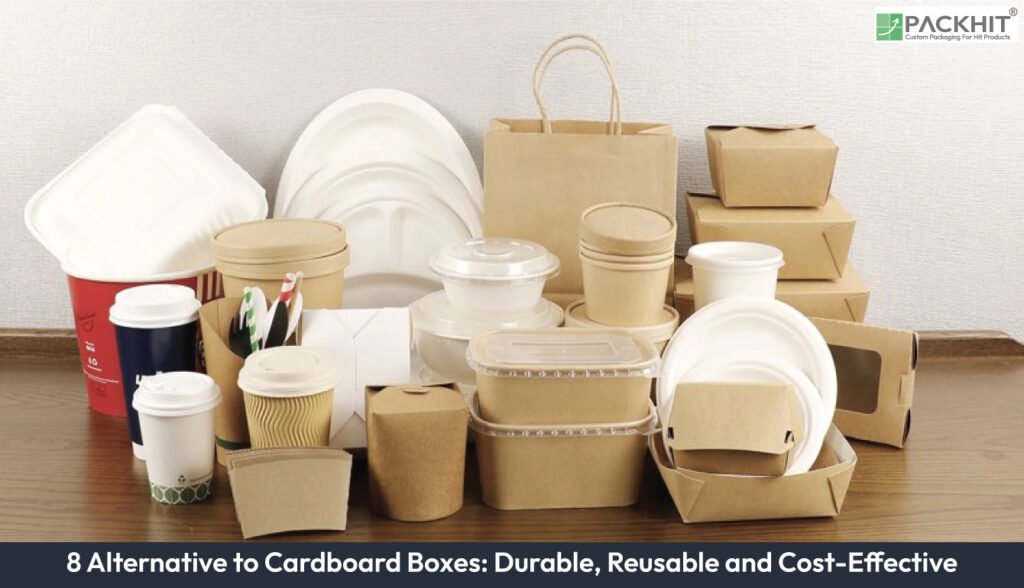
The eight alternatives to cardboard boxes cover flexible wraps, loose-fill cushioning, compostable bio-materials, fibre-based moulded forms and returnable rigid containers. They include corrugated bubble wrap for surface protection, biodegradable peanuts for void fill, cornstarch and seaweed formats for compostable single-use packs, mycelium composites for rigid inserts, moulded pulp for shaped fibre support, recycled board for short-cycle shipping, and reusable plastic crates for closed-loop transport. Each material adds different strengths, such as crush resistance, impact control or compostability, and manufacturers compare these attributes against cardboard boxes, if logistics flow, product mass, or disposal rules shape the pack decision.
The eight alternatives to cardboard boxes are given below:
- Corrugated Bubble Wrap
- Biodegradable Packaging Peanuts
- Cornstarch Packaging
- Seaweed Packaging
- Mushroom Packaging
- Moulded Pulp Packaging
- Recycled Cardboard and Paper
- Reusable Plastic Crates
1. Corrugated Bubble Wrap
Corrugated bubble wrap protects products without rigid outer boxes if surface impact and abrasion matter more than stacking strength. It combines a fluted paper layer with sealed air bubbles made from low-density polyethylene. Manufacturers use it to wrap glassware, electronics and metal components during transit. Compared with cardboard boxes, it reduces material volume, lowers parcel weight, and adapts to irregular shapes where boxes leave excess void space.
2. Biodegradable Packaging Peanuts
Biodegradable packaging peanuts fill empty space and prevent movement inside shipping packs, if loose-fill cushioning is required. They are made from starch or cellulose derived from corn, wheat, or recycled paper. Typical uses include protecting lightweight items such as cosmetics, ceramics and spare parts. As an alternative to cardboard inserts, they dissolve in water or compost, removing the disposal burden linked to mixed-material box systems.
3. Cornstarch Packaging
Cornstarch packaging replaces petroleum-based foams and rigid cartons in low-load shipments, if compostable single-use packs fit the distribution model. It is made from thermoplastic starch extracted from maize and formed into foams, films or trays. Food containers, protective inserts and mailers use this material. Against cardboard boxes, cornstarch formats cut fossil content and break down under controlled composting conditions.
4. Seaweed Packaging
Seaweed packaging serves short-life wrapping and sachet applications where rapid biodegradation matters, if moisture resistance is required for limited durations. It is produced from seaweed polymers such as alginate or agar, harvested from brown and red algae. Uses include dry food pouches, condiment sachets and inner wraps. Compared with cardboard boxes, seaweed formats remove tree fibre use and degrade without industrial processing.
5. Mushroom Packaging (mycelium composites)
Mushroom packaging forms rigid protective shapes that replace polystyrene and heavy cardboard inserts, if shock absorption and shape retention are required. It is made by growing mycelium around agricultural waste such as hemp hurds or straw. Manufacturers use it for furniture, appliances and electronics cushioning. As an alternative to cardboard boxes, it composts after use and maintains strength without synthetic binders.
6. Moulded Pulp Packaging
Moulded pulp packaging supports and separates products using formed fibre structures, if stacking stability and recyclability are priorities. It is made from recycled paper, cardboard and water, pressed into trays, clamshells and end caps. Common uses include egg cartons, drink carriers and device inserts. Compared with cardboard boxes, moulded pulp adds shape-specific protection while remaining within standard paper recycling streams.
7. Recycled Cardboard and Paper
Recycled cardboard and paper reduce virgin fibre use while keeping familiar box performance, if supply chains still depend on foldable cartons. They are made from post-consumer waste such as old corrugated containers and office paper. Uses include shipping boxes, sleeves and dividers. As an alternative to standard cardboard boxes, higher recycled content shortens fibre cycles and lowers material extraction.
8. Reusable Plastic Crates
Reusable plastic crates replace single-use cardboard boxes in closed-loop logistics, if return transport and asset tracking exist. They are made from high-density polyethylene or polypropylene moulded into rigid stackable forms. Food distribution, automotive parts and retail replenishment rely on these crates. Compared with cardboard boxes, they withstand hundreds of trips and reduce total packaging waste over time.
How to Choose the Best Alternative to Cardboard Boxes?
Pick the alternative that matches product fragility, logistics flow and local disposal capacity, if structural strength, reuse cycles or compostable end‑of‑life requirements shape the pack choice.
This comparison table groups eight packaging materials and shows how durability, reuse potential, cost bands and end‑of‑life routes differ across fibre, starch, seaweed, mycelium and plastic formats. It helps manufacturers read performance trade‑offs quickly before selecting a replacement for standard cardboard boxes.
| Alternative (examples) | Durability | Reusability (typical) | Unit cost | End-of-life pathway (examples) |
|---|---|---|---|---|
| Corrugated bubble wrap (fluted + air cells) | Moderate | Moderate (several reuses) | Low–Moderate | Recycling (paper components), repack reuse |
| Biodegradable packaging peanuts (starch/cellulose) | Low–Moderate | Low (single-use) | Moderate | Composting, water dissolution (depending on chemistry) |
| Cornstarch packages (thermoplastic starch foams/films) | Low–Moderate | Low | Moderate–High | Industrial composting or home composting (formulation dependent) |
| Seaweed packages (alginate/agar films) | Low–Moderate | Low | High (current scale) | Biodegradation, marine-safe disposal |
| Mushroom packages (mycelium composites) | Moderate | Low | Moderate–High | Industrial or home composting |
| Moulded pulp packaging (recycled fibre) | Moderate | Low–Moderate | Low | Recycling (paper stream), composting |
| Recycled cardboard and paper (examples: single-wall, double-wall) | High (for corrugated structures) | Moderate (if undamaged) | Low | Recycling (paper mill), repurposing |
| Reusable plastic crates (RPCs; HDPE/PP) | High | High (hundreds to thousands of cycles) | High (upfront) | Reuse, repair, end-of-life recycling |
Clear differences across fibre, starch, seaweed, mycelium and plastic formats show how material structure, service life and disposal pathways create the primary selection drivers for any pack that replaces standard cardboard boxes.