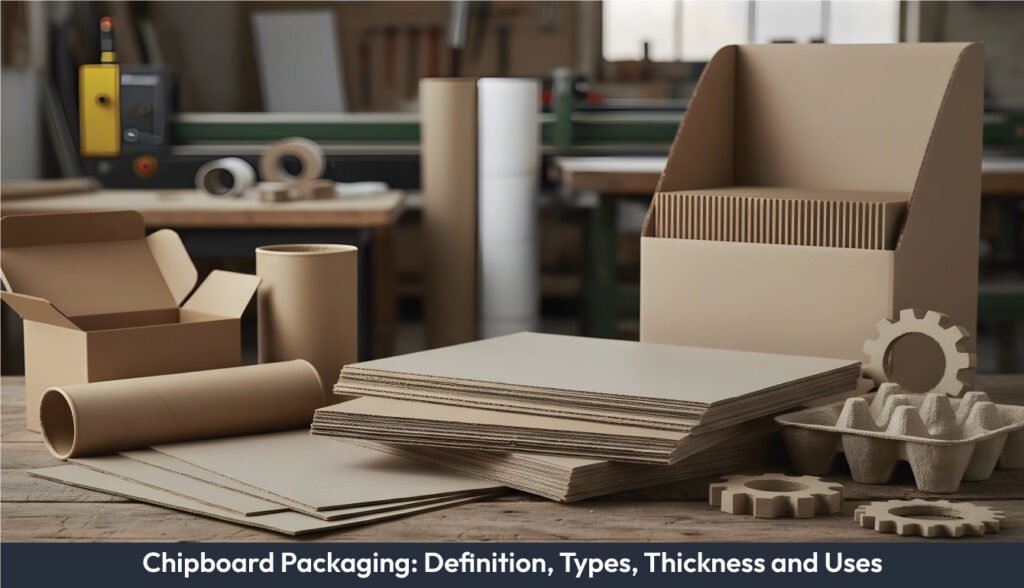
Chipboard packaging is a lightweight, single-layer paperboard formed from compressed recycled fibres, offering a smooth, printable surface for retail cartons. It is produced by pressing recycled paper pulp into consolidated sheets that can be calendered, coated or left uncoated depending on print and performance needs. Available in types such as solid uncoated, kraft, white-lined and poly- or clay-coated variants, chipboard comes in gauges from roughly 16- to 30-point, delivering moderate stiffness suited to light goods. Finishes like clay coats, poly coats, laminates and food-contact barriers improve colour accuracy, moisture resistance and surface durability. Chipboard packaging is widely used in retail packaging, gift boxes, food cartons, inserts and POS displays. It excels where thin profiles, crisp printing and low mass matter. Its limitations appear under heavy loads, high humidity or rough logistics, where corrugated board or plastics may outperform it. Chipboard can support food or moisture-sensitive products only when paired with compliant coatings or barrier layers that prevent fibre migration and shield against humidity.
Chipboard packaging covers lightweight paperboard used in retail, food and gift cartons, explained here through its definition, four types, gauge ranges, stiffness traits and main uses, including cereal boxes and customised gift packs made from printable recycled fibres.
- What is Chipboard Packaging?
- How is Chipboard Produced?
- What are the Types of Chipboard?
- How Thick and Structurally Stiff is Chipboard?
- What Finishes and Coatings Change Chipboard Performance?
- Untreated Chipboard Surfaces
- Clay‑Coated Chipboard
- Poly‑Coated Chipboard
- Laminated Chipboard
- Food‑Contact Barriers
- Where is Chipboard Used, and Which Product Categories Rely on it?
- Retail Packaging uses Chipboard for Print‑Critical Cartons
- Gift Boxes Use Chipboard for Customised Shapes
- Food Packaging Uses Chipboard for Dry-Food Cartons
- Inserts and Dividers Use Chipboard for Internal Control
- Point‑of‑sale (POS) Components use Chipboard for Light Display Parts
- What are the Limitations of Using Chipboard?
- How Does Chipboard Compare with Corrugated Cardboard and Plastic Packaging?
- Can Chipboard be Used for Food or Moisture-sensitive Products?
What is Chipboard Packaging?
Chipboard packaging is a single-layer paperboard used for lightweight, printable retail and consumer-product packaging. It forms as a solid sheet from paper-based fibres, and its smooth surface supports clear graphics and direct printing. The board maintains print quality, keeps mass low and bends cleanly during folding or die cutting. These traits fit shipping boxes, gift boxes and product displays, and they match the needs of cereal cartons and other dry-food packs, if a thin profile and easy customisation matter.
How is Chipboard Produced?
Chipboard is produced by pressing recycled paper fibres and wood pulp under heat and pressure into a consolidated sheet. Manufacturers process post-consumer waste into a pulp, form the sheet on paper machines, and dry and calender the surface to achieve the required smoothness; many operations incorporate FSC- or SFI-certified fibres and closed-loop recycling to reduce environmental impact. Using post-consumer feedstock reduces raw material costs and returns material to the recycling stream after the end of life.
What are the Types of Chipboard?
Chipboard types are split into four structural categories that differ by fibre composition, coating and surface quality. Each category supports specific packaging tasks for manufacturers that handle boxed food, cosmetics or gift items.
Solid Uncoated Chipboard
Solid uncoated chipboard uses compressed recycled fibres and forms a smooth sheet suitable for direct printing. Food brands use it for cereal cartons if a separate liner protects the contents. Gift‑box makers use it for low‑gloss cartons and inserts.
Kraft Chipboard
Kraft chipboard uses brown kraft fibres and carries higher tensile strength than white‑lined grades. Manufacturers specify it for dividers, pads and inserts that keep units positioned inside a secondary pack. Surface texture shows natural fibre colour.
White‑Lined Chipboard
White‑lined chipboard applies a bleached or clay‑coated top layer on a recycled core. Printers use it for colour‑critical retail packs such as cosmetics or supplements. The white surface supports sharper text and cleaner graphics than the brown grades.
Coated and Poly‑Coated Chipboard
Coated chipboard applies clay or polymer layers that add moisture resistance and reduce scuffing. Poly‑coated sheets protect labels during transit and support food packaging if the coating meets food‑contact rules. Dry‑food cartons use this variant when humidity changes occur.
How Thick and Structurally Stiff is Chipboard?
Chipboard thickness depends on gauge selection, which controls how cartons sit, fold and stack. Its stiffness comes from a compressed single layer that holds shape on shelves if loads stay light.
Here are a few aspects that describe how thick and structurally stiff chipboard is:
Chipboard Thickness
Chipboard thickness spans 16‑point to 30‑point gauges, and this range sets how cartons fold, stack and keep shape. Thin sheets fit cereal boxes and dry‑food packs because the profile saves shelf width in stores. Gift‑box lines use mid‑range gauges for inserts that hold position during die cutting and printing. Food plants favour these gauges because they keep cartons compact during replenishment. Cereal producers in particular rely on thin sheets that load easily into formers if humidity stays stable. The sheet’s density also limits bowing on display stands used for snacks and boxed cosmetics.
Chipboard Stiffness
Chipboard stiffness comes from a compressed single layer of recycled fibres, which forms a rigid but thin panel. The structure bends less than standard cardboard and stays flat during long print runs. This flatter surface protects graphics on cereal cartons and gift sets if transport shocks remain low. Sheet uniformity also reduces creasing faults during folding on high‑speed lines.
Chipboard Protection
Chipboard protection suits lightweight goods such as cereals, snacks and small cosmetics, and these items include flakes, bars and compact bottles. The board resists abrasion during short transits and keeps shapes intact on retail shelves. Surface dents form faster than on corrugated board, so brands add poly coats or thin laminates if scuffing repeats during handling. Food makers use inserts when cartons carry multiple units that shift in transit.
Chipboard Limits
Chipboard limits appear under heavy loads because fibre compression weakens under repeated impacts. Corrugated formats replace it for bulk movements or long travel paths if vibration cycles rise. Food and gift producers rely on chipboard for point‑of‑sale displays and boxed goods with light mass, not pallet stacks. The thin profile fits retail layouts, but sacrifices impact resistance during warehouse transfers.
What Finishes and Coatings Change Chipboard Performance?
Finishes and coatings change chipboard performance by altering print quality, surface durability and moisture control for food cartons and gift boxes.
Untreated Chipboard Surfaces
Untreated chipboard surfaces support direct printing that keeps text sharp on cereal cartons and small gift packs. The sheet accepts standard inks and holds colour if humidity stays low, and the recycled fibre pattern remains visible on brown grades used for short promotional runs.
Clay‑Coated Chipboard
Clay‑coated chipboard improves colour accuracy for cosmetics cartons and supplement boxes. The tighter surface controls ink absorption and limits light scuffs during shelf handling. Printers depend on this grade for fine shades that appear on colour‑critical retail units in stores.
Poly‑Coated Chipboard
Poly‑coated chipboard adds moisture control that protects printed surfaces during transit. This coating blocks light humidity changes often seen in food warehouses. Cereal brands rely on it when outer cartons face short-term exposure.
Laminated Chipboard
Laminated chipboard increases surface durability, which prevents label scratches on stacked cartons. A clear film shields printing from abrasion inside multipacks, if units move within secondary boxes. Gift‑box manufacturers use laminates for gloss or matte effects.
Food‑Contact Barriers
Food‑contact chipboard coatings create compliant barriers that block fibre migration into dry foods. These coatings separate the board from cereals or snacks and remain stable during packing lines. Chipboard without these treatments stays outside direct‑contact zones.
Where is Chipboard Used, and Which Product Categories Rely on it?
Chipboard supports three packaging groups: food cartons, gift sets and light retail units. Cereal plants load thin gauges that conserve shelf width if humidity stays low. Gift makers cut panels for seasonal boxes. Retail lines use smooth sheets for colour‑critical prints.
Retail Packaging uses Chipboard for Print‑Critical Cartons
Retail packaging uses chipboard for print‑critical cartons that require smooth surfaces and tight colour control. Brands apply it to cereal boxes, cosmetics cartons and book jackets because the sheet prints cleanly, folds predictably and keeps shelf widths compact in stores. The thin gauge supports tight planograms and stable stacking if loads stay light.
Gift Boxes Use Chipboard for Customised Shapes
Gift boxes use chipboard for customised shapes that depend on consistent fibre density. Makers cut, score and wrap panels to form rigid sets for seasonal ranges, fragrance lines and small homeware. The sheet accepts direct printing or wrapped paper, and recycled content aligns with retail sustainability targets. According to context data from packaging manufacturers (2023), chipboard supports rapid custom runs for short promotions.
Food Packaging Uses Chipboard for Dry-Food Cartons
Food packaging uses chipboard for dry‑food cartons that rely on thin walls and reliable crease profiles. Cereal plants load sheets into formers that maintain square geometry during filling. Coated grades block humidity shifts that appear in warehouse storage, if transit routes pass through mixed environments. Manufacturers add compliant liners when direct‑contact rules apply.
Inserts and Dividers Use Chipboard for Internal Control
Inserts and dividers use chipboard for internal control that fixes units inside secondary boxes. Pads stabilise bottles, bars or multipacks and reduce scratches inside cases. The material carries recycled content and cuts cleanly for die‑cut nests used in small electronics and seasonal gift sets.
Point‑of‑sale (POS) Components use Chipboard for Light Display Parts
Point‑of‑sale components use chipboard for light display parts that require tight print registration. Merchandisers cut headers, shelf talkers and small trays that sit near tills. The thin profile keeps freight mass low and bends cleanly during short installation cycles. Coated grades of chipboard reduce abrasion if units rub during transit.
What are the Limitations of Using Chipboard?
The limitations of using chipboard are mentioned below:
- Chipboard fails under heavy loads because compressed fibres deform under repeated shocks; cereal boxes and gift packs hold shape only during short transits.
- Chipboard supports print‑critical tasks where thin profiles, light mass and recyclable fibres matter, as seen on cereal cartons or custom gift boxes cited in context notes.
- Corrugated board suits rough handling because fluted layers absorb vibration on long routes if pallet stacks carry weight.
- Coated chipboard manages moisture shifts when clay or polymer layers block humidity changes during food warehousing.
- Laminated chipboard supports food‑contact rules if barriers stop fibre migration; plain sheets remain outside direct‑contact zones.
- Barrier materials replace chipboard when high humidity, direct food contact or long‑route compression cycles occur.
How Does Chipboard Compare with Corrugated Cardboard and Plastic Packaging?
Chipboard provides a smoother, more printable surface and a thinner profile than corrugated cardboard, which favours retail presentation and shelf-space conservation; corrugated board provides superior impact resistance for heavy or palletised shipments. Compared with plastic packaging, chipboard typically offers higher recycled content, biodegradability and lower transport energy due to reduced mass, making it a sustainable alternative when moisture and barrier needs are manageable. Choose corrugated for structural protection in rough logistics and chipboard for consumer-facing presentation and cost-sensitive, lightweight units.
Can Chipboard be Used for Food or Moisture-sensitive Products?
Chipboard supports food or moisture‑sensitive products only when a compliant barrier or coating blocks fibre migration and humidity shifts. Plain chipboard is not food‑safe on its own. Coatings and laminations extend chipboard performance in food and moisture‑sensitive applications, and poly‑coated boards add surface protection; compliance with applicable food‑contact regulations applies when coatings sit in direct contact with cereals or snacks. Thin-coated grades help cereal makers conserve shelf space, if humidity stays controlled in storage. Use coated or laminated chipboard if moisture resistance or food‑contact performance is necessary; otherwise, specify an inert barrier material or secondary containment.