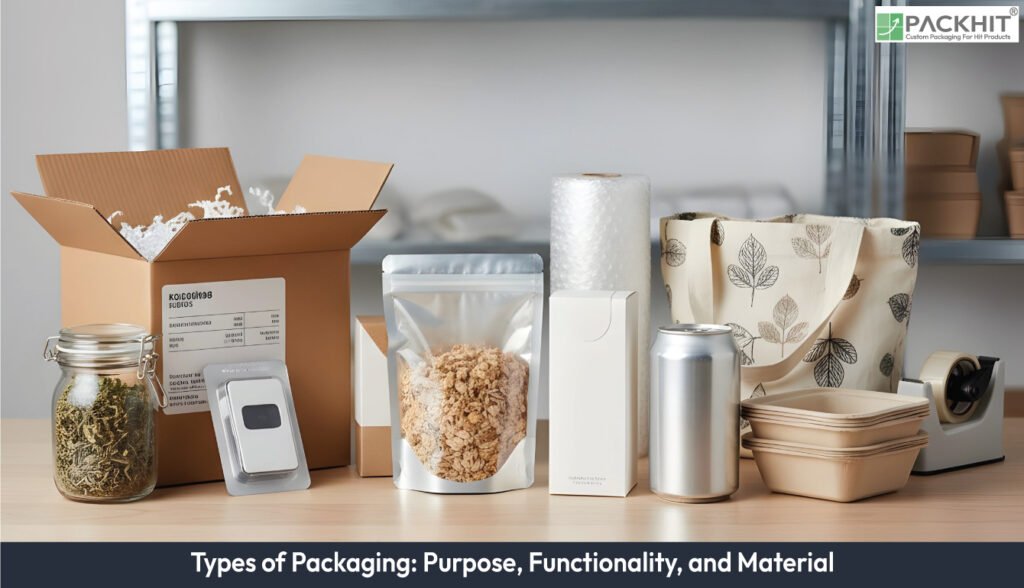
Packaging types are designed based on purpose, functionality, and material to ensure containment, protection, or display. Primary packaging holds the product directly, maintaining hygiene, dosage accuracy, and consumer visibility, such as bottles, cartons, or trays. Secondary packaging groups primary units for storage and handling efficiency, adding scuff resistance and inventory tracking through boxes or shrink wraps. Tertiary packaging provides the outer transport layer, stabilising pallets and preventing damage during transit. E‑commerce packaging protects goods in parcel handling with mailers, padded envelopes, and void-fill materials to reduce returns. Retail packaging aids shelf presentation and consumer selection with printed boxes or clamshells, while shelf-ready packaging simplifies stocking through perforated trays or display-ready shippers. Frustration-free packaging minimises excess layers for easy unboxing, flexible packaging offers lightweight, moisture-resistant pouches, and rigid packaging provides stable, protective containers. Sustainable and compostable packaging uses recyclable, mono-material, or biodegradable substrates to reduce environmental impact while maintaining product integrity.
What are the Types of Packaging?
Packaging types follow a layered pattern of purpose, functionality, and material that are selected for containment, protection, or display in packaging. Each type occupies a point in production, storage, or retail movement and uses defined substrates such as paperboard, plastics, or metal.
The different types of packaging are detailed below:
Primary Packaging
Primary packaging holds the product, controls contamination, and supports dosing accuracy. This layer contacts liquids, powders, or solids and stabilises goods through filling and consumer handling. Bottles for beverages, paperboard cartons for cereals, and thermoformed trays for produce illustrate common formats, if manufacturers want direct-contact containment with clear labelling zones. This type shapes how a consumer identifies quantity, ingredients, or usage instructions, and it anchors product presentation before any secondary layers surround it.
Secondary Packaging
Secondary packaging groups multiple primary units and structures how products move through storage and retail stocking. Corrugated sleeves, chipboard boxes, and shrink‑wrapped bundles hold sets of items, so teams load shelves faster if stores manage frequent restocks. This layer adds scuff resistance around printed primary surfaces and balances weight inside larger cartons. It also carries batch marks or barcode data that warehouses scan before palletisation, which keeps inventory rotation predictable.
Tertiary Packaging
Tertiary packaging forms the outer transport layer that stabilises shipments on pallets or freight racks. Stretch‑wrapped loads, pallet skirts, and stacked corrugated cases distribute pressure across corners and prevent collapse if trailers bounce or tilt during transit. This layer limits crush points, reduces vibration transfer, and builds a modular footprint for forklifts. Shippers rely on it because it sets the final protective boundary before goods reach distribution centres or retail backrooms.
E‑commerce Packaging
E‑commerce packaging controls impact, moisture, and surface abrasion during parcel handling and last‑mile transport. Mailer boxes, padded envelopes, and void‑fill papers create compression buffers that limit corner crush and product shift if carriers stack loads in irregular patterns. This layer stabilises primary containers, keeps printed panels flat for barcode readability, and reduces return rates linked to scuffs or deformation. Brands apply it across pick‑and‑pack stations because each parcel moves through 3 to 6 touchpoints before delivery, and consistent structures cut claim frequency across parcel networks. In this guide, we show types on the market and practical cues that help manufacturers match e‑commerce packaging with product weight, surface fragility, and carrier‑specific movement cycles.
Retail Packaging
Retail packaging structures how consumers read, scan, and pick products in crowded aisles. Printed boxes, clamshells, and hanging cards hold UPC data in stable zones and guide shelf placement if stores manage narrow facings or peg displays. This form balances colour accuracy, surface rigidity, and brand copy so consumers identify quantity and variant details quickly. Manufacturers select formats that survive repeated handling without panel collapse and maintain clean presentation through daily restocking cycles.
Shelf‑Ready Packaging
Shelf‑ready packaging cuts unpacking steps and stabilises product presentation in store aisles. Perforated corrugated trays, tear‑away lids, and display‑ready shippers move from pallet to shelf in one action if retail teams handle frequent restocks. This format keeps rows aligned, protects primary panels during handling, and holds barcode zones in fixed positions for quick scanning. Manufacturers use it to shorten shelf‑fill cycles and reduce the 20% time loss linked to carton‑by‑carton unpacking in busy stores.
Frustration‑Free Packaging
Frustration‑free packaging removes excess layers and keeps openings simple for faster unboxing. It uses right‑sized corrugated mailers, paper‑based cushions, and peel‑open seams that cut waste if products move through parcel networks. This format reduces damage rates because tight internal fits limit product shift, and it keeps disposal easy through mono‑material panels. Manufacturers pick it for e‑commerce goods that require clean presentation without plastic ties or hard‑to‑tear blisters.
Flexible Packaging
Flexible packaging uses thin substrates that bend while keeping moisture and oxygen within controlled limits. Polyethene pouches, metallised laminates, and form‑fill‑seal bags cut freight weight and lower storage volume if products contain volatile or hygroscopic ingredients. This format shapes tight seals around powders or liquids and reduces headspace that causes oxidation. Brands choose it because converters form custom widths or gusset profiles that stabilise upright displays in retail environments.
Rigid Packaging
Rigid packaging relies on fixed‑shape containers that resist compression and panel deformation. Glass jars, metal tins, and injection-moulded tubs block oxygen ingress and protect contents if loads stack during warehouse cycles. This format maintains label flatness for accurate scanning and holds geometry through temperature shifts in distribution. Manufacturers use it for goods that need stable headspace, defined torque values on closures, or tamper‑evident seals that prevent breach during transit.
Sustainable Packaging
Sustainable packaging uses recyclable, compostable, or mono‑material substrates that keep waste streams simpler for municipal recovery systems. Moulded fibre trays, mono‑material pouches, and recycled paperboard cartons reduce mixed‑layer contamination if manufacturers target lower disposal friction. This form supports stable shelf presentation because fibre panels resist scuffing in handling cycles, and converters shape them with tight tolerances that maintain barcode clarity. Brands pick defined material families such as recycled PET or kraft board because these hold print density during long storage intervals and meet rising state‑level recovery mandates. The format aligns with demand for lighter freight loads if distribution centres track emissions tied to packaging mass.
Compostable Packaging
Compostable packaging breaks down through controlled microbial activity and returns organic material to soil systems. It uses fibres, starch blends, and PLA films that decompose under heat and moisture in certified industrial environments. Panels hold graphics with low‑migration inks, and converters shape trays, wraps, or pouches for products that tolerate short oxygen‑barrier cycles. Brands pick it because it reduces landfill load through materials sorted as organics, if recovery partners run industrial composting lines. This format supports clear product presentation and stable stacking during short‑term storage. In this guide, we show types on the market and give quick selection cues so manufacturers match compostable formats with moisture‑sensitive goods or lightweight retail items.
Reusable Packaging
Reusable packaging circulates through repeated trips and cuts single‑use waste volumes across distribution loops. Crates, refillable containers, and returnable totes move product lines between factories and retailers with fixed dimensions that protect surfaces. These formats hold shape through cleaning cycles and retain barcode clarity across rotations. Manufacturers apply them if freight routes remain stable and return logistics keep containers in circulation.
Biodegradable Packaging
Biodegradable packaging breaks down through microbial activity and reduces residual mass in soil environments. Starch blends, coated papers, and cellulose films decompose within controlled humidity and temperature cycles. Panels carry graphics with low‑migration inks and support dry goods that tolerate moderate barrier performance. Producers pick these substrates if disposal routes link to composting or natural‑fibre recovery streams.
Carbon Neutral Packaging
Carbon neutral packaging balances production emissions through quantified offsets that track energy use across material stages. Fibre boards, mono‑material plastics, and mixed formats enter carbon accounting where converters document transport distance, substrate weight, and fuel source. Brands adopt these formats if reduction targets extend across manufacturing cycles and distributors monitor freight‑linked emissions. This category aligns with state rules asking for transparent lifecycle data.