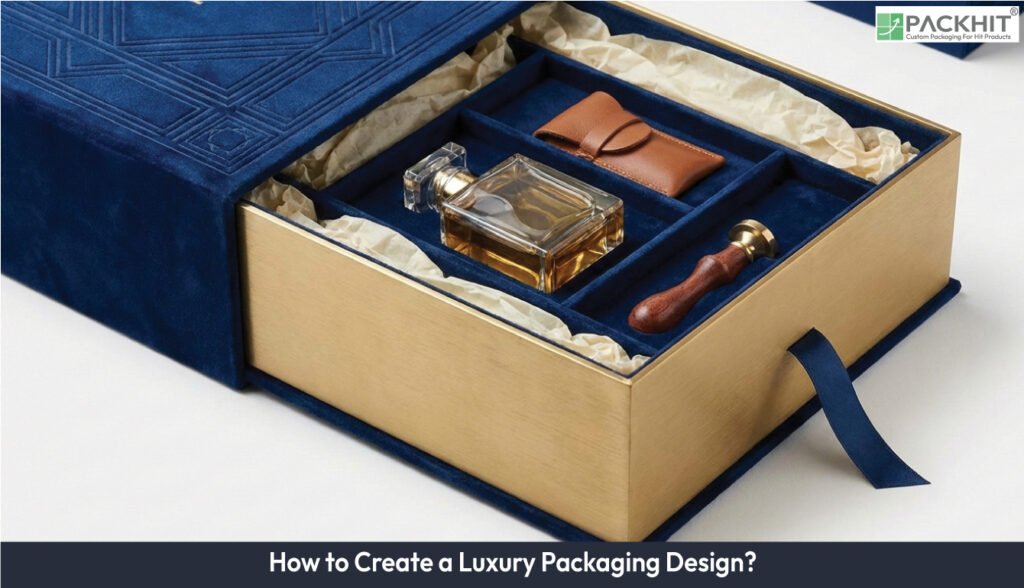
To create a luxury packaging design, define objectives and constraints, choose a substrate with coating, create structural layouts, design visuals, and validate prototypes. Luxury packaging typically relies on dense substrates, clean graphics, and controlled tactile accents, such as embossing, foil, and soft-touch coatings, to shape how consumers perceive quality. The development process moves from defining the brief to selecting substrates and finishes, building accurate dielines, planning restrained graphics, specifying sensory accents, and validating prototypes. Accuracy in luxury packaging design depends on careful material control, tight colour management, and precise registration, while also balancing sustainability through mono-material fibre solutions and low-impact finishes. These decisions directly influence purchase behaviour by strengthening perceived value and consumer trust. Current trends in luxury packaging design emphasise minimalism, tactile textures, fibre-based materials, and consistent unboxing structures, reflecting how luxury packaging continues to merge aesthetics, functionality, and environmental responsibility.
- How to Create Luxury Packaging Design?
- 1. Define the Brief and Constraints
- 2. Select Substrate and Surface Finish
- 3. Build Structural Dielines
- 4. Plan Graphic Composition
- 5. Specify Tactile and Optical Accents
- 6. Prototype and Validate
- What are the Characteristics of the Luxury Packaging Design?
- How to Ensure Accurate Luxury Packaging Design?
- How to Balance Sustainability with Luxury Packaging Design?
- How Does Luxury Packaging Design Influence Purchasing Decisions?
- What are the Emerging Trends in Luxury Packaging Design?
How to Create Luxury Packaging Design?
To create a luxury packaging design, define production constraints first and map each stage of the process to material, graphic and structural choices that signal quality. Below is a six-step process for creating effective luxury packaging design.
- Define the brief and constraints
- Select substrate and surface finish
- Build structural dielines
- Plan graphic composition
- Specify tactile and optical accents
- Prototype and validate
1. Define the Brief and Constraints
Define brief and constraints by capturing target cost band, product mass and handling conditions. This mapping sets board calliper ranges, finish options and print processes. The brief also identifies the retail channel, because counter displays use different surface treatments than e‑commerce shipping.
2. Select Substrate and Surface Finish
Select substrate and surface finish by choosing rigid board, SBS paperboard or coated stock. Surface finish determines tactile signal and light behaviour. Soft‑touch, textured varnish or uncoated fibre boards create the first quality cue in hand, if the package sits in a boutique setting.
3. Build Structural Dielines
Build structural dielines by setting panel clearances, glue flaps and crease allowances. Structural dielines regulate stack strength and opening geometry. Lift‑lid, book‑style or drawer formats behave differently under load and shape the unboxing sequence.
4. Plan Graphic Composition
Plan graphic composition by limiting the colour set to one dominant hue with a single accent and by specifying a tight typographic hierarchy. Graphic composition supports restraint if luxury cues depend on clarity and negative space. Printed panels carry only essential information to avoid clutter.
5. Specify Tactile and Optical Accents
Specify tactile and optical accents by assigning emboss, deboss, spot metallics or pattern textures to selected zones. Tactile and optical accents create controlled sensory contrast. Production teams use precise registration if emboss and foil appear on the same motif.
6. Prototype and Validate
Prototype and validate by producing one functional sample for stress, closure and print tests. Prototype and validate loops confirm ccalliperstability, closure reliability and colour accuracy under store lighting. Converters often perform drop tests and humidity checks for products that transit long distances.
What are the Characteristics of the Luxury Packaging Design?
The characteristics of luxury packaging design centre on material density, controlled tactile contrast and restrained graphic language.
- Material density: Rigid boards and thick SBS that add mass. For example, lift‑lid perfume boxes and drawer cartons for confectionery.
- Tactile contrast: Blind emboss, deboss, or micro‑texture that changes finger drag. For example, embossed crests on fragrance boxes.
- Colour restraint: One dominant hue with a single accent. For example, two‑tone cartons in beauty categories.
- Surface control: Soft‑touch or matte varnish that mutes glare. For example, muted coatings on skincare cartons.
- Structural clarity: Lift‑lid, book‑style or drawer formats that regulate opening force. For example, magnetic‑closure gift boxes.
How to Ensure Accurate Luxury Packaging Design?
To ensure accurate luxury packaging design, control material density, restrict graphic elements and assign precise finishes that mark quality during first contact.
- Brief: Define cost band, handling conditions and retail channel; map these details to board calliper and finish range.
- Mass: Use dense substrates such as rigid board or thick SBS; these materials shift perceived product weight in the hand.
- Surface: Apply soft‑touch, micro‑texture or matte varnish; these finishes reinforce luxury cues without excessive print.
- Graphics: Limit colour to a dominant hue with one accent; keep typographic hierarchy tight and concise.
- Accents: Assign foil, blind emboss or texture to controlled zones; reserve complex registration for motifs that justify it.
- Structure: Build dielines with accurate clearances; lift‑lid or drawer formats regulate unboxing rhythm.
- Sample: Produce one functional prototype; record deviations in colour, closure force and crease behaviour.
- Testing: Use climatic, drop or adhesive tests for categories that transit long distances.
How to Balance Sustainability with Luxury Packaging Design?
Balancing sustainability with luxury packaging design uses dense fibre substrates, restrained graphics and low‑impact finishes that keep luxury cues intact while reducing composite waste. Luxury packaging relies on material mass and precise tactile signals, and those same signals can come from single‑material boards with chain‑of‑custody verification. Foil volumes drop when blind emboss or micro‑texture supplies contrast. Structural teams switch to mono‑material inserts such as folded SBS or moulded pulp for categories that ship long distances. Adhesive use narrows because lift‑lid and drawer structures carry their reveal through crease geometry. The balance forms when material density, tactile geometry and clean graphics stay consistent with luxury cues while substrates, inserts and finishes reduce multi‑layer waste.
How Does Luxury Packaging Design Influence Purchasing Decisions?
Luxury packaging design influences purchasing decisions by shifting quality judgement during first contact through material density, restrained graphics and controlled tactile contrast. Consumers form quick assessments from substrate weight, colour precision and surface texture, if those cues match category expectations. Thick, rigid board increases perceived product value; soft‑touch coatings mute glare and create a slow‑hand feel that signals care; blind embossing on a small logo adds micro‑shadow that draws attention without clutter. According to design groups in 2023, about 40 per cent of buyers in beauty and fragrance categories change purchase intent after touching textured cartons. Examples appear in rigid perfume boxes that use lift‑lid structures, in confectionery cartons that use foil on a small crest, and in beverage gift boxes that use drawer formats for controlled reveal. These packaging types shift perceived trust because structural weight, tactile geometry and colour restraint guide early judgement.
What are the Emerging Trends in Luxury Packaging Design?
Emerging trends in luxury packaging design focus on material density, restrained graphics and controlled sensory cues that tie luxury signals to recyclability goals. Designers push fibre‑based boards with verified chain‑of‑custody, if a brief limits composites. Colour systems shift to two‑tone palettes that use negative space as a clarity device. Digital short‑run print gains use during seasonal drops, as converters cut make‑ready waste for low‑volume SKUs. Structural formats are moving toward drawer and lift-lid boxes, where the opening force remains consistent across runs. Packaging for the fragrance and food categories incorporates mono-material inserts, such as pulp trays or folded SBS cradles, to eliminate foam. These trends show how luxury packaging design pivots toward dense substrates, minimal graphic language and controlled tactile geometry.