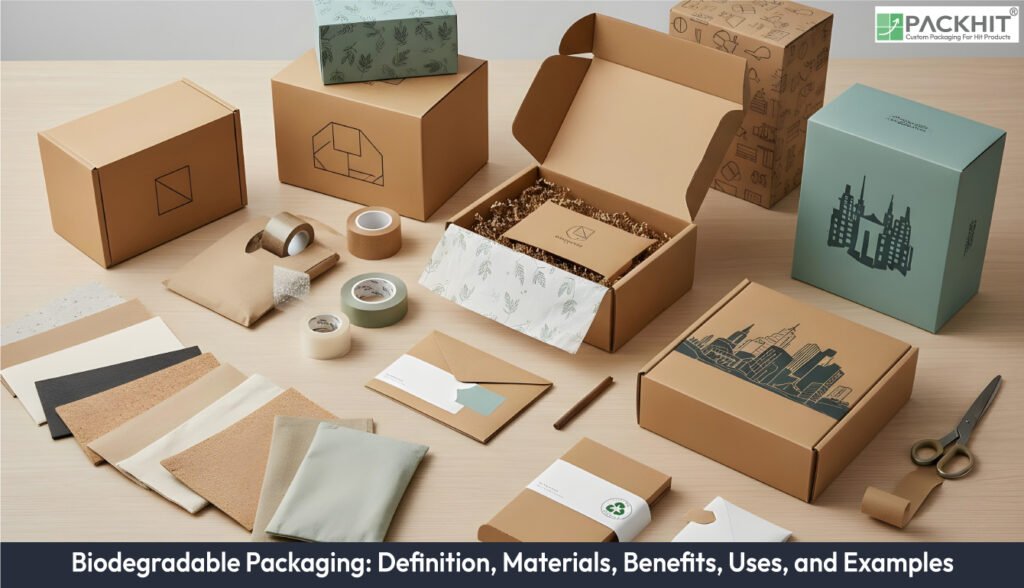
Biodegradable packaging offers sustainable alternatives that support environmental goals while maintaining product protection. Options include a range of plant-based, fibre, and bio-derived materials suitable for different applications. The benefits of biodegradable packaging include waste reduction, improved disposal outcomes, and alignment with sustainability initiatives. Adoption of biodegradable packaging involves thoughtful selection, testing, and guidance for end-of-life handling. Emerging developments in biodegradable packaging focus on advanced materials, scalable solutions, and innovative formats that enhance performance and broaden practical uses.
- What is Biodegradable Packaging?
- What Materials are Used in Biodegradable Packaging?
- Polylactic Acid (PLA)
- Pulp Thermoformed Packaging
- Mushroom Mycelium
- Seaweed Films
- Starch-Based Bioplastics
- Cellulose-Based Films
- Chitosan
- Bagasse
- Palm Leaf Materials
- Hemp Fibre
- What are the Environmental Benefits of Biodegradable Packaging?
- Reduced Plastic Pollution
- Lower Microplastic Formation
- Eased Landfill Pressure
- Decreased Risk to Wildlife
- Improved Waste-Stream Turnover
- What are the Primary Uses of Biodegradable Packaging?
- Food Packaging
- Foodservice Disposables
- E-Commerce and Shipping Packaging
- Retail and Consumer Goods Packaging
- Agricultural and Produce Distribution
- What are the Risks and Limitations of Biodegradable Packaging?
- What are the Latest Trends in Biodegradable Packaging?
- How Does Biodegradable Packaging Differ From Compostable Packaging?
What is Biodegradable Packaging?
Biodegradable packaging is packaging designed to decompose by biological activity into simpler natural compounds when placed in suitable environments. The material type of biodegradable packaging is classified by end-of-life behaviour rather than origin. The primary use of biodegradable packaging focuses on eco-friendly packaging that communicates environmental responsibility.
What Materials are Used in Biodegradable Packaging?
Biodegradable packaging relies on materials (polylactic acid, starch-based bioplastics, cellulose-based films, seaweed, etc.) that break down through natural microbial activity while still delivering functional strength, safety, and product protection. The most widely used materials are outlined below.
Polylactic Acid (PLA)
Polylactic acid comes from fermented plant sugars and supports transparent cups, trays, clamshells, and lightweight containers in food and retail packaging. The polymer breaks down in controlled industrial composting conditions where heat and humidity activate microbial digestion. PLA offers clarity and stiffness that mimic conventional plastics, which makes it a common choice for biodegradable packaging formats.
Pulp Thermoformed Packaging
Pulp thermoforming uses recycled paper fibres to create inserts, trays, containers, and protective shells. Heat and pressure form rigid structures that maintain strength during transport. Fibre porosity accelerates moisture absorption and microbial breakdown, placing pulp packaging firmly within biodegradable solutions.
Mushroom Mycelium
Mushroom mycelium grows around agricultural waste and creates custom protective shapes for electronics, cosmetics, and fragile goods. The fungal network dries into rigid forms that replace synthetic foams. Organic structure and low-density composition support fast decomposition in home or industrial composting.
Seaweed Films
Seaweed extracts produce flexible, edible, or water-soluble films used for single-serve sachets, wraps, and dry-goods pouches. Marine algae regenerate quickly without farmland or freshwater inputs, which strengthens sustainability performance. Thin-film construction allows rapid biological breakdown in natural environments.
Starch-Based Bioplastics
Starch-based materials come from corn, potatoes, or tapioca and form films, foams, loose-fill cushioning, and flexible bags. Natural starch granules allow microbes to access and digest the material quickly in composting systems. Starch blends replace petroleum foams and reduce long-term waste accumulation in protective packaging.
Cellulose-Based Films
Cellulose films originate from processed plant fibres and deliver breathable, transparent wrapping for produce, bakery items, and dry foods. The film structure absorbs moisture and supports rapid microbial action during end-of-life breakdown. Fibre-based chemistry ensures clean decomposition without leaving persistent residues, making the films well-suited for biodegradable packaging.
Chitosan
Chitosan comes from chitin found in crustacean shells and forms coatings, films, and antimicrobial layers for perishables. Natural biopolymer chains degrade through enzymatic activity in soil and compost environments. Chitosan adds functional value through spoilage reduction while still meeting biodegradable packaging requirements.
Bagasse
Bagasse arises from leftover sugarcane fibre and forms hot-food containers, plates, trays, and clamshells. Heat and pressure bind the fibres into strong shapes that resist moisture and oils during use. Fibrous composition allows microorganisms to convert the material into compost without leaving harmful residues.
Palm Leaf Materials
Palm leaf materials come from naturally fallen fronds that are cleaned, pressed, and moulded into sturdy packaging items such as bowls, trays, and plates. Fibre strength supports single-use applications without coatings or additives. Natural plant structure breaks down safely after disposal, which makes palm leaf packaging fully biodegradable.
Hemp Fibre
Hemp fibre produces robust papers, moulded boards, and speciality packaging for wraps, labels, sleeves, and small boxes. Strong cellulose content maintains durability through the packaging lifecycle while still supporting biodegradation. Fast-growing hemp crops reduce pressure on wood pulp and contribute to lower-impact packaging systems.
What are the Environmental Benefits of Biodegradable Packaging?
Biodegradable packaging delivers measurable ecological gains by reducing long-term waste persistence and improving how materials cycle through natural and managed disposal systems. The key benefits include.
Reduced Plastic Pollution
Reduced plastic pollution arises from materials that decompose instead of accumulating for decades. Faster biological breakdown lowers the volume of persistent fragments entering soil, waterways, and marine environments. Shorter persistence directly limits long-term contamination loads.
Lower Microplastic Formation
Lower microplastic formation results from materials that break down biologically rather than fracture into smaller synthetic particles. Microbial digestion prevents the formation of stable microplastics that spread through air, food chains, and aquatic systems.
Eased Landfill Pressure
Eased landfill pressure comes from packaging that reduces mass residence time in disposal sites. Faster decomposition frees landfill space more quickly and cuts the long-term management burden associated with durable plastics.
Decreased Risk to Wildlife
Decreased risk to wildlife emerges when packaging avoids persistent fragments that cause ingestion, entanglement, or internal blockage. Biodegradable materials convert into biomass and natural compounds, which reduces harm to terrestrial and marine species.
Improved Waste-Stream Turnover
Improved waste-stream turnover results from materials that break down within months rather than decades. Short end-of-life cycles increase throughput in composting and organic recycling systems, which strengthens circularity and lowers environmental load.
What are the Primary Uses of Biodegradable Packaging?
Biodegradable packaging supports applications where products enter composting, organic recycling, or rapid biological breakdown after use. The main uses across different sectors are outlined below.
Food Packaging
Food packaging and foodservice disposables widely use biodegradable materials for fresh produce wraps, bakery liners, meal trays, prepared-meal pouches, plates, cups, clamshells, cutlery, and takeaway containers. Short product lifecycles and frequent food contamination make compostable formats practical in both segments. Fibre, biopolymer, bagasse, PLA, and moulded fibre structures maintain freshness, withstand heat and hygiene demands, and support controlled end-of-life decomposition instead of long-term waste accumulation.
Foodservice Disposables
Foodservice operations use biodegradable plates, cups, clamshells, cutlery, and takeaway containers. Single-use formats suit rapid turnover and benefit from materials that decompose instead of lingering in waste systems. Heat-resistant bagasse, PLA, and moulded fibre meet functional and hygiene requirements for on-the-go consumption.
E-Commerce and Shipping Packaging
E-commerce brands rely on compostable mailers, moulded-pulp inserts, fibre-based cushioning, and recycled-paper envelopes. Lightweight formats reduce transport emissions while supporting clean decomposition after delivery. Biodegradable materials replace plastic films and foams in protective and outer shipping roles.
Retail and Consumer Goods Packaging
Retail goods use biodegradable films, trays, sleeves, and rigid packs for cosmetics, small electronics, and household items. Fibre structures and plant-based polymers meet branding needs while offering reduced environmental persistence. Compostable packaging also supports sustainability claims for eco-positioned products.
Agricultural and Produce Distribution
Agricultural supply chains adopt biodegradable trays, produce baskets, seedling pots, and breathable films. Rapid turnover and organic waste recovery infrastructure make biodegradation viable at distribution centres and farms. Natural fibre packaging aligns with produce handling and soil-return practices.
What are the Risks and Limitations of Biodegradable Packaging?
Risks and limitations of biodegradable packaging include dependence on proper disposal infrastructure, incompatibility with mechanical recycling systems, potential toxin release from certain additives, unclear labelling that leads to misrouting, and higher production costs.
- Biodegradable materials depend on proper infrastructure for disposal and biological degradation. Without suitable composting or organic systems, expected environmental benefits may not be realised.
- Many biodegradable products are not compatible with existing mechanical recycling systems and must be directed to compost or organic waste streams.
- Certain formulations or additives release harmful residues during decomposition, making ecotoxicity testing essential for certified compostable materials.
- Labels often fail to clearly communicate required disposal methods or decomposition time, which leads to misrouting and reduced environmental impact.
- Unit production costs for biodegradable packaging are generally higher than conventional materials, influencing procurement decisions. Prices are expected to decrease as production scales up and supply expands.
What are the Latest Trends in Biodegradable Packaging?
Current developments in biodegradable packaging span market adoption, material innovation, production scaling, and cost trends.
- Businesses are moving towards integrating sustainable materials into their product lines.
- Consumer demand for compostable and biodegradable formats has risen steadily in recent years.
- Research focuses on developing bio-based polymers with improved barrier and mechanical properties to match or exceed conventional plastics while remaining biodegradable.
- Scaling of certified compostable film production supports broader commercial availability and improves consistency for industrial applications.
- Exploration of edible films, protein-based films, and polysaccharide alternatives targets niche food applications, providing functional packaging with reduced environmental impact.
- Increased production and a larger supplier base are expected to lower unit costs, making biodegradable packaging more competitive with conventional materials.
How Does Biodegradable Packaging Differ From Compostable Packaging?
Biodegradable and compostable packaging differ in decomposition time, certification, and environmental assurance. The table below highlights these distinctions clearly.
| Feature | Biodegradable Packaging | Compostable Packaging |
|---|---|---|
| Breakdown Process | Materials that naturally break down through microbial action over time | Materials that break down under specific conditions within a defined timeframe and pass standardised tests |
| Decomposition Time | Varies widely, may take months to years, depending on the material and environment | Fixed timeframe defined by certification (e.g., ASTM D6400, EN 13432, BPI) |
| Testing and Certification | Not always certified; breakdown is general and environment-dependent | Certified through standardised tests for disintegration, biodegradation, and ecotoxicity |
| Environmental Assurance | Partial; effectiveness depends on local conditions and disposal methods | Highly certified to ensure safe, complete composting in industrial or home compost environments |
| Typical Examples | PLA, PHA, starch-based plastics, cellulose films | PLA, PHA, PBAT blends, certified compostable films and trays |
| Labelling | Often generic, may not indicate time or disposal method | Includes certification marks and disposal guidance to ensure correct composting |
Understanding the differences between biodegradable and compostable packaging helps businesses and consumers choose the right materials and disposal methods to achieve intended environmental benefits.