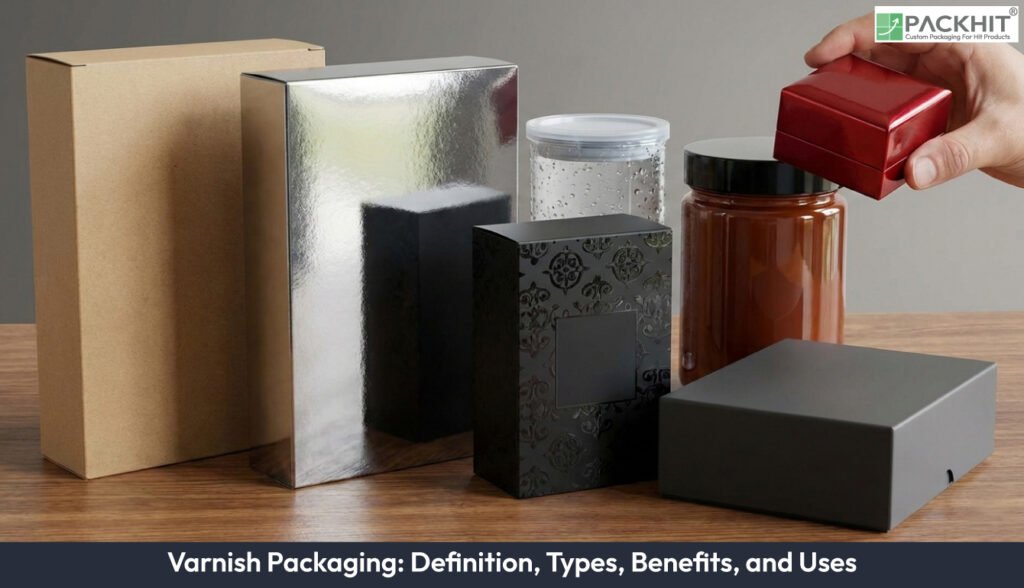
Varnish in packaging adds a clear coating to printed surfaces to enhance visual appeal, protect prints, and adjust tactile qualities. Various finishes, such as gloss, matte, satin, textured, and pearlescent, create different visual and touch effects, while multiple formulations, including water-based, UV-cured, solvent-based, oil-based, and acrylic, influence drying, durability, and handling. Applications of varnish support colour enhancement, selective detailing, and abrasion resistance, helping packaging maintain quality and convey brand value. Industries such as food, cosmetics, pharmaceuticals, and retail use varnish to preserve print integrity and regulate surface properties during storage and transport. Environmental considerations, coating methods, and production constraints shape varnish performance, balancing aesthetics, functionality, and sustainability.
- What is Varnish in Packaging?
- What Types of Varnish are Used in Packaging?
- Finish-Based Varnish Types
- Formulation-Based Varnish Types
- What are the Curing and Application Considerations for Varnish in Packaging?
- What are the Benefits of Using Varnish in Packaging?
- Enhanced Colour Appeal
- Refined Surface Finish
- Emphasised Design Elements
- Improved Tactile Experience
- Strengthened Surface Protection
- Increased Environmental Resistance
- Extended Longevity
- Simplified Cleaning
- Customizable Visual Effects
- What are the Uses of Varnish in Packaging?
- What Sustainability Options and Constraints Apply to Varnish in Packaging?
- How is Varnish Applied in Print Workflows?
- What Functional Outcomes Does Varnish Provide in Packaging?
- What are the Limitations, Hazards, and Common Faults of Varnish Packaging?
What is Varnish in Packaging?
Varnish in packaging refers to a transparent coating applied over printed ink to form a clear surface film. Varnish in packaging protects printed graphics and alters visual and tactile properties. The finish functions as a coating used on printed substrates during the final production stage. The material consists of a varnish formulation whose composition affects drying behaviour, handling performance, and environmental profile. The clear film preserves colour visibility while increasing colour depth and surface protection.
What Types of Varnish are Used in Packaging?
Types of varnish used in packaging differ by finish and formulation, each offering unique benefits for branding, protection, and sensory impact.
Finish-Based Varnish Types
Finish types determine the visual and tactile effect of packaging, influencing perception and usability.
- Gloss Varnish: Produces a bright, reflective surface that intensifies colour depth and highlights details, ideal for attention-grabbing packaging.
- Matte Varnish: Delivers a smooth, non-reflective finish that softens the appearance and reduces glare, making it suited for elegant, understated designs.
- Satin Varnish: Balances sheen and subtlety, offering a gentle gloss with soft texture for versatile branding applications.
- Soft-Touch Varnish: Provides a velvety, tactile surface that conveys premium quality and encourages physical engagement with the packaging.
- Textured Varnish: Adds patterns or raised effects to create visual interest and an interactive sensory experience.
- Pearlescent Varnish: Imparts iridescent, multi-tonal effects that add sophistication and distinctive appeal.
Formulation-Based Varnish Types
Chemical composition affects durability, environmental compatibility, and suitability for different packaging contexts.
- Water-Based Varnish: Uses water as a solvent, offering eco-friendly properties and food-safe applications while maintaining moderate durability.
- UV-Cured Varnish: Hardens instantly under ultraviolet light, providing strong abrasion resistance and suitability for high-speed production lines.
- Solvent-Based Varnish: Offers superior moisture and chemical resistance, ideal for challenging environmental conditions, but requires careful handling due to VOCs.
- Oil-Based Varnish: Utilises natural or synthetic oils to provide a durable finish, often chosen for artisanal or speciality packaging.
- Acrylic-Based Varnish: Ensures high clarity, flexibility, and long-term colour retention, making it a popular choice for premium designs.
What are the Curing and Application Considerations for Varnish in Packaging?
Varnish selection also depends on application technique and layer thickness. Thin coatings preserve print detail and substrate feel, while thicker layers enhance gloss, texture, or relief effects but may require longer curing and careful handling. Spot or selective application can create contrast, highlight specific areas, or achieve specialised effects. Varnish choice directly influences packaging aesthetics, durability, and user experience, making it a critical element in design and production planning.
What are the Benefits of Using Varnish in Packaging?
The use of varnish in packaging delivers multiple advantages, including surface protection, colour stability, moisture control, tactile feel, and production efficiency. enhance visual appeal, tactile experience, and durability. These benefits improve brand perception, protect printed surfaces, and increase overall packaging value.
Enhanced Colour Appeal
Enhanced colour appeal amplifies the depth and saturation of printed graphics. Varnish intensifies hues and sharpens details, making packaging more eye-catching and visually striking.
Refined Surface Finish
Refined surface finish creates a polished or sophisticated appearance. Gloss, matte, satin, and soft-touch varnishes allow brands to achieve either high-gloss brightness or subtle elegance, depending on design goals.
Emphasised Design Elements
Emphasised design elements highlight logos, images, or text areas. Spot varnish or selective coatings draw consumer attention to key branding components and product information.
Improved Tactile Experience
Improved tactile experience enhances the feel of packaging. Soft-touch and textured varnishes provide velvety or patterned surfaces, encouraging physical interaction and signalling premium quality.
Strengthened Surface Protection
Strengthened surface protection shields printed areas from scratches, scuffs, and mechanical wear. Varnish preserves the integrity of packaging during handling, storage, and transport.
Increased Environmental Resistance
Increased environmental resistance protects packaging against moisture, humidity, oils, and chemicals. Specific varnish formulations maintain print clarity and substrate stability under varied conditions.
Extended Longevity
Extended longevity prolongs the functional life of packaging. Varnish reinforces the substrate, prevents peeling or tearing, and maintains colour vibrancy under light exposure and regular handling.
Simplified Cleaning
Simplified cleaning creates smooth surfaces that are easy to wipe. Gloss and satin varnishes facilitate maintenance and hygiene, especially for food, beverage, and consumer product packaging.
Customizable Visual Effects
Customizable visual effects enable unique brand expression. Pearlescent, textured, and satin varnishes allow packaging designs to stand out and create memorable consumer experiences.
What are the Uses of Varnish in Packaging?
Varnish in packaging supports four main use groups: food, cosmetics, pharmaceuticals, and retail goods. Each group relies on clear coatings to stabilise printed ink, adjust surface reflectivity and moderate wear during shipping or shelf display. Coated layers prevent moisture rise on porous boards when pack lines run at quick speeds, or if brands request controlled gloss levels. Water‑based, oil‑based, and UV‑cured films work across paperboard, labels, and flexible formats.
In Food Packaging
In food packaging, water‑based varnish gives compliance with migration limits and manageable odour levels. Thin coats protect labels on ready‑meal trays or snack cartons from moisture spots. Dispersion gloss or matt films from lacquer towers give a stronger shine or flatter tone than conventional press varnish.
For Cosmetic Packaging
For cosmetic packaging, soft‑touch or satin coats add a fine surface grip on cartons for foundations, skincare tubes, or fragrance sleeves. Spot UV on small detail areas increases contrast between coated and uncoated paper without blocking critical text. Consistent coat weight matters because over‑varnish on dark pigments creates dull zones.
In Pharmaceutical Packaging
In pharmaceutical packaging, UV‑cured varnish forms a dense, dry film that resists humidity cycles in distribution hubs. Coated boxes keep dosage text sharp when handled by automated packers. Air‑dried varnish remains an option for leaflet covers where lightweight stock absorbs solvent faster.
For Retail Packaging
For retail packaging, selective varnish raises definition on logos, pattern edges, or cut‑sheet inserts. Spot UV produces contrast when brands need a sharp gloss profile on a matte background. Shops use these coated cartons on seasonal runs if colour lift and scratch resistance matter during open‑shelf display.
Across all uses, varnish modulates gloss, protects ink, and stabilises print during real handling. UV, gloss, and matt systems give practical results in short and long production cycles, if coat weight and drying conditions stay controlled.
What Sustainability Options and Constraints Apply to Varnish in Packaging?
Sustainability options and constraints in varnish packaging depend on formulation and chemical composition. Low‑VOC and bio‑based varnishes reduce environmental impact and support eco-friendly packaging goals. Compatibility with recycling streams and regulatory compliance varies according to varnish chemistry and quality. Environmental declarations from suppliers provide information on composition and volatile organic compound levels. Lifecycle effects should be evaluated in the context of the overall packaging system to ensure responsible material selection.
How is Varnish Applied in Print Workflows?
Varnish is applied in print workflows as an extra coating step following standard ink printing techniques. The process begins with a finish type specification during prepress and sample proofing. Varnish is then deposited either as a full-surface flood or selective spot coating using a press-mounted coating unit. Post-coating checks ensure accurate registration and detect surface defects. The applied varnish enhances colour depth, adds the chosen finish, and modifies tactile properties, while application errors can result in misalignment or uneven coverage.
What Functional Outcomes Does Varnish Provide in Packaging?
Varnish provides both protective and decorative functions in packaging. Surface protection minimises smudging, scratches, and damage to printed details. Colour modulation enhances perceived depth and saturation by modifying gloss and reflectance. Certain formulations reduce visible fingerprint marks compared with uncoated surfaces. Tactile modification creates either smooth, reflective surfaces or soft, low-sheen textures, influencing how consumers interact with the packaging. The applied film also extends print longevity and maintains shelf stability under normal handling conditions.
What are the Limitations, Hazards, and Common Faults of Varnish Packaging?
Varnish packaging carries certain limitations and hazards that require careful management. Chemical risk arises from formulations containing substances that pose inhalation or ingestion hazards, making proper ventilation, protective equipment, and adherence to supplier safety guidance essential. Overapplication can produce uneven or cheap-looking surfaces, so controlling coat weight is critical for brand consistency. Alignment errors, particularly with spot varnish, reduce perceived quality when registration precision is insufficient. Application reliability depends on substrate porosity, drying time, and press calibration, meaning not all coatings succeed on the first pass.
Common faults include:
- Overcoating: causes heavy or uneven gloss; corrected by reducing coat weight and testing sample runs.
- Spot varnish misalignment: appears as halos or overlap at registration edges; corrected by recalibrating registration controls and using alignment strips.
- Poor adhesion or delamination: varnish lifts during handling; mitigated by verifying substrate compatibility and using adhesion promoters.
- Health and safety incidents: solvent odours or worker complaints; mitigated by following supplier safety guidance, enforcing ventilation, and using personal protective equipment.
Varnish choice and application process directly influence quality, safety, and the visual and tactile performance of packaging.