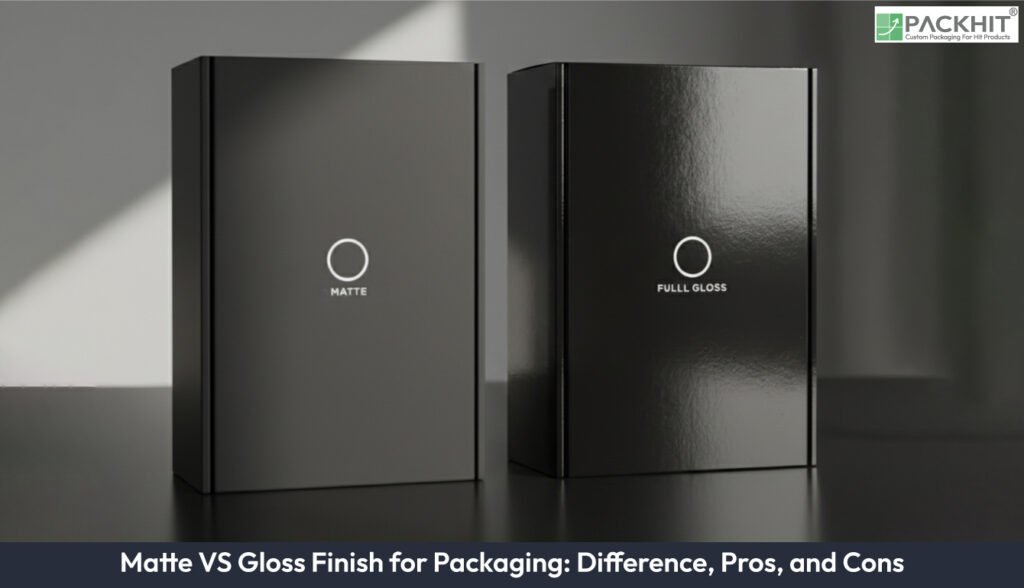
Matte and gloss finishes for packaging sets two surface behaviours that change reflectivity, colour strength, handling patterns and brand cues across printed cartons, labels and pouches. Matte finish uses low glare for controlled text clarity. Gloss finish raises reflectivity for stronger colour density. Key differences of matte and gloss finishes include light spread, saturation shifts, tactile friction, brand‑signal alignment and coating reactions during post‑press work. Pros and cons of matte and gloss finishes include how each finish affects glare, grip, colour impact, abrasion control, fingerprint visibility and viewing‑angle behaviour.
- What is a Matte Finish?
- What is a Gloss Finish?
- What are the Differences Between Matte and Gloss Finishes?
- Reflectivity and Glare
- Colour Intensity and Saturation
- Tactile Feel and Surface Friction
- Brand Signalling Patterns
- Production Behaviour
- What are the Pros and Cons of Matte and Gloss Finishes?
- How to Choose Between Matte and Gloss Finish for a Packaging Brand?
What is a Matte Finish?
Matte finish refers to a low‑reflectivity surface that diffuses light and produces a muted appearance suited to packaging that relies on controlled glare levels and steady legibility. This finish scatters incident light rather than redirecting it, which reduces specular hotspots under directional shelf lighting. Colour density reads as steadier but less saturated compared to gloss, and fine text stays readable at shorter viewing distances. Brands that depend on natural, muted or luxury cues use matte coatings on cartons, labels or flexible packs if they want a calmer optical presence. Matte coatings appear as varnish or film lamination, and soft‑touch variants add a velvety surface that changes tactile response while keeping reflectivity low. The measurable difference between matte and gloss in this context revolves around reflectivity levels and how those levels shape legibility and colour behaviour under UK retail lighting.
What is a Gloss Finish?
Gloss finish produces a smooth, reflective surface that redirects light and increases visible shine on printed packaging. This finish creates clear specular highlights, which raise colour intensity and make photographic panels read with stronger contrast under retail LEDs. Reflectivity sits at the upper end of common packaging coatings, so saturation shifts upward, and edges appear sharper at mid‑range viewing distances. The surface feels slick because the coating forms a continuous film with low friction, which helps cartons and pouches move cleanly through automated packing lines. Brands that rely on bold colours or high‑impact graphics use gloss to gain shelf presence if the retail environment contains directional lighting. Gloss varnish or gloss lamination adds abrasion resistance similar to matte alternatives, although fingerprints can show more easily on darker substrates, if handled frequently during stocking.
What are the Differences Between Matte and Gloss Finishes?
Differences between matte and gloss finishes describe how reflectivity, colour behaviour and tactile response shift once a coating sits on printed packaging. These differences shape readability, shelf impact and brand alignment in UK retail environments, if the pack sits under directional LEDs or mixed fluorescent lighting.
Reflectivity and Glare
Reflectivity sets the primary contrast between matte and gloss because matte diffuses light across the surface and gloss redirects it into concentrated highlights. This contrast changes how small text reads under spot lighting and how colour blocks shift when viewed at an angle.
Colour Intensity and Saturation
Colour intensity shifts because matte reduces apparent saturation, and gloss strengthens perceived contrast. These shifts influence how product images, line art and brand colours behave under supermarket shelf lighting or in e‑commerce photography conditions.
Tactile Feel and Surface Friction
Tactile feel varies because matte, including soft‑touch variants, increases surface friction while gloss forms a smoother film. These tactile differences alter how consumers handle cartons, sleeves or pouches during inspection and how operators feed packs on automated lines.
Brand Signalling Patterns
Brand signalling patterns differ because matte supports natural, muted or luxury cues while gloss supports high‑visibility and bold graphic contrast. These patterns help manufacturers align finish choice to product categories such as natural cosmetics or fast‑moving confectionery.
Production Behaviour
Production behaviour changes because matte and gloss respond differently to varnish or lamination processes, even though both coatings protect substrates from abrasion. Behaviour depends on coating thickness, gloss‑unit specification and substrate absorbency during post‑press stages.
The table below groups the practical differences between matte and gloss finishes so manufacturers can compare optical, tactile and production‑related traits before selecting a coating.
| Difference | Matte | Gloss | Context Note |
|---|---|---|---|
| Light behaviour | Diffuse reflection | Specular reflection | Defines glare levels under LEDs. |
| Colour response | Lower apparent saturation | Higher apparent saturation | Shifts photographic panels and brand colours. |
| Surface handling | More friction | Smoother slip | Affects retail handling and line loading. |
| Brand cues | Natural or muted ranges | High‑contrast visual ranges | Applies to cosmetics or fast‑moving confectionery. |
| Coating behaviour | Variable by varnish or laminate type | Variable by varnish or laminate type | Both protect printed substrates. |
The table summarises the measurable contrasts between matte and gloss so decision‑makers can match finish type to light conditions, brand signals and production limits.
What are the Pros and Cons of Matte and Gloss Finishes?
The pros and cons of matte and gloss finishes describe how each coating changes light behaviour, colour response, handling and brand fit on printed packaging.
Pros of Matte Finish
- Glare reduction: Diffuse reflection keeps text readable under shelf LEDs and reduces hotspots on photographic panels.
- Tactile grip: Increased surface friction stabilises handling for cartons and pouches during consumer inspection.
- Muted tone: Lower saturation creates a controlled look that suits natural, artisan or luxury ranges (examples: skincare cartons, artisan foods).
- Consistent colour: Light scatter reduces viewing-angle shifts if packs sit under mixed lighting.
- Mark resistance: Varnish or laminate variations add abrasion control comparable to gloss systems.
Cons of Matte Finish
- Saturation loss: Reduced colour intensity limits impact for brands that depend on bright tones.
- Texture variation: Soft-touch films attract particulate more readily during storage in dusty environments.
- Surface drag: Higher friction slows automated loading in some packing lines.
Pros of Gloss Finish
- Shine level: Specular reflection increases visual punch for photographic or metallic artwork.
- Colour strength: Higher perceived saturation pushes brand palettes toward stronger contrast under LEDs.
- Shelf pull: Concentrated highlights catch attention in crowded displays for rapid-turn categories (examples: confectionery, personal care sachets).
- Smooth handling: Lower friction helps packs slide cleanly through automated equipment.
Cons of Gloss Finish
- Glare spikes: Reflected hotspots obscure small text if positioned under directional lighting.
- Fingerprint visibility: Marks show more clearly on dark substrates during repetitive handling.
- Viewing-angle shift: High reflectivity exaggerates colour change when packs sit at oblique angles.
How to Choose Between Matte and Gloss Finish for a Packaging Brand?
To choose between matte and gloss finish, match the finish to lighting, colour behaviour and handling demands on your packaging. Matte suits control glare levels if text density sits high or if muted colour is part of your brand signal. Gloss suits strong saturation if photographic panels dominate or if packs sit in bright retail aisles. Choose the finish that aligns with the brand persona and production limits shown in the earlier differences list.