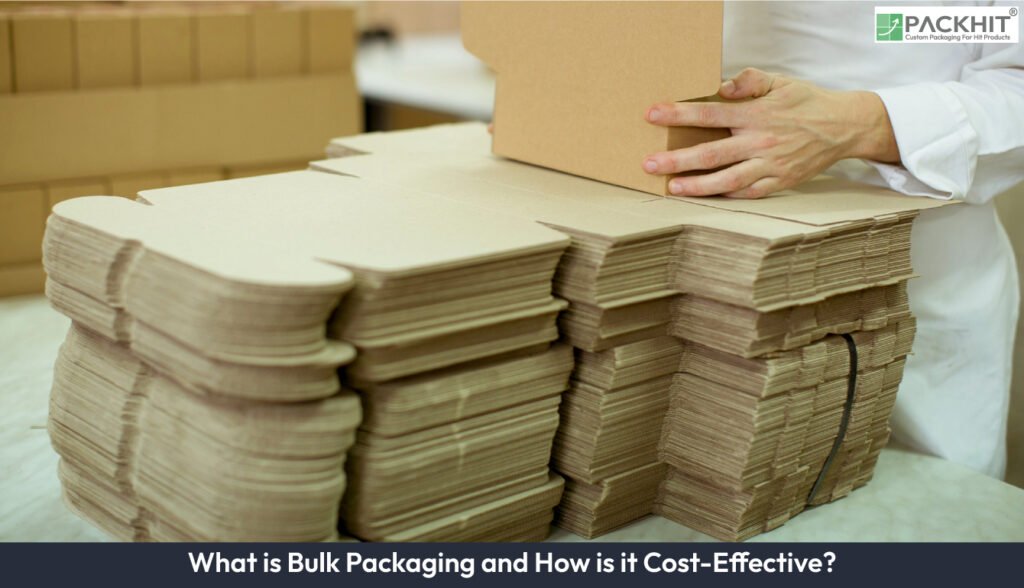
Bulk packaging refers to the use of large-capacity containers that consolidate multiple units into a single load to support high-volume transport, storage, and handling in manufacturing supply chains. Bulk packaging reduces costs by lowering material use, handling labour, transport spend, storage demand, damage rates, and end-of-life waste across per-unit operations. Bulk packaging is manufactured through structured forming, shaping, reinforcement, closure integration, cleaning, and compliance testing to ensure safe, repeatable containment. Examples of bulk packaging include IBCs, drums, FIBCs, bulk boxes, tanks, flexitanks, and octabins used for liquids, powders, and granular goods. Cost-effectiveness in bulk packaging is calculated by comparing per-unit material, labour, transport, storage, waste, damage, and compliance costs against smaller pack formats. Bulk packaging is chosen by businesses to improve load efficiency, reduce operational variability, enable reuse, and achieve lower per-unit costs in high-volume supply chains.
- What is Bulk Packaging?
- How Does Bulk Packaging Reduce Costs?
- Material Reduction
- Lower Handling Labour
- Transport Efficiency
- Storage Optimisation
- Consistent Fill and Discharge Processes
- Reduced Damage Probability
- Lower Disposal and End‑of‑Life Handling
- How Bulk Packaging is Manufactured?
- 1.Material Forming
- 2. Structural Shaping
- 3. Reinforcement Installation
- 4. Closure and Valve Integration
- 5. Cleaning and Preparation
- 6. Inspection and Compliance Testing
- What are the Examples of Bulk Packaging?
- Intermediate Bulk Containers (IBCs)
- Steel Drums
- Plastic Drums
- Flexible Intermediate Bulk Containers (FIBCs)
- Bulk Boxes (Gaylord Boxes)
- Bulk Tanks
- Flexitanks
- Octabin Containers
- How do Manufacturers Calculate Cost-Effectiveness for Bulk Packaging?
- Why Choose Bulk Packaging for Business?
What is Bulk Packaging?
Bulk packaging refers to the containment of products in larger units that hold multiple retail or transport quantities at once, and the format supports high‑volume shipment, storage and handling in manufacturing supply chains. The approach groups liquids, powders or granular goods inside containers such as IBCs, drums, FIBCs or bulk boxes to reduce the number of individual packs in circulation. It relies on larger capacities that concentrate multiple units in a single load, and this reduces packaging material per unit, handling steps per unit and space used in pallet or container transport. Bulk packaging also creates a consistent fill and discharge process across batches, if product density, flow behaviour or compatibility remain stable, and the larger format aligns with operations that move frequent or continuous loads.
How Does Bulk Packaging Reduce Costs?
Bulk Packaging reduces costs by cutting the number of individual packs in circulation and shrinking per‑unit labour, transport and material consumption across production and logistics.
Material Reduction
Material reduction lowers total packaging weight because bulk containers such as IBCs, drums and FIBCs replace dozens of small units. Material reduction decreases per‑unit cost if each container carries multiple retail-equivalent quantities.
Lower Handling Labour
Lower handling labour results from fewer touchpoints per shipment. Lower handling labour reduces picking, sealing and palletising steps, if operators move consolidated loads instead of single packs.
Transport Efficiency
Transport efficiency increases load density because bulk formats occupy less void space per unit of product. Transport efficiency reduces freight cost per unit, if pallet, container or trailer space is used closer to full capacity.
Storage Optimisation
Storage optimisation condenses product volume into larger footprint units. Storage optimisation cuts warehousing cost per unit, if inventory rests in stackable containers that reduce aisle movements and racking positions.
Consistent Fill and Discharge Processes
Consistent fill and discharge processes stabilise cycle time because valves, liners and inlets follow repeatable configurations. Consistent fill and discharge processes lower operational variability if product flow behaviour remains constant.
Reduced Damage Probability
Reduced damage probability limits loss events because robust bulk formats decrease the count of small vulnerable packs. Reduced damage probability lowers write‑off cost per unit, if the product sits in a rigid or reinforced flexible containment.
Lower Disposal and End‑of‑Life Handling
Lower disposal and end‑of‑life handling reduces the number of small waste items that require sorting or baling. Lower disposal and end‑of‑life handling cuts per‑unit waste fees, if bulk containers follow reuse or simplified recycling streams.
How Bulk Packaging is Manufactured?
Bulk packaging is manufactured through sequential production, conversion and quality‑control stages that prepare large‑capacity containers for powders, liquids or granular goods. Manufacturers run a fixed order of steps that create stable containment for high‑volume movement.
- Material Forming
- Structural Shaping
- Reinforcement Installation
- Closure and Valve Integration
- Cleaning and Preparation
- Inspection and Compliance Testing
1.Material Forming
Material forming creates the base substrate for bulk containers by melting, moulding or cutting polymers, steel sheets or corrugated fibreboard sheets. Material forming determines wall thickness and barrier performance if product density or hazard class demands specific containment strength.
2. Structural Shaping
Structural shaping produces the final drum body, IBC cage, FIBC sack or bulk box shell by blow‑moulding, folding, welding or stitching operations. Structural shaping sets container geometry that controls fill volume, stacking capacity and discharge behaviour.
3. Reinforcement Installation
Reinforcement installation adds cages, ribs, seam bands or woven support panels that hold weight during lifting, transport and pallet stacking. Reinforcement installation improves load retention if the filled mass approaches the upper range of container design limits.
4. Closure and Valve Integration
Closure and valve integration attaches lids, bungs, discharge spouts or liner fitments that manage controlled filling and emptying. Closure and valve integration establishes leak resistance and flow control, if liquids or fine powders require regulated release rates.
5. Cleaning and Preparation
Cleaning and preparation removes particulates, oils and residues using rinsing, air‑blowing or sterilisation routines. Cleaning and preparation protect product purity if the container enters food, pharmaceutical or cosmetic supply chains.
6. Inspection and Compliance Testing
Inspection and compliance testing checks seam integrity, cage stability, stacking strength and leak performance using compression or pressure tests. Inspection and compliance testing confirm regulatory readiness for UN‑rated drums, food‑contact IBCs or export‑grade FIBCs.
What are the Examples of Bulk Packaging?
Examples of bulk packaging include rigid, semi‑rigid and flexible containers that carry consolidated product loads for transport, storage and processing. These formats handle liquids, powders, granules and semi‑solid materials across manufacturing supply chains in the UK.
Intermediate Bulk Containers (IBCs)
Intermediate Bulk Containers hold liquids or flowable materials in 800–1,200 litre units. Intermediate Bulk Containers support chemical transfer, food‑ingredient batching and industrial fluid storage if the viscosity and compatibility match the tank and valve configuration.
Steel Drums
Steel Drums carry solvents, oils and hazardous liquids in 200–250 litre capacities. Steel Drums support chemical manufacturing, lubrication plants and regulated goods transport, if impact resistance and UN markings cover the shipped product class.
Plastic Drums
Plastic Drums contain detergents, additives and food-contact liquids in 120–220 litre volumes. Plastic Drums support cleaning chemical production, beverage‑ingredient handling and agricultural liquid feedstocks, if material compatibility aligns with pH and oxidation behaviour.
Flexible Intermediate Bulk Containers (FIBCs)
Flexible Intermediate Bulk Containers move powders, flours, grains and resins in 500–2,000 kg sacks. Flexible Intermediate Bulk Containers support milling operations, construction material dosing and polymer production, if dust control and lifting loops meet site standards.
Bulk Boxes (Gaylord Boxes)
Bulk Boxes store plastics, components and dry goods in corrugated or plastic bins holding 300–1,000 kg loads. Bulk Boxes support automotive parts movement, electronics component staging and dry ingredient storage, if stacking limits and pallet sizing align with handling rules.
Bulk Tanks
Bulk Tanks transfer oils, syrups and chemicals in multi‑thousand‑litre capacities. Bulk Tanks support high‑volume food‑oil movement, petrochemical transport and continuous‑feed processing, if temperature control and insulation match product stability needs.
Flexitanks
Flexitanks move edible oils, wine and non-hazardous fluids in 16,000–26,000 litre liners installed inside containers. Flexitanks support export routes, long‑distance liquid movement and seasonal food‑oil shipments, if route planning avoids cargo mixing and temperature spikes.
Octabin Containers
Octabin Containers store pellets, powders and flakes in heavy-duty corrugated structures sized for pallet transport. Octabin Containers support plastics compounding, resin distribution and agricultural‑grade dry material shipment, if vibration and compression loads stay within box design limits.
How do Manufacturers Calculate Cost-Effectiveness for Bulk Packaging?
Manufacturers calculate cost-effectiveness for bulk packaging through a set of financial, operational and compliance-based evaluations that quantify real per‑unit savings across production, storage and transport workflows.
- Cost comparison measures material spend against the equivalent number of small packs, if container capacity replaces multiple individual units.
- Handling labour analysis measures operator time for filling, moving and pallet tasks, if batch sizes shift from single packs to consolidated loads.
- Transport density assessment measures pallet and trailer utilisation, if bulk formats lower void space per kilogram or litre shipped.
- Storage utilisation review measures racking use and aisle movements, if larger containers reduce pick points and position count.
- Waste‑management review measures disposal fees for small components, if reuse cycles for drums or IBCs decrease waste weight.
- Cleaning and return‑logistics evaluation measures wash cycles, reverse transport and inspection time for reusable units, if containers cycle through multiple turns.
- Damage‑rate analysis measures write‑off quantities for sensitive items, if rigid or heavy‑duty formats reduce breakage events.
- Regulatory compliance cost review measures testing, certification and documentation work, if bulk formats reclassify goods under transport rules.
- Break‑even modelling measures capital spend for filling equipment, discharge valves or lifting gear, if throughput volumes support amortisation.
Manufacturers calculate cost-effectiveness for bulk packaging by grouping these measures into a per‑unit outcome that reflects material, labour, transport, storage and compliance costs across the intended shipment volumes.
Why Choose Bulk Packaging for Business?
Choose Bulk Packaging for Business because consolidated containers cut per‑unit material, handling and storage costs across routine manufacturing loads. Bulk units raise trailer and pallet fill levels if product density matches container geometry. Reusable drums or IBCs lower waste weight across repeat cycles. Bulk formats also stabilise fill and discharge time in high‑frequency operations, if flow behaviour stays consistent.