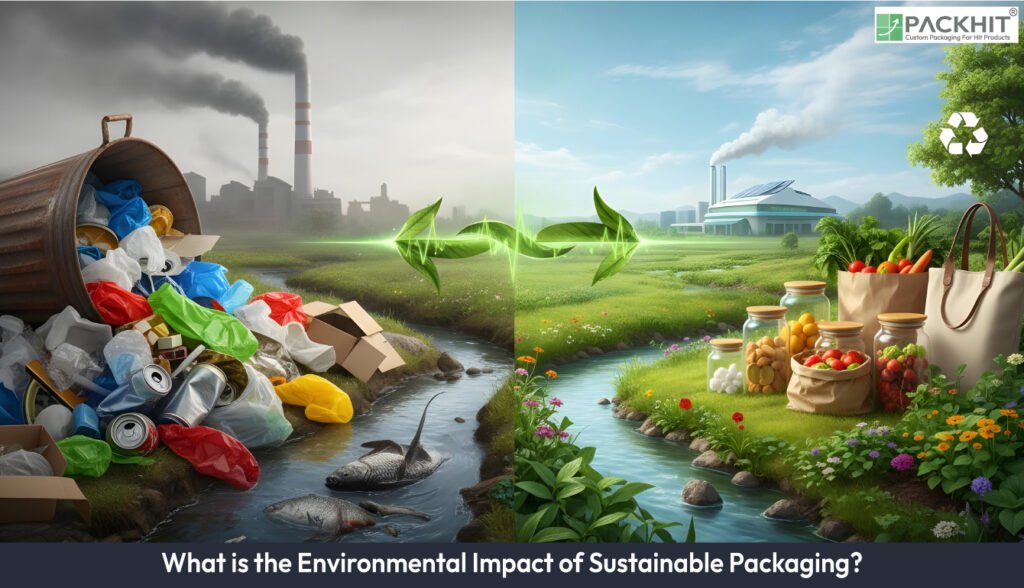
Environmental impacts of sustainable packaging arise from the interaction of material choice, functional design and lifecycle management. Packaging formats, including recyclable, compostable and reusable options, influence energy use, emissions and resource consumption across production, distribution and end-of-life stages. Material origin, such as recycled polymers, certified fibres or agricultural residues, affects both embodied carbon and downstream recovery potential. Alternative approaches, such as mono-material design, bulk distribution or reuse systems, can shift environmental burdens while supporting efficient material flows. Design decisions also interact with logistics and processing infrastructure to determine overall environmental performance and cost efficiency.
- What is Sustainable Packaging?
- How Does Sustainable Packaging Affect the Environment?
- How do Paper and Plant-Based Packaging Impact Environmental Outcomes?
- Where do Sustainable Packaging Materials Come From?
- What Alternatives to Conventional Packaging Support Sustainability?
- What is the Manufacturing Workflow of Sustainable Packaging?
- How Does Sustainable Packaging Lower Costs and Improve Recycling Efficiency?
- What Barriers Limit the Environmental Benefits of Sustainable Packaging?
- What Packaging Design Strategies Improve Sustainability and Recyclability?
What is Sustainable Packaging?
Sustainable packaging means using materials that cut environmental impact compared with single‑use plastic by lowering resource demand, reducing waste, and improving recovery through recycling or composting systems. Sustainable packaging reduces impacts over a defined functional unit by matching material type, protective role and end‑of‑life route to the product requirement. Material types include paperboard, corrugated fibre, PET and aluminium. Primary functions include containment, mechanical protection and barriers against moisture or oxygen. End‑of‑life routes include reusable formats, mechanically recyclable formats and industrially compostable formats. Key variables include single-use or multi-use service life, high- or low-barrier needs, and the level of contamination from food residues or grease, which alters recovery performance.
Sustainable packaging also depends on system choices. Mass, barrier strength and structure complexity are balanced against recyclability and reuse logistics. Primary packaging covers bottles and pouches. Secondary packaging covers corrugated trays and shrink‑wrap. Tertiary packaging covers pallets and crates. Each group uses different materials, creates distinct environmental pressures and enters separate recovery pathways.
How Does Sustainable Packaging Affect the Environment?
Sustainable packaging affects the environment by reducing resource consumption, lowering emissions, and improving waste recovery when compared with conventional packaging systems. Environmental outcomes improve when packaging design lowers embodied carbon per functional unit and aligns material formats with real collection and recovery infrastructure.
1. Reduces Resource Use
Sustainable packaging reduces raw material demand through lightweighting, downgauging, and structural optimisation. Lower material input decreases pressure on forests, fossil resources, and mineral extraction. Right-sized packaging also limits overpackaging and associated upstream energy and water use.
2. Lowers Carbon Emissions
Sustainable packaging lowers greenhouse-gas emissions across production and transport stages. Recycled polymers reduce emissions linked to virgin polymer production, while certified fibre sourcing limits carbon loss from unsustainable land use. Lightweight designs reduce fuel consumption during distribution by lowering shipment mass and volume.
3. Improves Manufacturing Footprint
Sustainable packaging improves manufacturing impacts by shifting toward recycled or renewable inputs. Recycled polymers reduce fossil fuel extraction, although additional sorting and cleaning increase processing energy. Fibre-based materials require pulp processing and responsible forestry to control land-use and biodiversity impacts.
4. Optimises Transport Efficiency
Sustainable packaging optimises transport efficiency by reducing weight and improving space utilisation. Thinner walls, fewer layers, and compact formats decrease fuel use per unit moved through supply chains, lowering transport-related emissions.
5. Enhances Material Recovery
Sustainable packaging enhances recovery outcomes when formats match existing systems. Mono-material designs improve sorting accuracy and mechanical recycling yields. Simplified structures reduce reject rates and increase the likelihood of material re-entry into production cycles.
6. Limits Waste Persistence
Sustainable packaging limits long-term waste persistence by prioritising recyclability, reuse, or controlled compostability. Compostable materials reduce environmental accumulation only where separate collection and industrial composting infrastructure exist; without separation, compostables can reduce overall recovery efficiency.
7. Redistributes Environmental Burdens
Sustainable packaging redistributes environmental burdens rather than removing them entirely. Fibre alternatives increase water and land demand. Bio-based polymers replace fossil carbon with biogenic carbon but depend on agricultural inputs such as fertilisers and irrigation. Effective design evaluates these shifts across the full life cycle to avoid unintended impacts.
How do Paper and Plant-Based Packaging Impact Environmental Outcomes?
Paper-based and plant-based packaging shift the environmental burden away from fossil-carbon intensity toward biogenic resource flows, with distinct manufacture and end-of-life implications.
- Shifts environmental impacts from fossil-carbon use to biogenic resource demand across production, distribution, and end-of-life stages.
- Paper packaging uses cellulose fibre from virgin or recycled sources; pulping and forming increase water and energy consumption.
- Virgin fibre raises land-use pressure and biodiversity risk if forestry management is insufficient.
- Recycled fibre lowers embodied carbon and raw-material extraction but can reduce structural strength over repeated cycles.
- Barrier coatings improve moisture and grease resistance but limit fibre recyclability by complicating repulping.
- Plant-based packaging uses polymers derived from starch, sugar, or microbial feedstocks, reducing fossil-carbon intensity during production.
- Agricultural sourcing of plant-based polymers increases land, water, and fertiliser demands.
- End-of-life performance of plant-based polymers relies on industrial composting, as open-environment biodegradation is limited.
- Misrouting plant-based polymers into conventional plastic recycling streams reduces recyclate quality and increases processing losses.
- Environmental performance depends on infrastructure alignment: paper benefits from fibre recycling systems, and plant-based polymers require dedicated composting facilities.
- Poor system compatibility shifts environmental burdens instead of reducing overall impact.
Where do Sustainable Packaging Materials Come From?
Sustainable packaging feedstocks originate from three principal sources: post-consumer recyclate, renewable biomass, and durable materials used within reuse systems.
- Post-Consumer Recyclate: Includes secondary polymers recovered from used packaging, such as rPET from bottles and recycled HDPE from jugs. Provides lower embodied carbon compared with virgin resins. Supply depends on collection efficiency, contamination levels, and regulatory compliance for food-contact applications. Pre-consumer scrap, like extrusion trim or paper mill rejects, offers higher-quality secondary feedstock with lower contamination risk.
- Renewable Biomass: Comprises certified forestry fibres, agricultural residues, and fermentation-derived feedstocks. Examples include FSC-certified softwood and hardwood, bagasse or wheat straw, and sugarcane ethanol for bio-polymers. Traceability and certification ensure responsible sourcing, prevent unintended land-use change, and support ecosystem services.
- Durable Materials for Reuse Systems: Consists of materials designed for multiple use cycles, such as glass bottles, aluminium cans, and HDPE crates. Requires collection, washing, and redistribution logistics. Environmental benefits appear after sufficient reuse cycles amortise production impacts per unit.
What Alternatives to Conventional Packaging Support Sustainability?
Alternatives comprise reuse models, format substitution to mono-materials, bulk or concentrated distribution models, and circular-material strategies such as mechanical and chemical recycling.
- Reuse Systems: Employ refillable or returnable packaging, such as beverage refill loops and bakery crates. Reduce per-use material consumption and lower lifecycle environmental impacts where collection and redistribution logistics are feasible.
- Mono-Material Substitution: Replace multi-layer laminates with single-polymer formats, such as mono-PE pouches or mono-PP trays. Enhance mechanical recycling efficiency and simplify end-of-life recovery. Design adjustments may be needed to maintain barrier and functional performance.
- Bulk Dispensing and Concentration: Reduce packaging per functional dose through bulk distribution or concentrate formats, for example, bulk detergent dispensers or concentrate sachets. Minimise material use and transport volume across supply chains.
- Circular-Materials Strategies: Increase post-consumer recycled content and apply chemical recycling technologies for mixed polymers, including depolymerisation of PET and pyrolysis of polyolefins. Recover feedstocks that would otherwise be lost to energy recovery or landfill, closing material loops.
What is the Manufacturing Workflow of Sustainable Packaging?
Packaging lifecycle stages comprise feedstock extraction or collection, conversion into substrates, printing/coating and assembly, filling and distribution, and an end-of-life pathway determined by composition and local infrastructure.
- Acquire Feedstock: Collect post-consumer recyclate, renewable biomass, or durable materials for reuse systems. Quality, contamination levels, and certification define suitability for conversion.
- Convert Materials: Transform raw feedstocks into usable substrates through processes such as polymer extrusion, sheet forming, pulp moulding, coating, and lamination. Energy consumption, chemical inputs, and adhesive/ink selection influence environmental performance and recyclability.
- Apply Printing, Coating, and Assembly: Add graphics, functional coatings, and assemble packaging components. Choices like solventless adhesives and water-based inks reduce emissions and facilitate end-of-life recovery.
- Distribute and Fill Products: Pack products and move through logistics networks. Lightweighting and compact formats lower transport energy per unit.
- Manage End-of-Life: Route packaging to mechanical or chemical recycling, industrial composting, anaerobic digestion, energy recovery, or landfill. Material identity, labelling, and collection infrastructure determine recovery success. Optical and NIR sorting improve mono-material recovery but perform poorly on dark or heavily printed substrates, increasing reject rates.
How Does Sustainable Packaging Lower Costs and Improve Recycling Efficiency?
Sustainable packaging lowers overall system costs by reducing material use, transport mass, and disposal fees while improving recyclate quality.
- Right-sizing and thinner walls lower raw-material purchase costs and reduce fuel consumption during transport.
- Mono-material designs, separable labels, and attached closures reduce sorting rejects and enhance recovered material value.
- Specifying minimum post-consumer recycled content mitigates exposure to virgin material price fluctuations.
- Ensuring consistent and high-quality feedstock for reprocessing in supplier contracts, closed-loop agreements, and compatible chemistries.
- Simplifying polymer blends, removing non-recyclable additives, and designing for disassembly enhances recyclate yield, reduces downstream processing costs, and supports material circularity.
What Barriers Limit the Environmental Benefits of Sustainable Packaging?
Sustainable packaging faces several barriers that reduce its potential environmental impact.
- Constrains Collection and Sorting: Low municipal collection rates, inadequate sorting facilities, and limited industrial composting prevent materials from entering recovery streams.
- Complicates Material Recovery: Multi-layer laminates, mixed-material closures, and heavily printed surfaces increase recycling rejects and contaminate otherwise recyclable streams.
- Limits High-Quality Feedstock Supply: Scarce post-consumer recyclate, especially for food-grade applications, reduces the availability of certified or high-quality secondary materials.
- Creates Economic Challenges: Higher costs for certified sustainable feedstocks and limited markets for recycled content discourage adoption by producers and suppliers.
- Misaligns Incentives: Lack of consumer participation in proper disposal and absence of producer responsibility programs diminish the effectiveness of recovery and circularity initiatives.
What Packaging Design Strategies Improve Sustainability and Recyclability?
Practical packaging design reduces environmental impacts and supports recyclability by simplifying materials, optimising construction, and aligning components with end-of-life processing. Mono-material formats improve mechanical recycling efficiency and reduce contamination in recovery streams. Water-based or separable coatings and adhesives prevent the bonding of incompatible materials that hinder recycling. Attached or easily removable closures and labels maintain material integrity and reduce losses during sorting. Right-sized packaging, reduced layering, and concentrated product formats lower per-unit material use and transport energy. Effective design balances protection and functional performance with recyclability to achieve measurable operational and environmental gains.