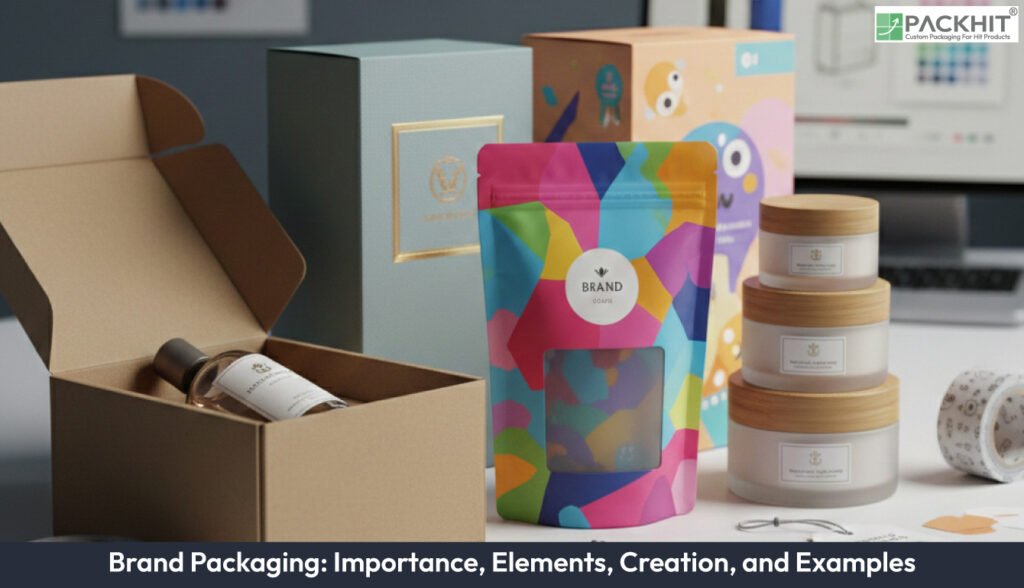
Brand packaging is the coordinated use of structure, graphics, materials, and controlled text to identify a product, signal quality, and explain use at the point of contact. It combines physical containment with visual identification so buyers recognise the brand, assess value, and understand handling before opening. The elements of brand packaging include logos, colour systems, materials, and tactile cues that signal quality, safety, and price level, which support recognition across channels and increase repeat purchase through familiarity. Creating brand packaging is a step-by-step creation process, from audience definition and market research to material selection, legal checks, cost control, and artwork finalisation. Practical examples of brand packaging show how luxury, sustainable, retail shelf, and e-commerce packaging formats signal price level, protection needs, and usage context while supporting transport efficiency and repeat purchase.
- What is Brand Packaging?
- What is the Importance of Brand Packaging?
- What are the Key Elements of Brand Packaging?
- How to Create Brand Packaging?
- 1. Define Audience Requirements
- 2. Collect Market Research Inputs
- 3. Add Visual Elements
- 4. Select Suitable Materials
- 5. Validate Regulatory and Legal Requirements
- 6. Control Costs and Production Feasibility
- 7. Finalise Artwork and Product Files
- What are the Examples of Brand Packaging?
What is Brand Packaging?
Brand packaging is a packaging strategy in which structural form, graphics, materials, and messaging are intentionally coordinated to signal brand identity and product positioning. Unlike generic packaging, which prioritises containment and logistics alone, brand packaging integrates identification and communication functions. The packaging surface becomes a carrier of brand signals, including recognisable marks, colour systems, and tone cues that allow immediate attribution at the point of contact.
What is the Importance of Brand Packaging?
Brand packaging is important because it helps customers instantly identify the product, signals quality and safety before use, and influences purchase decisions at the point of sale. Consistent use of logos, colour systems, and typography allows faster shelf recognition when similar products compete for attention. Material choice, print accuracy, and layout order communicate price level and brand character, which stabilises trust across retail and online channels. Tactile factors such as surface texture and pack weight support emotional attachment, which links directly to repeat purchase and long-term brand preference.
What are the Key Elements of Brand Packaging?
The key elements of brand packaging include logo, colour palette, typography, material, finishes, tagline or catchphrase. Each element defines how brand packaging communicates identity, function, and product position.
The elements of brand packaging are discussed below:
Logo
The logo acts as the main visual marker in brand packaging and helps people identify the product at first glance. The same logo position, size, and colour on labels, boxes, and cartons support fast recognition across shelves and online listings. This consistent display builds memory through repeated viewing of brand packaging in stores and during transport. Clear contrast between the logo and the background keeps the mark readable from a distance. Controlled logo use across all pack sizes keeps the brand image stable. Poor changes in shape or colour reduce clarity and weaken brand packaging recognition.
Colour Palette
Colour in brand packaging works as a quick visual sign that helps people recognise a product before reading any text. A clear colour palette lets the product stand out on shelves and helps buyers separate it from similar items nearby. The same primary colours, such as red, blue, or green, stay consistent across boxes, bottles, and labels, while secondary colours support product variants. This consistency helps brand packaging stay familiar, even when the pack size or format changes. Strong and repeated colour use improves shelf detection and supports faster buying decisions.
Typography
Typography in brand packaging controls how people read and understand product information. The same typeface across labels, boxes, and cartons keeps the brand looking familiar. Clear font size, spacing, and text order help buyers find names, variants, and instructions quickly. This consistency reduces reading effort on small and large packs. Brand packaging loses clarity when fonts are too thin or decorative, and it also makes legal text and usage details harder to read.
Material
Material choice in brand packaging controls product protection, transport efficiency, perceived price level, and environmental impact. Paperboard, corrugated board, rigid plastics, glass, and flexible films each communicate a clear functional role. Corrugated board supports stacking and long-distance transport for outer cartons, such as shipping cases and transit boxes. Folding cartons suit retail display for dry goods, including cereals and personal care items. Rigid plastics and glass signal stability and controlled dispensing, which appear in cosmetics jars, beverage bottles, and pharmaceutical containers.
Sustainable material selection has become a fixed part of brand packaging decisions. Recyclable paperboard, FSC-certified corrugated board, and mono-material plastics reduce sorting complexity in waste streams. For example, in food and health categories, visible use of recyclable or recycled materials correlates with higher trust and repeat purchase when protection standards remain unchanged.
Finishes
Finishes define surface behaviour, visual contrast, and tactile response on brand packaging. Common finishes include matte varnish, gloss varnish, soft-touch coating, spot UV, foil stamping, and embossing. Matte finishes reduce glare under retail lighting and improve text legibility. Gloss finishes increase colour density and highlight product photography. Soft-touch coatings add grip and reduce scuff marks during handling.
Selective finishes direct visual focus on brand packaging by isolating specific areas, such as logos, product names, or seals, through controlled contrast. Spot UV, foil accents, and embossing create focal points that guide eye movement without increasing text density or reducing layout clarity. For example, spot UV isolates logos or product names without crowding the layout. Foil stamping signals higher price tiers in cosmetics and gifting categories, while embossing adds physical differentiation without extra ink coverage.
Imagery
Imagery in brand packaging gives a clear visual context for how a product looks and how it is used. Imagery includes product photos, simple illustrations, or flat graphics, such as food images, usage icons, or pattern elements. The same image style across packs keeps brand packaging consistent and easy to recognise on shelves. Controlled imagery placement supports fast reading and keeps focus on the logo and product name. Limited imagery reduces clutter and avoids confusion between product variants. Clear imagery helps brand packaging stay readable in retail and online listings.
Tagline or Catchphrase
Brand packaging uses a tagline or short phrase to explain what the product is and why it exists. This brand message is placed near the logo so buyers see it within the first few seconds. The wording stays short and clear, such as use, benefit, or product type, to avoid confusion. The same tone and words appear across boxes, labels, and cartons to keep recognition stable. Clear messaging supports trust when it matches the language used on websites and listings.
How to Create Brand Packaging?
To create brand packaging, follow a defined sequence that converts brand identity into production-ready packaging by fixing audience requirements, validating market signals, standardising visual assets, selecting transport-efficient materials, and confirming legal compliance while controlling print cost and manufacturing limits.
The steps to create brand packaging are explained below:
1. Define Audience Requirements
Brand packaging starts by identifying the buyer and the way the product is used. The same audience sets clear limits for text size, colour contrast, and material strength on brand packaging. Fast-moving products, such as snack bars and soft drinks, use bold colours and short text for quick reading. Regulated products, such as supplements and medical devices, use larger panels and fixed font sizes for clear information order. The sales channel also shapes brand packaging, where shelf packs focus on the front face, and direct-to-consumer packs allow more space for instructions and compliance details.
2. Collect Market Research Inputs
Market research gives clear facts that guide brand packaging decisions. Market research uses store visits, shelf photos, and sales data to show how buyers see logos, read labels, and notice colours within the first 3 seconds. This research shows which logo sizes, colour blocks, and layouts stand out on shelves, which helps brand packaging stay consistent across bottles, cartons, and pouches, and improves recognition.
3. Add Visual Elements
Brand identity becomes clear when a pack uses the same logo position, colours, text size, and image style on every format. The logo stays in the same place on cartons, bottles, labels, and boxes, so people recognise the product faster. The same colour ratios help the pack stand out from a distance, even when the size changes.
The text layout controls reading and legal accuracy. Product names, variants, and required details follow a fixed-size order, which keeps the pack clean and reduces printing mistakes. The same font system appears on inner packs and outer cartons, which keeps the brand’s look consistent during display and transport.
Images explain the product instead of adding decoration. One image style is used across all packs to avoid confusion between ranges. The box shape and material support the message, where rigid board shows protection and flexible packs show ease of use, while standard sizes help fit more products on pallets and simplify transport.
4. Select Suitable Materials
Material selection determines protection level, transport efficiency, and brand perception. Paperboard, corrugated board, rigid plastics, and flexible films each signal different price points and use cases, such as corrugated board for shipping cartons or barrier films for moisture-sensitive foods. Material thickness, surface finish, and print compatibility control durability and colour accuracy. Standard container sizes increase pallet density and reduce breakage during transit. Heavier substrates communicate stability, while lightweight materials reduce freight weight and handling costs.
5. Validate Regulatory and Legal Requirements
Regulatory validation confirms that brand packaging meets legal standards for labelling, safety, and material use. This step checks mandatory text, font size, and panel order for regulated categories, such as food, cosmetics, and supplements. For example, in the UK, compliance includes ingredient lists, allergen disclosure, recycling symbols, and country-of-origin markings. Barcode placement and batch coding are also verified to support traceability and retail scanning.
6. Control Costs and Production Feasibility
Cost and feasibility control aligns brand packaging design with manufacturing limits. Artwork complexity, colour count, and finishing techniques are reviewed against print methods, such as offset, flexographic, or digital printing. Standard carton sizes and material gauges reduce waste and tooling costs. This step confirms that packaging runs fit pallet dimensions, transport loads, and supplier capacity.
7. Finalise Artwork and Product Files
Finalising artwork and production files locks the approved design for printing and assembly. Print-ready files include dielines, bleed settings, colour profiles, and resolution checks. Barcodes, regulatory text, and version control are confirmed before release. This stage prevents reprints, delays, and inconsistencies across packaging formats.
What are the Examples of Brand Packaging?
Brand packaging examples show how box-based structures use material, size, and layout to signal product value, protection level, and retail context. These examples focus on brands that rely on cartons and boxes for identification, transport efficiency, and repeat recognition.
Cadbury
Cadbury uses folding cartons and paperboard sleeves for boxed chocolates sold in UK supermarkets. The fixed purple colour, consistent logo placement, and clear product windows help shoppers recognise the brand quickly. Carton dimensions match shelf heights and multipack transit cases, which improves stacking and reduces damage during transport.
Apple
Apple uses rigid paperboard boxes with white surfaces and centred logos. Internal trays hold each component in a fixed position, which limits movement during shipping and handling. The box opens in a controlled sequence, which protects the product and keeps parts organised during unboxing.
Nike
Nike uses corrugated shoe boxes with standard sizes and bold logo placement. The limited colour range keeps the boxes easy to identify in stores and warehouses. Fixed box dimensions support pallet stacking and automated handling in retail storage and e‑commerce fulfilment.
Samsung
Samsung uses folding cartons and corrugated boxes for electronic products. Each box separates product images, model names, and legal information into clear sections. Reinforced corners and internal inserts protect screens and components during long-distance shipping.
Lego
Lego uses rigid folding cartons with strong colour blocks and front-facing product images. Box sizes relate directly to piece count and age group. The carton structure protects the contents while keeping the product visible and easy to identify on shelves.
L’Oréal
L’Oréal uses folding cartons for cosmetics with controlled colours, consistent logo placement, and clear text order. Secondary cartons protect bottles and jars during transport. Matte and gloss finishes help separate product ranges and price levels.
Estée Lauder
Estée Lauder uses rigid paperboard boxes with precise closures and fitted inserts. Dark base colours, gold foiling, and embossing signal a higher price position. Internal supports reduce breakage during storage and distribution.
The Body Shop
The Body Shop uses recyclable folding cartons for skincare and personal care products. Kraft-style boards, low ink coverage, and clear ingredient panels support environmental communication. Box sizes closely match container dimensions, which reduces empty space and material waste.