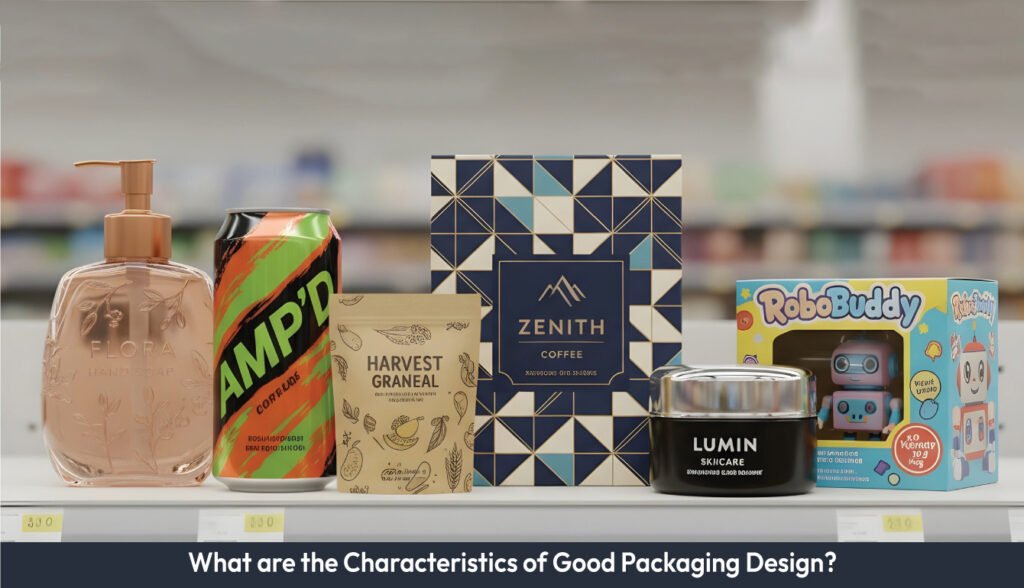
Good packaging design integrates multiple factors that ensure the product is protected, visually appealing, and user-friendly. Effective design balances brand communication, structural integrity, usability, and sustainability while supporting efficient production. Decisions around materials, typography, visual hierarchy, and functionality influence durability, consumer experience, and regulatory compliance. The characteristics together create packaging that strengthens brand identity, enhances shelf impact, and delivers practical value throughout the product lifecycle.
- What is a Good Packaging Design?
- What are the Key Characteristics of Good Packaging Design?
- 1. Enhanced Protection
- 2. Effective Brand Communication
- 3. Elevated Visual Impact
- 4. Improved Usability
- 5. Sustainable Material Choices
- 6. Streamlined Production and Prototyping
- 7. Optimised Cost and Complexity
- What is the Process of Developing a Good Packaging Design?
- How Can Good Packaging Design Be Eco-Friendly While Maintaining Protection?
- How are Rules and Print-Ready Files Ensured in Good Packaging Design?
What is a Good Packaging Design?
Good packaging design is a process that defines structure, graphics and production-ready outputs for a product. The process focuses on creating packaging and artwork that reinforce brand identity. Packaging design applies proper workflow to build both the visual and functional aspects of a product’s enclosure. The overall scope covers the full journey from brief definition and structural planning to graphic layout, prototyping and final artwork preparation. The resulting package aims to deliver product protection, clear brand communication and full compliance with regulatory requirements.
What are the Key Characteristics of Good Packaging Design?
The characteristics of good packaging design cover functional, visual, sustainable, and economical considerations that together ensure effective and high-quality packaging. The key elements of good packaging design are explained below:
1. Enhanced Protection
Packaging must ensure product safety during transport and storage while maintaining shelf stability. Material selection and structural design determine mechanical protection, containment and barrier performance. Performance metrics such as in-transit damage rate, seal integrity and accelerated shelf-life guide specifications and testing, including drop and compression trials.
2. Effective Brand Communication
Packaging conveys brand identity through consistent graphics and a clear information hierarchy. Colour palettes, logo placement and copy tone enhance recognition at the shelf and online. Print-ready artwork and compliance documentation support regulatory review, supply-chain scanning and mandatory information legibility.
3. Elevated Visual Impact
Typography and visual elements establish hierarchy, readability and recognisability. Typeface, size, contrast and spacing enable quick interpretation and support automated scanning for e-commerce. Elements such as bold headlines, colour blocking and pictorial marks are validated in production-scale and photographic assets.
4. Improved Usability
User-centred design improves handling and consumer experience. Opening sequence, resealability, tactile finishes and packaging weight influence first impressions and repeat purchase. Prototypes and user trials verify ergonomic and functional performance, including single-handed opening, resealable spouts and grips for diverse users.
5. Sustainable Material Choices
Sustainability informs material, structural and end-of-life decisions. Material choices determine mass, recyclability and reuse potential while balancing protective requirements. Emerging trends include mono-material constructions, reduced mass and reusable systems guided by lifecycle criteria.
6. Streamlined Production and Prototyping
Production readiness requires validated prototypes, accurate CAD outputs and production-compatible files. Prototypes enable testing of structural, print and user requirements before full-scale production. Stepwise workflows reduce iterations and improve dimensional accuracy and artwork alignment. Tools include AR mock-ups, low-fidelity physical models and production-intent samples.
7. Optimised Cost and Complexity
Packaging design balances visual appeal, functionality and production efficiency. Efficient material use, minimised tooling and scalable processes align complexity with project value. Each feature contributes to quality, usability and cost control.
What is the Process of Developing a Good Packaging Design?
For developing a good packaging design, a structured sequence of steps is followed to ensure the final product meets functional, visual, and regulatory requirements. Each step builds on the previous one, guiding the process from initial concept to production-ready packaging.
- Start with the Brief: Define product requirements, brand goals, target audience, and functional needs. Set objectives for protection, usability, sustainability, and visual communication.
- Develop Concepts: Generate structural ideas, visual treatments, and material options. Prepare sketches or digital mock-ups to evaluate feasibility and brand alignment.
- Create Structural Design: Define the package form, dimensions, folding, and assembly. Select materials that meet protection, environmental, and manufacturing requirements.
- Develop Prototypes: Produce physical or digital packaging prototypes after structural and graphic decisions. Use prototypes to test functionality, visuals, and user experience.
- Conduct Testing and Validation: Assess protection, usability, regulatory compliance, and visual performance. Make adjustments to structure, materials, or artwork as needed. Revalidate if material changes occur.
- Prepare Final Artwork: Finalise artwork based on approved concepts and tested prototypes. Ensure files are print-ready and meet production and regulatory standards.
- Release to Production: Implement the validated design in manufacturing. Ensure the final package matches the approved structure, materials, and graphics.
How Can Good Packaging Design Be Eco-Friendly While Maintaining Protection?
Good packaging design can combine sustainability with product protection by selecting materials and structures that safeguard the product while reducing environmental impact. Strategies include optimising dielines to minimise waste, using recyclable single-material substrates, and removing unnecessary secondary components. Prototype testing and transit simulations ensure that durability and usability remain intact, allowing eco-friendly choices to support both functional performance and overall packaging quality.
How are Rules and Print-Ready Files Ensured in Good Packaging Design?
Good packaging design integrates regulatory compliance and production readiness from the start. Print-ready assets include correct colour formats, bleed margins, barcode placement, and legible statutory text. Regulatory statements and symbols are verified against jurisdictional rules. Final production outputs consist of high-resolution, colour-managed files, validated dielines, and a compliance checklist to ensure the packaging meets functional, legal, and brand standards.