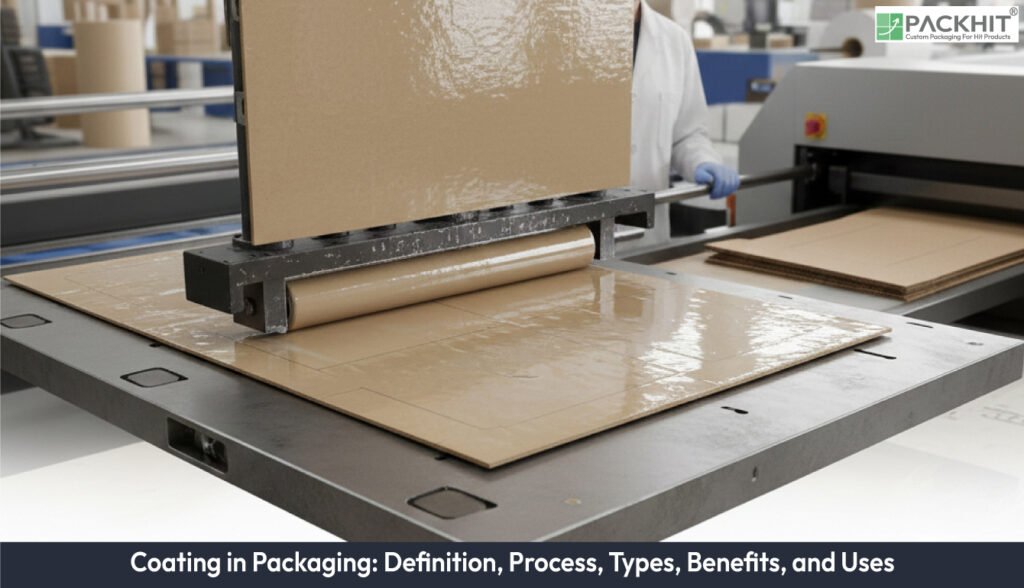
Coating in packaging is a thin protective and functional layer applied to paper or paperboard to improve surface protection, barrier performance, appearance and safe contact for food, medical and consumer goods. The coating process involves substrate preparation, film application, drying or curing, and finishing, with process factors such as formulation, film weight and curing method directly influencing gloss, durability and adhesion. Different coating types include UV, aqueous, matte, gloss, barrier, soft-touch and speciality finishes, each selected based on performance, cost and visual or tactile needs. Coatings enhance durability by improving scratch, abrasion and moisture resistance, while barrier coatings control oxygen, grease and water transmission to protect products and extend shelf life. Optical control through matte or gloss finishes improves brand presentation, colour strength and readability, while tactile effects like soft-touch coatings influence consumer perception. Regulatory compliance, especially for food and medical packaging, is essential to ensure odour- and taint-neutral performance. Across industries such as food, medical, retail, luxury and e-commerce, coatings are tailored to balance protection, functionality and branding requirements.
- What is Coating in Packaging?
- What is the Process of Coating in Packaging?
- Substrate Preparation Steps
- Film Application Stages
- Drying and Curing Operations
- Finishing Tasks after Coating
- Process Factors that Change the Final Result
- What are the Different Types of Coatings Used in Packaging?
- UV Coating
- Spot UV Coating
- Matte Coating
- Aqueous (AQ) Coating
- Barrier and Functional Coatings
- Varnish Finishes
- Soft‑Touch Finishes
- What are the Benefits of Applying Coatings to Packaging?
- Protection and Durability
- Barrier Performance and Product Protection
- Optical Control and Brand Presentation
- Tactile Differentiation and Consumer Perception
- Cost and Regulatory Implications
- What Coatings are Used Across Different Packaging Industries?
What is Coating in Packaging?
Coating in packaging is a thin material layer applied to a substrate to change optical, mechanical or barrier characteristics. Coating is a covering placed on paper or paperboard that performs surface protection, imparts barrier properties and must be compatible with adhesive bonding; examples include coatings used on printed cartons, coated paperboard and corrugated mailers.
The primary purpose is to protect contents and enable functional packaging performance while maintaining safe contact behaviour for applications such as food and medical packaging. Coating formulations, therefore, carry mandatory safety requirements: chemicals used in food or medical applications must meet all relevant regulatory and odour/taint criteria, and odour‑neutral and taint‑neutral formulations are an emerging trend in the sector.
What is the Process of Coating in Packaging?
The coating process applies a formulated liquid or dispersion onto a paper or paperboard substrate and converts that liquid into a continuous film through drying or curing. The sequence uses four core stages: substrate preparation, film application, film conversion and finishing. Each stage depends on surface energy, wet film weight and the curing environment. Matte systems, which diffuse light and produce a non‑reflective and velvety surface, follow the same sequence but produce a softer tactile profile because the coating contains light‑scattering particles.
Substrate Preparation Steps
Substrate preparation increases adhesion and stabilises surface energy. Priming creates a uniform surface so the film anchors cleanly across fibres and printed areas. The preparation step also removes loose dust or coating residues that limit bond strength. Paperboard used for matte coating, for example, cosmetic cartons, often receives a tighter calibration during preparation because matte films show surface defects more visibly than gloss films.
Film Application Stages
Film application distributes the coating across the substrate through flood, one-sided or spot placement. Flood application covers the full panel, while spot placement deposits liquid only on design elements such as a logo. A matte coating in spot form produces a muted contrast effect if set over a printed gloss area. Application thickness changes gloss level: heavier deposits create stronger diffusion for matte finishes, while thinner films produce moderate softening of reflected light. Operators adjust roller speed or application heads to manage wet film weight.
Drying and Curing Operations
Drying and curing convert the wet film into a stable surface. UV systems rely on ultraviolet lamps to cross‑link monomers in seconds, while aqueous systems release water through heated or ambient airflow. Matte coatings use the same processes but create a velvety feel because the cured surface scatters incident light. Cure profiles influence hardness, scratch resistance and water response. Uneven cure creates gloss patches, so operators often balance lamp intensity or airflow based on substrate thickness.
Finishing Tasks after Coating
Finishing trims, cuts and perforates the coated substrate once the coating reaches full stability. Die‑cutting removes carton blanks, and scoring prepares fold lines. Matte surfaces require controlled stacking because the soft texture scuffs more easily than gloss films. Carton converters use slip sheets or increased inter‑stack spacing to prevent pressure marks during storage.
Process Factors that Change the Final Result
Process factors, including formulation type, wet film weight, cure method and application pattern, change gloss level, adhesion and abrasion response. UV films add scratch resistance and water protection, while matte films reduce glare but mark more quickly unless paired with a protective layer. Cost varies with equipment steps and chemistry selection; no‑coating paths reduce finishing cost, while complex chemistries raise material volume and energy use.
What are the Different Types of Coatings Used in Packaging?
Coatings in packaging are classified by chemistry and by finish. Coatings in the packaging group are divided into UV‑curable systems, aqueous systems, gloss finishes and matte finishes. Coatings in packaging also include functional chemistries that add barrier or antimicrobial behaviour found on food trays or hygiene‑sensitive packs.
UV Coating
UV coating forms a transparent liquid film that cures under ultraviolet light. UV coating uses monomer and oligomer mixtures that cross‑link during exposure and create a hard, glossy surface. UV coating increases colour strength on printed cartons and protects mailers that face abrasion during transit. UV coating covers full surfaces or selected panels if the artwork requires emphasis. UV coating produces sharp edge contrast because the film height remains uniform after curing.
Spot UV Coating
Spot UV coating applies a targeted UV‑cured film onto selected design elements to create sharp contrast and stronger colour density. Printers place the film on logos, titles or textured panels, and the cured height adds a crisp, raised sheen. The method supports long‑run cartons because the process uses the same UV chemistry found in gloss systems, but limits it to small areas, and this control helps brands separate key graphics on luxury goods or electronics packs. Spot UV also pairs with matte backgrounds, if converters want a two‑tone surface without switching to lamination, which tends to cost more and reduce recyclability.
Matte Coating
Matte coating produces a diffuse, non‑reflective surface that scatters light. Matte coating creates a velvety feel because the cured layer contains particles that disrupt reflected light, similar to the matte finish noted in the reference context. Matte coating reduces glare on cosmetic boxes, cartons for fashion goods and electronics sleeves. Matte coating marks faster than gloss films if operators skip a protective layer during finishing.
Aqueous (AQ) Coating
Aqueous coating forms a water‑based film that dries through controlled airflow. Aqueous coating produces lower gloss than UV films and suits cartons that require moderate protection without high reflectivity. Aqueous coating improves handling durability for retail boxes and stabilises printed areas that face rubbing during stacking. Aqueous coating fits production lines that limit UV lamps or solvent systems.
Barrier and Functional Coatings
Barrier and functional coatings restrict moisture, oxygen or grease movement across paperboard. Barrier and functional coatings increase shelf stability on food trays, wrappers and meal boxes. Barrier and functional coatings include antimicrobial films and taint‑neutral layers that suit hygiene‑focused sectors. Barrier and functional coatings add specific roles that base finishes cannot provide alone.
Varnish Finishes
Varnish forms a clear protective layer that adjusts surface sheen to gloss, satin or low‑sheen levels. These films stabilise printed colour on cartons and reduce scuffing during transit or stacking.
Soft‑Touch Finishes
Soft‑touch finishes create a velour‑like surface that feels smooth because the cured layer diffuses light. Brands use these finishes on premium cartons where tactile contrast separates product tiers.
What are the Benefits of Applying Coatings to Packaging?
Coatings add mechanical protection, barrier performance, optical control and tactile differentiation to packaging substrates. They increase scratch resistance, reduce moisture movement and improve legibility under direct retail lighting. Matte coating scatters light and creates a soft surface, because its layer diffuses reflections.
Protection and Durability
Coatings reduce abrasion, scratch marks and water damage. UV‑cured films increase scratch resistance on corrugated mailers, and varnish protects folding‑carton panels. Water‑resistant chemistries limit failure during transit or storage in damp areas.
Barrier Performance and Product Protection
Barrier coatings control moisture, oxygen and grease transfer across the substrate and extend shelf life or maintain product condition. Examples include barrier liners used on chilled foods and grease‑resistant wraps used on oily items. Adhesive and laminate compatibility remains important where coated substrates later require joining steps.
Optical Control and Brand Presentation
Finish selection adjusts gloss and colour strength. UV coatings increase colour saturation and create bright panels, for example, glossy cosmetic cartons. Matte coatings reduce glare and improve readability on premium grocery cartons because they diffuse light. Spot and flood placement shapes emphasis; spot UV sharpens logos on printed covers, and flood varnish evens the surface on gift box lids.
Tactile Differentiation and Consumer Perception
Coatings change surface feel. Matte and soft‑touch films create a velvety texture similar to a matte photo finish. These textures influence purchase decisions in fashion and luxury categories. Matte surfaces scuff faster unless converters add a protective layer.
Cost and Regulatory Implications
Coatings increase material and process costs. Uncoated paperboard reduces finishing cost where barrier or surface control is not critical. Food and medical formats require compliant chemistries; converters validate odour and taint behaviour through controlled tests, if packaging touches sensitive contents.
What Coatings are Used Across Different Packaging Industries?
Coatings are deployed across packaging formats to meet protection, barrier and brand‑presentation objectives. Multiple coatings are used in different industries, which are detailed below:
Food
Food packaging uses coatings that control moisture, grease and oxygen transfer across cartons, trays and laminates. These coatings create stable contact surfaces for chilled, frozen and dry foods. Matte films reduce glare under retail lighting and create a soft feel because the matte layer scatters reflected light.
Medical and Pharmaceutical
Medical and pharmaceutical packaging uses coatings that stabilise sterile wraps, component envelopes and blister backers. These coatings limit particle release and maintain chemical inertness during storage. Matte finishes appear on diagnostic cartons where glare reduction improves label readability.
Retail and Luxury
Retail and luxury packaging uses coatings that control gloss, texture and colour behaviour on rigid gift boxes, folding cartons and cosmetic sleeves. Soft‑touch and matte films add a velvety feel because the cured particles diffuse light. Spot gloss coatings sharpen brand marks on textured surfaces.
E‑commerce and Transit
E‑commerce and transit packaging uses coatings that reduce abrasion and surface wear on corrugated mailers during distribution. UV films add scratch resistance to printed panels. Aqueous layers stabilise graphics during high‑friction handling.