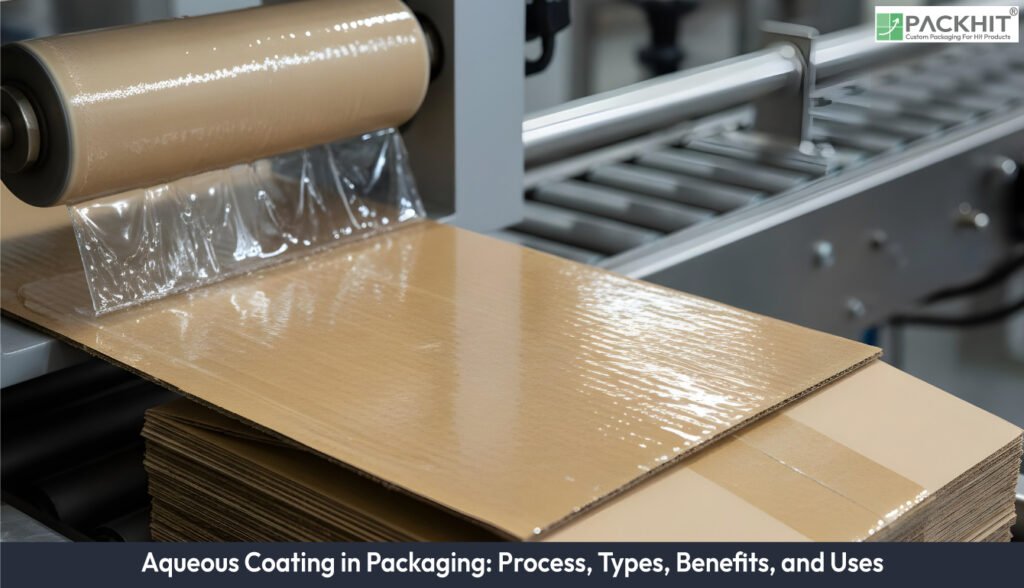
Aqueous coating in packaging uses water‑borne polymer films to create scuff control, gloss stability and food‑contact protection on printed paperboard. Aqueous coating production follows sequential stages that set film weight, apply the layer, remove water, complete polymer bonding and verify surface strength. Aqueous coating types include clear gloss, matte, satin, soft‑touch and barrier grades that shift feel, reflectance and oil resistance on cartons. Aqueous coating differs from UV and solvent systems through its water‑based composition, warm‑air drying, mid‑range gloss and food‑safe options. Aqueous coating benefits cover surface protection, moisture moderation, gloss control, low odour, quick drying, reduced VOC load and lower waste during print runs. Aqueous coating uses span retail cartons, food sleeves, beverage carriers, pharmaceutical packs, labels and courier‑handled paperboard formats.
- What is Aqueous Coating?
- What is the Aqueous Coating Process in Packaging?
- 1.Metering Stage
- 2. Application Stage
- 3. Drying stage
- 4. Curing and Film‑Formation Stage
- 5. Quality Verification Stage
- What are the Different Types Of Aqueous Coating in Packaging?
- What are the Benefits of Aqueous Coating in Packaging?
- Surface Protection
- Moisture Moderation
- Consistent Gloss Control
- Food‑Contact Compliance
- Low Odour
- Fast Drying
- Lower VOC Profile
- Cost Efficiency
- What are the Uses of Aqueous Coating in Packaging?
- Retail Cartons
- Food Packaging
- Beverage Packaging
- Pharmaceutical Packaging
- Paperboard Packaging
- Labels and Tags
- What is the Difference Between Aqueous Coating and Other Packaging Coatings?
- Why Choose Aqueous Coating for Packaging?
What is Aqueous Coating?
Aqueous coating is a water‑borne polymer film applied to printed paperboard as a protective layer that forms through water evaporation and polymer coalescence. The aqueous coating performs surface protection functions such as scratch reduction, moisture moderation and colour hold on paper‑based substrates. Typical material and performance characteristics of aqueous coating include acrylic or styrene‑acrylic dispersions, 30–55% solids content, rapid drying on press and a clear film that retains ink density. Practical performance attributes of aqueous coating cover fold resistance, low odour and stable gloss levels. Aqueous coating is made with formulations that meet food‑contact criteria; such variants are marketed as food‑safe and carry FDA approval.
What is the Aqueous Coating Process in Packaging?
The aqueous coating process in packaging includes sequential production steps that apply a water‑based polymer layer onto printed paperboard to create a protective film.
- Metering stage
- Application stage
- Drying stage
- Curing and film‑formation stage
- Quality verification stage
1.Metering Stage
Metering stage sets the coating weight through controlled transfer across rollers; the process uses anilox or metering rollers that regulate film thickness in a narrow tolerance band appropriate for paperboard substrates.
2. Application Stage
Application stage spreads the wet aqueous layer on the printed sheet through a flexo or tower coater; the step creates uniform surface coverage and avoids ink disturbance on freshly printed areas.
3. Drying stage
The drying stage removes water content by warm air and infrared heat; the stage reduces moisture levels quickly relative to solvent varnishes and prepares the polymer dispersion for coalescence.
4. Curing and Film‑Formation Stage
The curing and film‑formation stage completes polymer coalescence as solids bond into a continuous protective film; the stage produces scratch resistance, moisture moderation and a consistent gloss level on cartons and printed packaging.
5. Quality Verification Stage
Quality verification stage checks gloss, adhesion, and rub resistance through sample pulls; the checks confirm film uniformity and verify that the coating meets packaging durability requirements for UK manufacturing runs.
What are the Different Types Of Aqueous Coating in Packaging?
The different types of aqueous coating in packaging are clear gloss, matte, soft‑touch, satin, and functional barrier grades that use water‑borne polymer dispersions to change surface feel, gloss level, and protection on printed paperboard.
Clear Gloss
Clear gloss aqueous coating increases apparent ink density and adds a smooth surface that reduces scuff marks on printed cartons and paper labels. Clear gloss aqueous coating supports rapid drying on press and works on coated and uncoated paperboard.
Matte
Matte aqueous coating creates a flat surface with low reflectance that suits brands that avoid shine and want muted colour tones on consumer packaging. Matte aqueous coating uses silica‑filled dispersions that cut glare and provide steady visual uniformity.
Satin
Satin aqueous coating positions its gloss between matte and clear gloss and gives a restrained sheen on cartons used in personal‑care and household product lines. Satin aqueous coating stabilises colour without pushing reflectance above mid‑range values.
Soft‑Touch
Soft‑touch aqueous coating produces a velvety surface texture through modified polymers that scatter light and give a tactile finish on premium printed packaging. Soft‑touch aqueous coating slows drying relative to clear systems because of higher solids.
Functional Barrier
Functional barrier aqueous coating adds moisture moderation and grease resistance to food packaging that uses paperboard trays or folded cartons. Functional barrier aqueous coating relies on polymer blends that raise surface resistance to common food oils.
What are the Benefits of Aqueous Coating in Packaging?
The benefits of aqueous coating in packaging focus on surface protection, visual control, production efficiency and regulatory fit across printed packaging that uses paperboard substrates.
Surface Protection
Surface protection reduces scuffing, fingerprint marking and minor abrasion when cartons move through packing lines or retail handling. Surface protection also keeps ink density stable on coated and uncoated paperboard.
Moisture Moderation
Moisture moderation limits fibre swell and reduces print distortion when cartons encounter short‑term humidity shifts during transit or storage. Moisture moderation matters for paperboard formats that rely on dimensional stability.
Consistent Gloss Control
Consistent gloss control sets predictable reflectance across clear, matte, satin or soft‑touch grades. Consistent gloss control maintains colour behaviour and supports brand requirements that depend on fixed sheen levels.
Food‑Contact Compliance
Food‑contact compliance applies to aqueous formulations that use FDA‑accepted components for direct or indirect food exposure. Food‑contact compliance supports trays, sleeves and folded cartons used in chilled or ambient food distribution.
Low Odour
Low odour keeps printed packaging free from solvent traces that could transfer to food or fragranced goods. Low odour arises from the water‑borne nature of the coating and the low VOC content.
Fast Drying
Fast drying supports high‑speed litho or flexo production as water evaporates quickly under warm air and infrared heat. Fast drying reduces sheet marking and shortens wait times before cutting, creasing or glueing.
Lower VOC Profile
Lower VOC profile reduces airborne solvent load during print runs and supports environmental management plans in UK manufacturing plants. A lower VOC profile also limits compliance checks associated with solvent‑based varnishes.
Cost Efficiency
Cost efficiency results from short drying cycles and stable on‑press behaviour that reduces waste sheets during setup. Cost efficiency applies across large production runs where consistent film formation cuts reprint risk.
What are the Uses of Aqueous Coating in Packaging?
The uses of aqueous coating in packaging cover carton protection, colour stability, humidity control, food‑contact printing, and tactile surface design across paperboard packaging used in the UK manufacturing.
Retail Cartons
Retail cartons gain scuff control, colour steadiness and abrasion resistance during packing and shelf handling. Retail cartons in cosmetics, household goods and OTC items hold printed density because the aqueous film shields ink from friction points.
Food Packaging
Food packaging uses direct‑ or indirect‑contact aqueous grades that meet recognised food‑safety formulations. Food packaging such as sleeves, trays and folded boxes gains grease resistance when barrier polymers restrict oil penetration.
Beverage Packaging
Beverage packaging benefits from splash resistance and rub control during cold‑chain handling. Beverage packaging, such as multipack wraps and bottle carriers, maintains print clarity when condensation forms after chilling.
Pharmaceutical Packaging
Pharmaceutical packaging obtains low‑odour, low‑VOC protection that avoids taint transfer. Pharmaceutical packaging also secures ink stability on leaflets and carton stock, if repeated handling happens in dispensing areas.
Paperboard Packaging
Paperboard packaging receives surface protection against rubbing during courier sorting. Mailer boxes made from paperboard maintain printed instructions and branding when exposed to mechanical abrasion.
Labels and Tags
Labels and tags use thin aqueous films that prevent smudging if friction occurs during application or transit. Labels and tags maintain barcode readability because the coating keeps ink intact on narrow‑web substrates.
What is the Difference Between Aqueous Coating and Other Packaging Coatings?
The difference between aqueous coating and other packaging coatings, such as UV coating and solvent coating, concerns composition, cure method, gloss behaviour, surface strength and regulatory position across printed packaging that uses paperboard examples, such as folded cartons and labels.
The table below sets out the practical gaps between aqueous coating, UV coating and solvent varnish. The comparison covers five criteria that matter during UK packaging production runs.
| Criteria | Aqueous Coating | UV Coating | Solvent Varnish |
|---|---|---|---|
| Composition | Water‑borne acrylic or styrene‑acrylic dispersions at 30–55% solids | 100% solids acrylate systems that form an instant film under UV lamps | Solvent‑carried resins with volatile organic content that evaporates during drying |
| Drying / Cure Method | Drying by warm air and infrared heat through water evaporation | Photo-initiated cure triggered by ultraviolet energy | Evaporative drying that depends on airflow and solvent removal |
| Gloss Range | Low to mid gloss through clear, matte, satin or soft‑touch grades | High gloss that increases reflectance and ink contrast | Low to moderate gloss with visible variation on uncoated stock |
| Surface Strength | Scuff and moisture moderation suited to retail cartons | High abrasion strength on heavy‑handling items | Basic rub resistance with weaker film‑formation control |
| Regulatory Fit | Food‑contact grades available for indirect or direct contact | Limited food‑contact position unless specialised grades are configured | Constrained compliance because of solvent residues |
The comparison above frames the functional differences between aqueous coating and other coatings so that production teams can match coating chemistry to carton, label or paperboard specification without interrupting the running order of the overall article.
Why Choose Aqueous Coating for Packaging?
Choose aqueous coating for packaging because it adds controlled scuff protection and stabilises printed colour on paperboard sheets. The aqueous coating dries fast through warm air and infrared heat, so production lines keep a steady throughput on UK carton runs. The water‑borne film holds a low odour profile that reduces taint risk on food, cosmetic or pharmaceutical packs. The aqueous coating maintains gloss uniformity across clear, matte, satin or soft‑touch grades, so brand artwork stays consistent across repeated print batches.