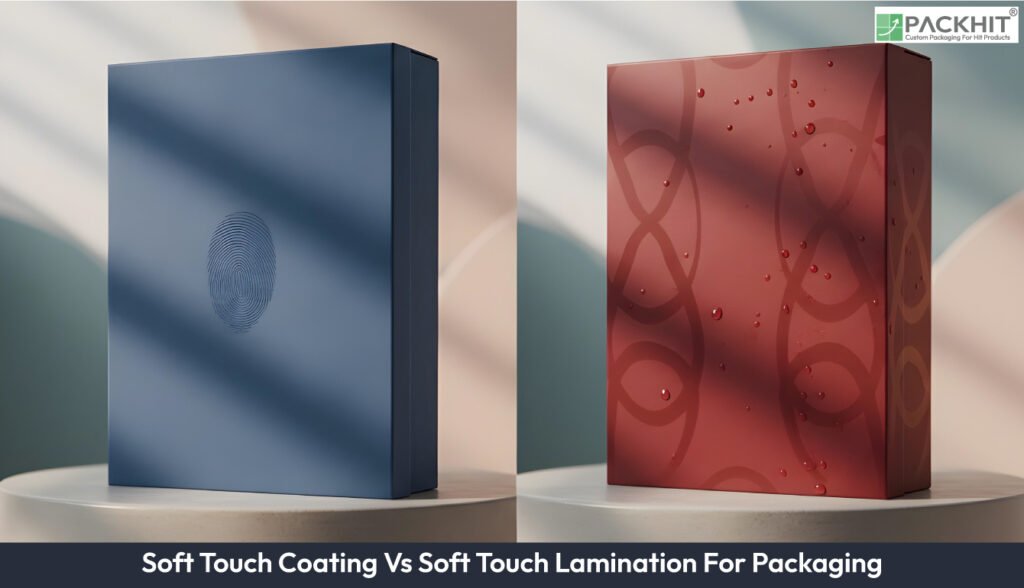
Soft‑touch coating and soft‑touch lamination describe two polymer finishes that change how printed cartons, sleeves and cards feel, protect colour surfaces, and move through converting. Coating applies during the print pass and forms a thin matte layer that keeps calliper shift low, preserves fine detail and supports fast production on short and mixed runs. Lamination bonds a discrete matte film after printing and increases abrasion resistance, moisture blocking and colour stability during transport, if packs run through long pick‑and‑pack routes. Both finishes reduce gloss and create a velvety tactile surface, yet lamination maintains uniformity across large panels, while coating reflects the texture of the underlying board. Manufacturers choose between them based on run size, converting constraints, recyclability limits and the required balance between tactile response and surface protection.
- What is Soft Touch Coating?
- What is Soft Touch Lamination?
- How Do Soft-Touch Coating and Soft-Touch Lamination Differ?
- Material Composition
- Tactile and Visual Characteristics
- Durability
- Physical Wear Resistance
- Layer Construction
- Protection
- Application Process
- Converting Behaviour
- Production Time and Cost
- Environmental Exposure
- Gloss Reduction
- Print Appearance and Colour Reproduction
- Where is Soft-touch Coating Used Compared to Soft-touch Lamination in Packaging?
- High-end Retail Packaging
- Business Cards and Invitations
- Product Sleeves and Hang Tags
- Electronics Packaging
- How Does Soft-touch Lamination Compare with Matte and Gloss Lamination?
What is Soft Touch Coating?
Soft touch coating is a thin polymer layer applied during the print pass that forms a matte, low‑friction surface with a velvety tactile response on paperboard substrates. The coating sits inside the fibre structure rather than on top of it, so printed detail remains clear, and colour shift stays limited on folding boxboard, coated papers and similar packaging grades.
What is Soft Touch Lamination?
Soft touch lamination is a post‑press process that bonds a soft‑feel polymer film to printed board and creates a matte, low‑friction surface with a protective film layer on folding cartons, rigid boxes and printed cards. The film covers the ink layer and forms a continuous polymer surface that reduces light reflection and adds a consistent tactile response across the sheet.
How Do Soft-Touch Coating and Soft-Touch Lamination Differ?
The difference between soft-touch coating and soft-touch lamination defines how each finish forms its polymer surface, changes converting behaviour, and controls durability on printed packaging. The comparison between soft-touch coating and soft-touch lamination is discussed in detail below:
Material Composition
Soft touch coating forms a thin polymer layer created from aqueous or UV dispersions that anchor into paperboard fibres and keep calliper changes low. The chemistry fixes through water evaporation or UV cure, and this fixation controls surface slip, matte level and drying stability on folding boxboard or coated papers.
Soft touch lamination bonds a polypropylene or polyester film with a soft‑feel top layer and an adhesive backing that creates a discrete barrier over the printed sheet. Film thickness, core polymer type and adhesive grade govern stiffness, moisture transmission and how the sheet moves through creasing and glueing stages. Coating behaves as part of the substrate; lamination introduces a separate structure that alters fold response if pack formats include tight gussets or narrow hinges.
Tactile and Visual Characteristics
Soft touch coating produces a matte surface with low friction and a tactile feel that reflects the underlying board texture. The coating sits close to the fibre structure, so small variations in paper smoothness influence gloss and haze.
Soft touch lamination forms a velvety polymer film that keeps gloss suppression stable across wide panels, if artwork covers large solids. The film controls light scatter and masks minor substrate variation, so colour areas read more uniformly on cartons and sleeves.
Durability
Soft touch lamination increases abrasion and moisture resistance because the film absorbs mechanical contact and blocks water ingress across panels and edges. The construction holds up during repeated handling cycles in retail logistics, if packs pass through conveyors or dense pick‑and‑pack stages.
Soft touch coating raises resistance relative to uncoated board but loses surface stability faster under frequent rubbing or stacking pressure. Coated panels dull sooner at corners, if transit routes involve long vibration or carton‑to‑carton contact.
Physical Wear Resistance
Soft touch lamination reduces edge wear, print burnish, and surface marking through a thicker polymer layer, and this layer distributes point pressure when cartons stack tightly. The film resists sliding abrasion if boxes run against tray dividers or shelf fronts.
Soft touch coating tolerates light scuffing on small formats but marks sooner under concentrated force or when rough substrates sit next to it in transit. The thinner layer cannot buffer friction as consistently, so surface haze increases faster on repeated contact.
Layer Construction
Soft touch coating forms a thin polymer layer that bonds to the substrate surface and keeps calliper shift low, so crease lines and glue zones behave close to an uncoated board. The layer integrates into the paper surface and does not alter hinge movement on compact folds.
Soft touch lamination applies a measurable film that increases stiffness and changes fold behaviour, if designs include tight hinges, narrow gussets or complex crash‑lock bases. The discrete barrier layer alters fibre exposure in glue areas and shifts the way creases open and close on production lines.
Protection
Soft touch lamination adds a film barrier that resists scratches, scuffs and moisture during transit, and the film layer holds its surface properties across repeated contact cycles because the polymer top coat absorbs friction. Laminated sheets keep print density stable when cartons ride against conveyor guards or pallet straps, if secondary packaging creates points of pressure.
Soft touch coating adds moderate resistance that supports shelf display but drops under repeated abrasion or humidity, if cartons move through distribution with rough contact or high moisture exposure. Coated surfaces show faster dulling at corners and panel edges because the thin layer sits inside the fibre network, so abrasive contact marks the substrate sooner under long transport routes.
Application Process
Soft touch coating is applied during the print pass because the press meters the polymer dispersion through anilox or coating units, and the layer forms as the sheets move through drying. The process keeps handling steps inside one sequence, and crews control viscosity, flow and laydown while monitoring registration and ink density.
Soft touch lamination is applied after printing because the board shifts to a laminator where operators load film rolls, apply adhesive, and run sheets through heated or pressured nips. The separate stage adds queue time and introduces checks for adhesive wet-out, nip temperature and film tension, if several formats enter the same line.
Converting Behaviour
Soft touch coating keeps crease, fold and glue characteristics close to untreated board because the polymer integrates with fibres and avoids major stiffness changes.
Soft touch lamination alters converting because the film changes bend radius, cracking behaviour and glue contact, if pack formats require tight hinges or narrow gussets. Coated sheets follow standard crease rules; laminated sheets need fold and glue trials to confirm lap joints, crash‑lock bases and hinge motion behave within tolerance.
Production Time and Cost
Soft‑touch coating cuts production time because the finish applies during the print pass, removes extra handling stages, and moves sheets straight to drying and stacking. The process keeps setup time low on short and medium runs because changeovers stay on the press.
Soft touch lamination increases cost and extends queues because the job moves to a laminator where operators load film, apply adhesive, trim edges and manage a separate cycle. The film, adhesive grade and machine passes raise the per‑sheet cost, and the fixed setup period only becomes efficient on large quantities.
Environmental Exposure
Soft touch lamination blocks moisture transfer through a continuous film layer that stabilises panels during humidity swings, minor liquid contact and temperature shifts.
Soft touch coating gives moderate defence, although the thin deposited layer dulls faster and can develop tack changes under prolonged humidity. Coating supports single‑material recycling because the layer integrates with fibres; lamination forms a mixed structure that raises separation complexity in paper‑recycling systems.
Gloss Reduction
Soft touch coating reduces gloss by diffusing reflection through a thin matte layer that keeps substrate texture visible and creates a slight variation across broad areas because fibre smoothness affects reflectance.
Soft touch lamination suppresses gloss more evenly because the matte film controls scatter across a continuous surface and masks small board inconsistencies. Coating provides a subtle matte shift; lamination produces a more uniform low‑gloss appearance.
Print Appearance and Colour Reproduction
Soft touch coating keeps printed detail crisp because the thin layer integrates with the ink film and causes minimal density shift on coated papers and folding boxboard.
Soft touch lamination alters visual density slightly because the film introduces a uniform polymer interface that softens micro‑detail, especially on dark solids, and shifts perceived saturation under angled light. Coating supports fine-line clarity; lamination produces steadier colour fields but softens small features when film thickness increases.
Where is Soft-touch Coating Used Compared to Soft-touch Lamination in Packaging?
Each packaging use-case below reflects a different requirement for tactile response, surface protection, and converting stability:
High-end Retail Packaging
High-end retail packaging uses soft-touch lamination as a protective film that keeps colour panels stable during repeated handling in stores and warehouses, and this film reduces scuffs on folding cartons for cosmetics boxes and jewellery cartons, if transit routes involve dense stacking.
Business Cards and Invitations
Business cards and invitations use soft-touch coating as an in-line finish that keeps calliper change low and preserves fine-line detail on small formats, and the coating fixes during the print pass and supports quick turnaround if runs contain several short quantities.
Product Sleeves and Hang Tags
Product sleeves and hang tags use soft-touch coating as a fast, low-cost finish that keeps creasing behaviour close to untreated board, and the thin layer maintains fold accuracy on sleeves and tags if the glue areas sit close to tight hinges.
Electronics Packaging
Electronics packaging uses soft-touch lamination as a film barrier that protects dark solids on smartphone boxes and accessory boxes. The laminated surface resists abrasion across conveyor points if units run through long pick-and-pack sequences.
How Does Soft-touch Lamination Compare with Matte and Gloss Lamination?
Soft touch lamination changes the surface through a tactile film layer, whereas matte and gloss laminations change the surface only through reflectance control. Matte lamination reduces glare and creates a flat appearance, yet it does not create the low‑friction softness that the soft‑touch film produces. Gloss lamination increases reflectivity and surface hardness, so the sheet reads brighter and resists light scuffing if packs move across conveyors. Soft touch lamination keeps colour fields steady by masking minor board variation, and this behaviour contrasts with matte film, which shows more texture through the sheet. Gloss film shifts tonal depth because the surface reflects more light, while soft‑touch film lowers reflection and adds a velvety feel across large panels.