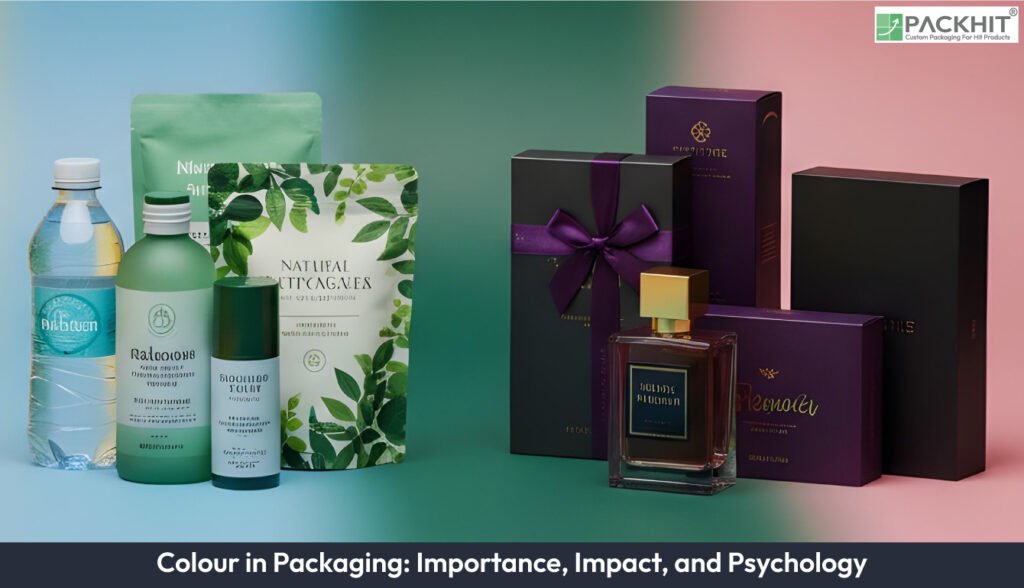
Colour in packaging drives instant recognition, emotional response, and category identification by activating learned visual cues at the point of sale. Cultural and industry colour codes in packaging influence consumers’ buying behaviour by shaping trust, expectations, and decision speed through familiar visual signals. Colour psychology in packaging affects attention, emotion, perceived quality, memory, and cognitive load during product evaluation. Brand colour selection aligns category norms, psychological meaning, cultural context, and print standardisation to protect recognition and reduce purchase hesitation.
- Why are Colours Important in Packaging?
- How do Cultural and Industry Colour Codes in Packaging Impact Buying Behaviour?
- Cultural Meaning and Symbol Interpretation
- Category Recognition and Shelf Navigation
- Trust Formation and Perceived Compliance
- Quality Signalling and Price Expectation
- Brand Differentiation Within Industry Limits
- Print Consistency and Colour Standardisation
- How Colour Psychology Influences Emotional and Cognitive Responses in Packaging Consumers?
- Attention Capture and Visual Priority
- Emotional Valence and Mood Association
- Perceived Quality and Product Expectations
- Memory Encoding and Brand Recall
- Cognitive Load Reduction and Decision Speed
- How Brands Choose Appropriate Colours in Packaging?
Why are Colours Important in Packaging?
Colours are important in packaging because they govern first recognition, emotional response, and category identification at the point of sale. Within approximately 0.3 seconds, colour activates learned visual cues that direct attention, shape expectations of quality and flavour, and signal product type through established category codes. For example, green for natural or organic foods and blue for hygiene and personal care products. Consistent colour use also reduces recognition errors across print runs and production batches. When colour is controlled through standardised systems such as Pantone, brands maintain visual accuracy and shelf consistency. Even minor colour deviations can lead to shelf confusion, brand dilution, or measurable sales loss. Primary colours red, blue, and yellow function as strong visual anchors and perform reliably under varied lighting conditions, making them effective for mass-market visibility. Secondary colours, including green, orange, and purple, enable differentiation within crowded categories while preserving perceptual clarity. Adjacent or closely related colours reduce contrast and are often used deliberately to communicate calmness, uniformity, or premium positioning. Colour grouping also affects legibility. High chromatic contrast between background and typography improves readability from a distance, while low-contrast, tonal palettes support minimalist aesthetics, often at the expense of rapid visual scanning.
How do Cultural and Industry Colour Codes in Packaging Impact Buying Behaviour?
Cultural and industry colour codes impact buying behaviour by shaping recognition speed, emotional trust, and category expectations at the point of sale. Shoppers decode colour before reading text, using learned cultural meaning and industry standards to filter choices. Misalignment between colour codes and product type increases hesitation. Alignment reduces decision time and improves selection accuracy.
Cultural Meaning and Symbol Interpretation
Cultural meaning and symbol interpretation guide emotional acceptance based on learned regional associations. White signals purity in the UK food and healthcare sectors, while it represents mourning in parts of East Asia. Red communicates urgency and appetite in Western retail, while indicating warning or prohibition in regulated environments. Colour misinterpretation reduces trust and lowers purchase intent.
Category Recognition and Shelf Navigation
Category recognition and shelf navigation allow shoppers to locate products within 1 to 2 seconds of shelf scanning. Industry colour norms, such as blue for oral care or green for organic foods reduce visual search effort. Familiar colour placement lowers cognitive load during comparison. Faster recognition increases conversion in low-involvement categories.
Trust Formation and Perceived Compliance
Trust formation and perceived compliance signal safety, regulation, and legitimacy through colour conformity. Pharmaceutical and hygiene packaging relies on white and blue to indicate sterility and control. Deviation from these codes raises doubt about formulation or standards. Consistent colour use supports perceived regulatory alignment.
Quality Signalling and Price Expectation
Quality signalling and price expectation communicate product positioning without textual claims. Dark, muted colours suggest density and higher formulation strength in cosmetics and supplements. Bright or highly saturated colours signal affordability in mass-market goods. Colour-position mismatch distorts price perception.
Brand Differentiation Within Industry Limits
Brand differentiation within industry limits balances uniqueness against recognisability. Accent colours introduce distinction while preserving category identification. Excessive deviation disrupts classification and reduces pickup rates. Controlled contrast improves memorability without breaking category logic.
Print Consistency and Colour Standardisation
Print consistency and colour standardisation protect recognition across production runs and suppliers. Pantone systems reduce shade variance in large-scale packaging. A single colour drift changes shelf visibility and weakens recall. Standardised colour control supports long-term brand stability.
How Colour Psychology Influences Emotional and Cognitive Responses in Packaging Consumers?
Colour psychology influences emotional and cognitive responses in packaging consumers by directing attention, shaping emotional judgement, and reducing decision effort during shelf evaluation.
Attention Capture and Visual Priority
Attention capture and visual priority control where the eye lands within the first 300 milliseconds of shelf exposure. High-contrast colours, such as yellow on dark substrates, interrupt peripheral scanning and force visual fixation. This effect reduces visual search time and increases product noticeability among adjacent packages. Repeated exposure strengthens colour–location memory during repeat purchase.
Emotional Valence and Mood Association
Emotional valence and mood association assign immediate positive or negative affect to a product before text processing begins. Warm colours, such as red and orange, increase arousal and stimulate appetite cues in food categories, while cool colours, such as blue, suppress urgency and signal control. These responses originate from learned biological and cultural conditioning. Emotional congruence increases trust when colour aligns with product function.
Perceived Quality and Product Expectations
Perceived quality and product expectations form through colour weight and saturation cues. Dark, low-saturation colours signal density and formulation strength in products such as cosmetics or supplements. Light or desaturated colours signal mildness and safety in products such as baby care or hygiene items. A mismatch between colour and product use increases cognitive friction.
Memory Encoding and Brand Recall
Memory encoding and brand recall rely on consistent colour exposure across viewing conditions. Distinctive hues encoded in long-term memory reduce reliance on logo reading during repurchase. Pantone-controlled colours improve recall accuracy by limiting shade drift across print runs. Stable colour memory lowers decision time in high-frequency categories.
Cognitive Load Reduction and Decision Speed
Cognitive load reduction and decision speed occur when colour simplifies category classification. Recognisable colour codes allow shoppers to filter options without reading claims or ingredients. Reduced mental processing increases selection speed in crowded retail environments. Faster decisions correlate with higher conversion in low-involvement purchases.
How Brands Choose Appropriate Colours in Packaging?
Brands choose appropriate colours in packaging by aligning product function, category colour codes, and print accuracy to reduce consumer decision time and protect brand recognition. Colour selection begins with established category norms, such as blue for hygiene products or green for organic foods because deviation from these conventions increases hesitation at the shelf. Psychological responses and cultural meanings are then evaluated to ensure emotional alignment with the product. For example, using calm tones for healthcare items or warm hues for impulse-driven foods. Final colour choices are standardised through systems such as Pantone to prevent shade variation, as even a single colour inconsistency across print runs can result in recognition loss and measurable sales decline.