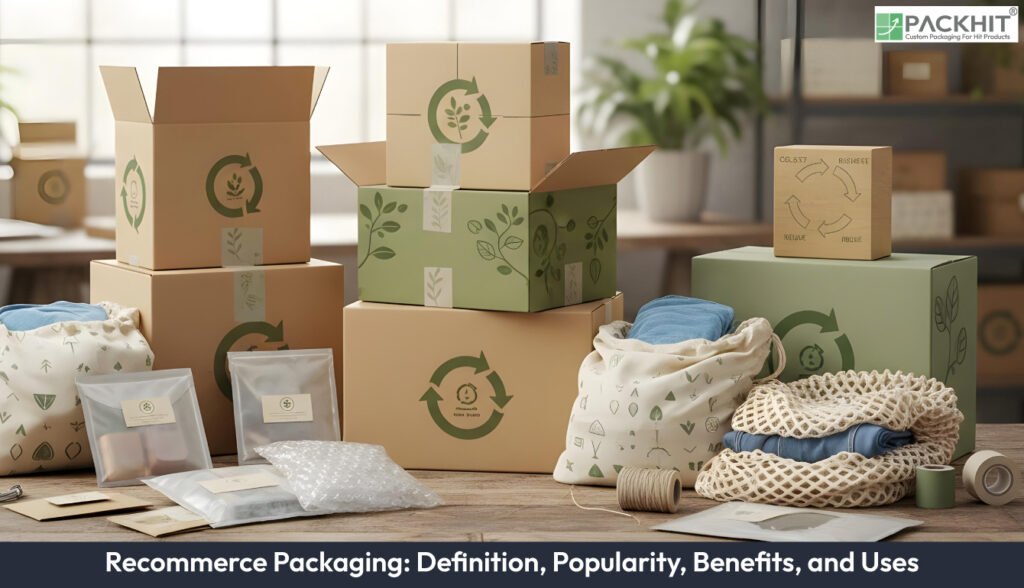
Recommerce packaging describes systems built to circulate repeatedly across resale, returns, refurbishment, and redistribution, going beyond traditional single-use shipping. The growing popularity of recommerce packaging stems from rising resale markets, cost pressures in reverse logistics, and regulations targeting packaging waste. The approach delivers clear benefits by reducing material use, lowering damage-related losses, and improving operational efficiency for brands and consumers. Practical uses span multiple industries, including retail, electronics, apparel, and rental services, where reusable packaging supports circular business models, predictable returns, and extended product protection throughout multiple logistics cycles.
- What does recommerce packaging mean?
- Why is recommerce packaging becoming popular?
- How does recommerce packaging support circular economy systems?
- What are the benefits of recommerce packaging?
- 1. Cost Savings for Brands
- 2. Improved Returns Experience for Consumers
- 3. Reduced Environmental Impact
- How is recommerce packaging engineered for reuse and durability?
- Which industries commonly use recommerce packaging?
- How is recommerce packaging used in daily operations?
What does recommerce packaging mean?
Recommerce packaging is a class of reusable or multi-cycle packaging designed to survive repeated shipment, handling, and inspection during resale or return processes. Unlike regular e‑commerce cartons, recommerce packaging is designed for long-term reuse rather than disposal. Materials focus on tear resistance, strength, and durability to handle 5–50 reuse cycles. Closures, labels, and shapes allow inspection, relabeling, and reconditioning without damage.
Recommerce packaging operates in reverse supply chains, moving goods from customers back to fulfilment centres, refurbishers, or resale platforms. Packages must withstand mixed transport, partial loads, and repeated openings. Recommerce packaging combines features of durable returnable packaging with compatibility for standard parcel networks.
Why is recommerce packaging becoming popular?
Recommerce packaging is growing in popularity because high product return rates, rising resale volumes, and UK and EU waste regulations make multi‑use packaging cheaper per shipment and lower packaging waste than single‑use formats.
- Cost efficiency: Multi-use packaging reduces material costs compared to single-use cartons, often paying off after 3-7 reuse cycles in apparel and electronics.
- Environmental impact: Reuse lowers packaging waste, supporting sustainability goals and reducing landfill contributions.
- Regulatory compliance: Extended producer responsibility (EPR) schemes and packaging waste targets in the UK and EU encourage adoption of durable, reusable formats.
- High return rates: Fashion returns over 20%, and electronics returns over 30% make durable packaging essential for handling inbound and outbound logistics.
- Reverse logistics support: Recommerce packaging is designed to withstand repeated shipping, inspection, and relabeling, ensuring reliability across multiple cycles.
How does recommerce packaging support circular economy systems?
Recommerce packaging refers to durable, multi-use packaging designed for repeated shipping and returns in reverse logistics and resale systems. Unlike single-use e-commerce cartons, recommerce packaging focuses on tear resistance, compression strength, and surface durability to withstand multiple reuse cycles. These packages enable efficient inspection, relabeling, and refurbishment while maintaining product protection. Recommerce packaging supports both closed-loop and open-loop circular economy models, reducing material consumption, waste, and operational costs while improving resale readiness and traceability across apparel, electronics, and other consumer goods sectors.
What are the benefits of recommerce packaging?
Recommerce packaging reduces per-shipment packaging cost for brands while giving consumers reusable, resealable packs that simplify returns, protect products across multiple shipments, and cut packaging waste.
1. Cost Savings for Brands
Recommerce packaging lowers variable packaging costs, reduces damage-related write-offs, and stabilises reverse logistics workflows. Unit costs often match single-use packaging after just a few reuse cycles, improving margins in electronics, luxury goods, and apparel.
2. Improved Returns Experience for Consumers
Durable packaging simplifies returns with resealable designs and pre-applied return pathways. Functional and easy-to-use packaging reduces disposal burden and encourages participation in resale or trade-in programs.
3. Reduced Environmental Impact
Multi-use packaging decreases the number of units entering household waste streams. Transport emissions per shipment decline as material impacts are spread across multiple reuse cycles, supporting sustainability and circular economy goals.
How is recommerce packaging engineered for reuse and durability?
Recommerce packaging is engineered for long-term reuse and durability by focusing on strong structures, reliable closures, and resilient surfaces. Corrugated boxes use reinforced edges and high-grammage liners, while polymeric mailers have thicker films and puncture-resistant seals. Zip closures, tuck flaps, or mechanical locks maintain repeated functionality, and surfaces support multiple labels without damage. Modular inserts and standardised sizes simplify refurbishment, extend package life, and ensure safe handling, all while balancing durability with transport efficiency.
Which industries commonly use recommerce packaging?
Recommerce packaging is used by apparel resale, consumer electronics refurbishment, luxury goods resale, rental-based retail, and spare parts distribution, including clothing returns, smartphone reconditioning, watch and handbag resale, tool hire, and B2B service logistics.
- Apparel resale: Lightweight reusable mailers designed for repeated handling and folding.
- Consumer electronics refurbishment: Rigid or semi-rigid packaging with shock absorption to protect high-value items.
- Luxury goods and accessories: Durable packaging that preserves presentation across multiple reuse cycles.
- Rental-based retail: Tool hire, media rental, and B2B spare parts distribution use returnable packaging to control assets and reduce loss.
How is recommerce packaging used in daily operations?
Recommerce packaging circulates as a reusable logistics asset, shipping products to customers, returning for inspection or refurbishment, and redeploying to secondary buyers using the same pack across multiple outbound and inbound cycles.
- Outbound and return logistics: Packages ship products to customers, return for inspection or refurbishment, and redeploy to secondary buyers.
- Inspection and maintenance: Scanning, cleaning, or minor repairs ensure packages remain functional across multiple cycles.
- Tracking and lifespan management: Programs monitor loss and cycle counts, or rely on material durability to guide replacement.
- Circular logistics role: Recommerce packaging acts as a reusable logistics asset, supporting resale, reverse supply chains, and revenue-based models.