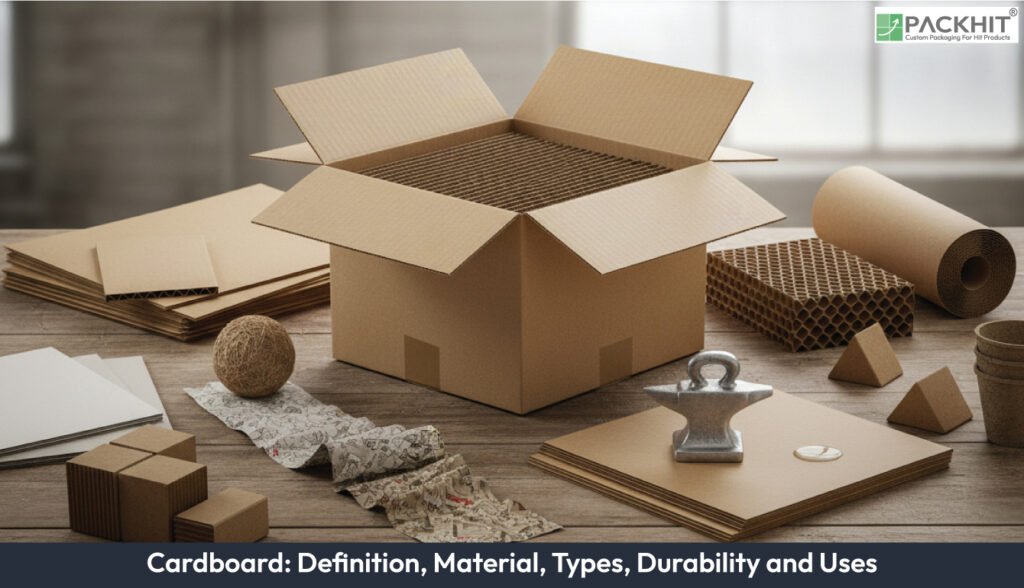
Cardboard is a paper-based material whose structure, composition and construction determine its strength, durability and uses across packaging, display, craft and recycling. Its cellulose-fibre layers create stiffness for tasks ranging from shipping boxes and pallet loads to retail cartons and event panels, while corrugated formats with fluted cores provide added compression resistance compared with smooth solid boards. Non-corrugated and speciality constructions, including folding boxboard, chipboard and honeycomb panels, offer clean cutting, print quality or high stiffness-to-weight ratios for displays and inserts. Durability shifts with board type, flute geometry and exposure to moisture or contamination, which weaken fibre bonds and reduce load capacity. These structural differences guide selection for protective packaging, retail displays, horticulture layers, craft builds and recycling streams, ensuring each application uses a board grade that matches required strength, appearance, moisture tolerance and ease of cutting.
- What is Cardboard?
- How Does Material Composition Change Cardboard’s Structural Construction?
- How Does Corrugated Construction Produce Strength?
- What are Non-corrugated and Speciality Constructions?
- What are the Types of Cardboard?
- Corrugated Cardboard
- Non‑corrugated Solid Cardboard
- Engineered Cardboard Panels
- Lightweight Craft Cardboard
- How Does Cardboard Durability Change Across Construction Types and Exposure?
- What are the Uses of cardboard?
- Protective Packaging
- Shipping Boxes
- Retail Displays
- Event Panels
- Craft Builds
- Horticulture Layers
- Recycling Feedstock
- How to Choose Cardboard for a Specific Application?
What is Cardboard?
Cardboard is a thick, paper-based packaging material designed to be stronger and stiffer than regular paper. It is made from cellulose fibres derived from wood pulp, which form layered boards with greater thickness and rigidity. Cardboard supports packaging and storage tasks such as shipping cartons and archive boxes. It also supports retail tasks through printed displays such as shelf‑ready units. Its role in the packaging lifecycle covers collection as recyclable feedstock and compression into dense bales for transport to mills. Cardboard also appears in simple craft tasks such as DIY fireplaces or wall decorations made from small shapes cut from lightweight board. If users cut and reuse leftover packaging offcuts that mimic the quick cardboard projects shown in the craft examples of jellyfish wall decor and cardboard fireplaces.
How Does Material Composition Change Cardboard’s Structural Construction?
Material composition sets the thickness, stiffness and deformation behaviour in cardboard. Cellulose fibres form bonded layers that change density and flex pattern. Multi‑layer facings around a corrugated medium add out‑of‑plane stiffness and impact absorption if boards face stacking loads. Single compact sheets stay flat for controlled print and predictable bending. Offcuts from these sheets cut into small shapes, such as DIY fireplaces or baby jellyfish wall decor from the craft examples, if leftover panels match light‑duty needs.
How Does Corrugated Construction Produce Strength?
Corrugated cardboard uses outer liners and a corrugated medium to create a stiff sandwich structure that adds rigidity and energy absorption. Flute profiles change how the board reacts under compression and impact; B flute and C flute adjust pitch and height to shift cushioning, stacking strength and print area. Single‑wall, double‑wall and triple‑wall grades support different load levels. Single‑wall works in lightweight distribution, and double‑wall supports palletised shipments. Multilayer boards carry higher stack compression demands. Simple craft builds, such as DIY fireplaces or small jellyfish wall pieces made from leftover cartons, use offcuts from these corrugated sheets because the structure cuts cleanly and stays stable in flat sections.
What are Non-corrugated and Speciality Constructions?
Non‑corrugated variants use solid board and paperboard grades such as folding boxboard and chipboard. These materials form compact layers that stay flat and cut cleanly. Engineered cores, such as honeycomb cardboard, use hexagonal cells that raise stiffness-to-weight ratios for inserts or display panels. Graphic and ivory boards use smooth surfaces that hold dense colour for retail packaging or luxury shoeboxes. Some compact boards use wax or other surface treatments, and these coatings reduce fibre recovery at recycling plants. Craft users cut these boards into simple shapes for small builds, such as DIY fireplaces or baby jellyfish wall pieces, if leftover cartons are available.
What are the Types of Cardboard?
The most common types of cardboard are mentioned below:
Corrugated Cardboard
Corrugated cardboard uses a fluted medium between two liners to create bending stiffness and compression strength. Single‑wall, double‑wall and triple‑wall grades support shipping tasks for products that face stacking, pallet movement or vibration. Flute profiles, such as B flute or C flute, influence the impact response and print area. Corrugated sheets appear in transport cartons, outer boxes and temporary structures, if low weight matters.
Non‑corrugated Solid Cardboard
Solid cardboard uses compact fibre layers without a fluted core. Folding boxboard, chipboard and graphic board give colour hold and smooth surfaces for retail cartons, shoeboxes and display sleeves. These boards deform more easily under compression compared with corrugated grades and suit applications where appearance matters more than bulk strength.
Engineered Cardboard Panels
Engineered cardboard panels include honeycomb cores and rigid structural sheets that support point‑of‑sale units, furniture prototypes or protective inserts. Honeycomb panels use hexagonal cells to create an internal structure with stiffness comparable to lightweight timber panels. These forms appear where rigidity and weight reduction align with recyclability demands.
Lightweight Craft Cardboard
Lightweight craft cardboard uses thin, easily cut fibreboards that hobby users repurpose for small builds and decorative projects. DIY fireplaces and jellyfish‑shaped wall pieces in the craft examples rely on this form because it cuts cleanly and holds simple folds. This category has limited load capacity but supports model‑making, mock‑ups and home décor trials.
How Does Cardboard Durability Change Across Construction Types and Exposure?
Cardboard durability varies with board construction and ambient conditions. Corrugated formats carry higher stiffness and compression capacity compared with single‑sheet boards, if loads involve stacking or transit vibration. Compact boards prioritise smooth surfaces and show lower out‑of‑plane resistance, if packaging functions focus on printed presentation rather than load.
Cardboard Strength Properties
Bending stiffness, compressive strength and crush resistance govern cardboard strength. Stiffness rises with larger section depth and specific flute geometry, if corrugated layers use wider pitches. Compressive capacity increases as wall count grows and liner weight rises. Packaging teams match board grade to stacked weight and manual handling mode to limit crushing, abrasion or panel bowing. Thin craft panels cut for DIY fireplace pieces or baby jellyfish shapes in the context examples show low structural margin because low‑mass boards lose rigidity quickly.
Moisture and Contamination Limit
Moisture and contamination weaken fibre bonding and reduce compression behaviour. Water uptake loosens fibre junctions and drops bending stiffness if humidity rises above storage tolerance. Grease, food residue or wax coatings lower mechanical integrity and block acceptance at recycling plants. Sorting lines reject boards with greasy patches, waxed faces or attached polystyrene inserts. Thin decorative shapes, including the jellyfish and fireplace craft pieces mentioned in the context, deform fast under moisture because low‑mass fibres saturate quickly than corrugated sheets.
What are the Uses of cardboard?
The main uses of cardboard cover packaging, transport, display, craft and horticulture tasks. Each use depends on board thickness, corrugated structure and print suitability.
Protective Packaging
Protective packaging uses cardboard to block bending and compression forces. Corrugated walls carry stacked loads if pallets move through warehouses. Inserts, sleeves and carton trays stabilise household goods, electronics and food packs.
Shipping Boxes
Shipping boxes use corrugated grades to keep stacked loads stable. B‑flute and C‑flute control cushioning and print area. Double‑wall boards resist crush in storage if cartons face long distribution cycles.
Retail Displays
Retail displays use paperboard and rigid sheets for printed presentation. Folding boxboard, graphic board, and engineered panels support trays, shoebox sleeves and point‑of‑sale stands that hold colour-dense artwork.
Event Panels
Event panels use wide sheets to create short‑term partitions. Honeycomb cores add stiffness for freestanding backboards, if installers need low mass and simple cutting.
Craft Builds
Craft builds use thin fibreboards for small shapes and decorative pieces. Offcuts from DIY fireplaces or baby jellyfish wall decor from the context examples, if users cut curves or fold light panels.
Horticulture Layers
Horticulture layers use cardboard sheets to slow weed growth and moisture loss. The sheets break down beneath compost and return fibre to soil if placed in contact with damp ground.
Recycling Feedstock
Recycling feedstock uses collected cardboard as fibre for repulping. Curbside streams bale material before mills remove contaminants and recover pulp for new board grades.
How to Choose Cardboard for a Specific Application?
To choose cardboard for a specific application, follow the material requirements of your project by matching board strength, moisture resistance, print quality, and flexibility to the demands of the intended use.
- Select corrugated boards for stacking or impact forces. Single‑wall, double‑wall and triple‑wall grades carry different compressive loads if boxes move through pallet handling. Flute profiles such as B‑flute or C‑flute change bending behaviour in transit.
- Select coated liners or add external barriers for humid environments. Untreated fibre absorbs water quickly if cartons pass through damp storage. Barrier films reduce absorption, although coatings lower acceptance in fibre‑recovery streams.
- Select a solid board for print fidelity. Graphic board, ivory board and folding boxboard support colour‑dense artwork, if retail packaging needs smooth surfaces and sharp edges.
- Select thin fibreboard for small decorative builds. Offcuts suit short projects such as cardboard fireplaces or jellyfish wall shapes from the craft examples, if users cut simple curves or slot‑fit joints.