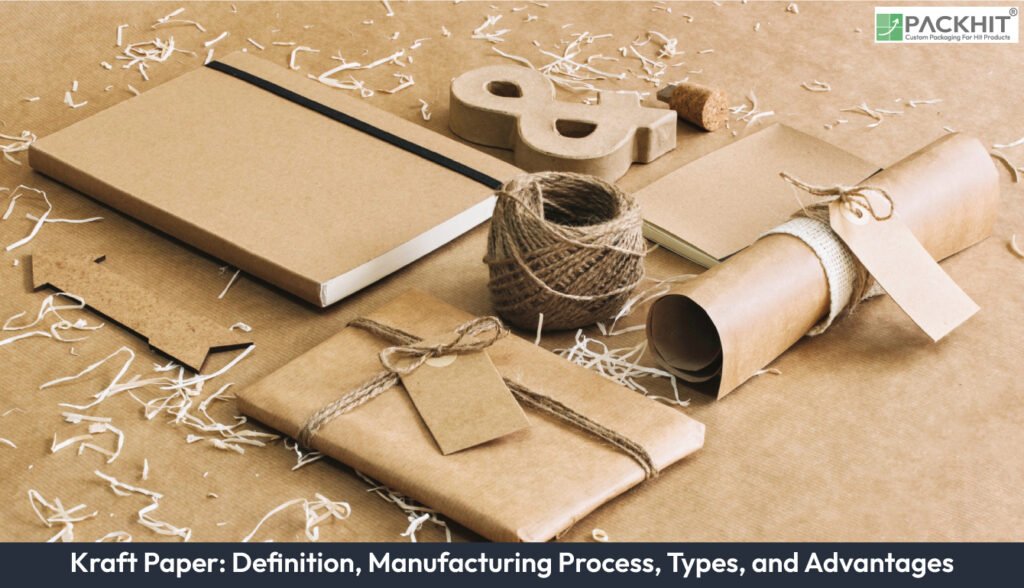
Kraft paper is a strong, durable packaging material made from chemically processed wood pulp, primarily sourced from long-fibre softwoods. It is known for its high tear resistance and stiffness and is widely used in retail, food, industrial, and e-commerce applications. The kraft pulping process removes lignin and strengthens fibres, producing kraft paper in various types such as brown, bleached, virgin, recycled, coated, and speciality grades for specific uses. The advantages of kraft paper include high strength, recyclability, cost-efficiency, and suitability for printing and branding.
- What is Kraft Paper?
- What is the Manufacturing Process of Kraft Paper?
- 1. Pulping
- 2. Screening and Washing
- 3. Bleaching (Optional)
- 4. Paper Formation
- 5. Pressing and Drying
- 6. Winding and Cutting
- What are the Different Types of Kraft Paper?
- Natural Brown (Unbleached Kraft) Paper
- White (Bleached Kraft) Paper
- Virgin Kraft Paper
- Recycled Kraft Paper
- Poly-Coated Kraft Paper
- Coated (Treated Kraft) Paper
- Printed Kraft Paper
- Sack Kraft Paper
- Absorbent Kraft Paper
- Spinning Kraft Paper
- Hunting Cartridge Paper
- Waxed Kraft Paper
- Candy Wrapping Paper
- What are the Key Advantages of Kraft Paper?
- High Strength and Durability
- Tear and Puncture Resistance
- Moisture and Grease Resistance
- Scratch Resistance
- Recyclable and Lightweight
- Supports Sustainability Goals
- Versatile for Printing and Branding
- What are the Common Uses of Kraft Paper?
What is Kraft Paper?
Kraft paper is a type of paper made from the chemical pulp of wood fibres, primarily sourced from long-fibre softwoods such as pine and spruce. The name “kraft” comes from the German word for “strength,” reflecting the material’s primary purpose of providing durability and eco-friendliness. Common examples of kraft paper include kraft sandwich wraps, kraft bakery boxes, and kraft grocery bags.
The strength of kraft paper comes from three key factors:
- Chemical processing: The kraft process removes lignin from the wood pulp, increasing the proportion of cellulose in the fibres and producing longer, more aligned fibres.
- Process chemistry: Sulphur-containing compounds introduced during production enhance fibre bonding, improving tensile strength.
- Choice of fibres: Long-fibre softwoods, such as pine, spruce, and fir, are preferred because they provide a high strength-to-weight ratio.
The result is a material with excellent tensile strength, high tear resistance, and significant stiffness.
What is the Manufacturing Process of Kraft Paper?
The manufacturing process of kraft paper is called kraft pulping, also known as the sulfate process. The detailed process is given in the steps below:
- Pulping
- Screening and Washing
- Bleaching (Optional)
- Paper Formation
- Pressing and Drying
- Winding and Cutting
1. Pulping
The Kraft pulping process begins with wood chips being cooked in a solution called white liquor, which contains sodium sulfide and other alkaline chemicals. This cooking process separates lignin from cellulose, breaking down the wood structure to produce kraft pulp. The resulting pulp is strong, fibrous, and suitable for making durable kraft paper.
2. Screening and Washing
After pulping, the kraft pulp is screened and thoroughly washed to remove residual chemicals, dirt, and other impurities. This ensures a clean and uniform pulp that will produce consistent paper quality. Proper washing is critical to maintain the strength and durability of the final paper.
3. Bleaching (Optional)
If a lighter or white appearance is required, the kraft pulp may be bleached to remove remaining pigments. Bleaching improves the visual quality of the paper for packaging or printing purposes. However, excessive bleaching can slightly reduce the mechanical strength compared to unbleached kraft.
4. Paper Formation
The washed (and optionally bleached) pulp is formed into a continuous paper web on a paper machine. Fibres are aligned and distributed evenly to create a uniform sheet. This step determines the thickness, density, and consistency of the kraft paper.
5. Pressing and Drying
The wet paper web is pressed to remove excess water and then passed through heated rollers. This step dries the fibres while improving strength, resilience, and smoothness of the paper. Proper pressing and drying are essential for producing high-quality kraft paper suitable for packaging.
6. Winding and Cutting
The dried paper is wound into large rolls or cut into pre-sized sheets for retail or industrial use. This step prepares the paper for distribution and further converting into boxes, bags, or other kraft paper products.
What are the Different Types of Kraft Paper?
The different types of kraft paper with various surface treatments are listed below:
- Natural Brown (Unbleached Kraft) Paper
- White (Bleached Kraft) Paper
- Virgin Kraft Paper
- Recycled Kraft Paper
- Poly-Coated Kraft Paper
- Coated (Treated Kraft) Paper
- Printed Kraft Paper
- Sack Kraft Paper
- Absorbent Kraft Paper
- Spinning Kraft Paper
- Hunting Cartridge Paper
- Waxed Kraft Paper
- Candy Wrapping Paper
Natural Brown (Unbleached Kraft) Paper
Natural brown or unbleached kraft paper has a natural, earthy colour and is valued for its high strength, making it ideal for heavy-duty packaging, protective wrapping, and eco-friendly branding. Its strong fibres provide excellent durability for industrial applications, shipping, and storage. Typically, brown kraft paper is available in weights ranging from around 40 to 120 grams per square metre, depending on the intended use.
White (Bleached Kraft) Paper
White or bleached kraft paper offers a lighter appearance and improved print quality, which makes it suitable for retail packaging, branded bags, and applications where visual presentation is important. While bleaching slightly reduces the inherent strength compared to unbleached kraft, it remains strong enough for most packaging and wrapping tasks. Bleached kraft generally ranges from 50 to 120 grams per square metre in weight.
Virgin Kraft Paper
Virgin kraft paper is made entirely from fresh wood pulp, resulting in excellent strength and uniformity. It is often chosen for direct food contact, industrial packaging, and applications that require maximum durability. Virgin Kraft is typically produced in weights from 60 to 150 grams per square metre, providing both flexibility and reliability.
Recycled Kraft Paper
Recycled kraft paper incorporates reclaimed fibres, such as waste paper and newsprint, helping to reduce the demand for virgin pulp and support environmental sustainability. Although slightly weaker than virgin kraft, it is strong enough for packaging, shopping bags, and other eco-conscious products. Recycled kraft paper is usually available in the range of 50 to 100 grams per square metre.
Poly-Coated Kraft Paper
Poly-coated kraft paper features a polyethene coating on one or both sides, providing resistance against moisture and making it suitable for food packaging, liquid containers, and other products exposed to damp conditions. Depending on the coating and application, poly-coated kraft paper typically weighs between 70 and 150 grams per square metre.
Coated (Treated Kraft) Paper
Coated or treated kraft paper undergoes additional surface treatments to improve water resistance, barrier properties, or printability. It is commonly used in food packaging, industrial applications, and products requiring enhanced surface performance. The weight of coated kraft paper generally ranges from 70 to 150 grams per square metre.
Printed Kraft Paper
Printed kraft paper comes with pre-applied designs, logos, or branding, making it suitable for retail packaging, gift wrapping, or decorative purposes. It combines the durability of kraft with visual appeal and usually weighs between 50 and 120 grams per square metre.
Sack Kraft Paper
Sack Kraft paper is specifically designed for manufacturing strong paper sacks and bags capable of carrying heavy or bulky materials, such as flour, cement, or animal feed. Its durability and tensile strength make it ideal for industrial use, with typical weights ranging from 80 to 180 grams per square metre.
Absorbent Kraft Paper
Absorbent kraft paper is engineered to soak up liquids, oils, or moisture, making it useful in food packaging, industrial processes, and spill containment. Its weight commonly ranges from 60 to 120 grams per square metre, balancing absorbency and strength.
Spinning Kraft Paper
Spinning kraft paper is a thin, flexible, yet strong paper used in textile and industrial applications, such as forming cores, tubes, or other wrapped products. It generally comes in weights from 50 to 100 grams per square metre, providing the necessary strength without excess bulk.
Hunting Cartridge Paper
Hunting cartridge paper is a specialised kraft paper used in ammunition production, particularly for cartridge wads. It combines flexibility and strength to withstand mechanical stresses, typically weighing between 80 and 120 grams per square metre.
Waxed Kraft Paper
Waxed kraft paper is coated with wax to resist grease, moisture, and staining. It is commonly used for wrapping meat, deli items, and other food products where barrier protection is essential. Waxed kraft paper generally ranges from 50 to 90 grams per square metre.
Candy Wrapping Paper
Candy wrapping kraft paper is lightweight, flexible, and suitable for wrapping confectionery or small food items. It protects the product while remaining easy to handle, usually weighing between 40 and 70 grams per square metre.
What are the Key Advantages of Kraft Paper?
The key advantages of kraft paper are given below:
High Strength and Durability
Kraft paper provides excellent strength, making it reliable for protecting products during storage and transit. Its robust fibres ensure that items remain secure even under heavy loads.
Tear and Puncture Resistance
Kraft paper is ideal for packaging heavy, irregular, or sharp-edged items due to its superior tear and puncture resistance. This reduces the risk of damage to both the packaging and the contents.
Moisture and Grease Resistance
Kraft paper is suitable for food packaging and environments exposed to damp conditions due to its availability in moisture-resistant and grease-resistant variants. It protects contents from spills, oils, and light moisture.
Scratch Resistance
Kraft paper acts as a protective layer of packaging material, preventing scratches and surface damage during storage or transport. It is particularly useful for delicate or high-value items.
Recyclable and Lightweight
Kraft paper is highly recyclable, lightweight, and widely accepted in standard paper recycling streams. This makes it an environmentally responsible packaging choice.
Supports Sustainability Goals
Unbleached kraft paper contributes to sustainability by reducing reliance on virgin pulp and lowering environmental impact.
Versatile for Printing and Branding
Kraft paper is compatible with printing, branding, and custom surface treatments. It can be easily customised for logos, graphics, or product information.
What are the Common Uses of Kraft Paper?
The most common uses of kraft paper across different industries include:
- Retail packaging: Kraft paper is used for shopping bags, gift wrap, garment swing tags, and premium product presentation.
- Food packaging: Kraft paper is used for bakery boxes, sandwich wraps, pizza boxes, and food-contact liners (virgin Kraft is recommended for direct food use).
- E-commerce and shipping packaging: Kraft paper is used for parcel wrapping, void fill, cushioning, carton lining, and pallet layering to reduce abrasion and movement.
- Crafts and stationery packaging: Kraft paper is used for scrapbooking, card making, custom envelopes, decorative packaging, and other creative projects.