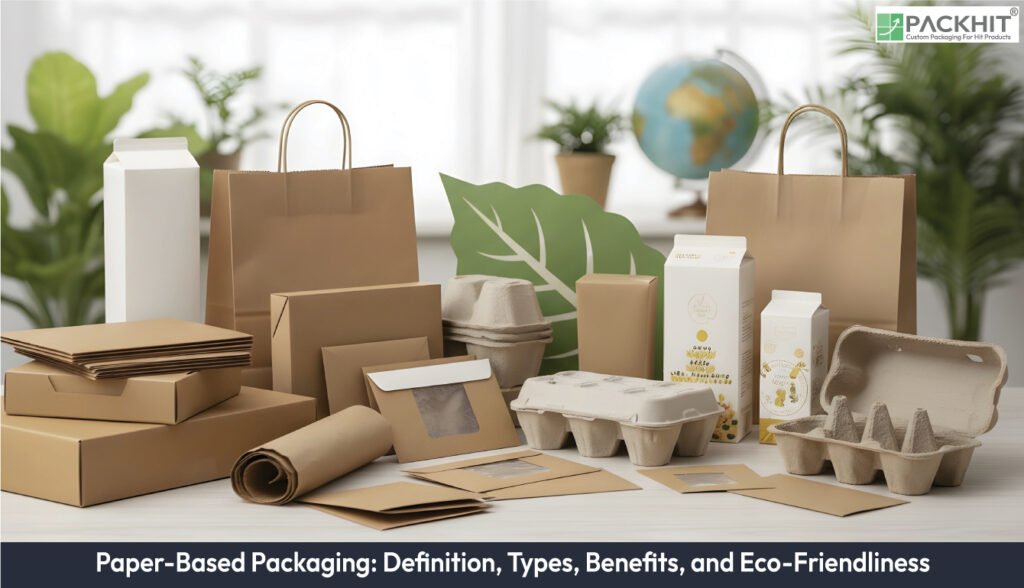
Paper-based packaging refers to packaging made primarily from paper and paperboard materials, covering a wide range of formats and types used across industries. Different structures, material grades, and applications support protection, branding, and handling needs while offering functional versatility. Key benefits of paper-based packaging include recyclability, renewability, printability, and lightweight performance. The eco-friendliness of paper-based packaging materials depends on responsible sourcing, barrier choices, and end-of-life recovery. Ongoing innovation, market trends, and regulatory developments continue to improve performance, sustainability, and adoption of paper-based packaging.
- What is Paper-Based Packaging?
- What is the Material Composition and Structure of Paper-Based Packaging?
- Which Paper-Based Packaging Types are Commonly Used?
- 1. Corrugated Board Packaging
- 2. Folding Carton Packaging (Paperboard Cartons)
- 3. Kraft Paper Bags
- 4. Rigid Paperboard Packaging
- 5. Flexible Paper Packaging
- What are the Benefits of Paper-Based Packaging?
- Enhanced Sustainability
- High Recyclability
- Strong Brand Presentation
- Broad Functional Versatility
- Safe Food Contact
- Lightweight Shipping Efficiency
- Efficient Cost Control
- Why is Paper-Based Packaging Considered Eco-Friendly?
- Which Industries Commonly Use Paper-Based Packaging?
- What are the Operational and Economic Impacts of Paper-Based Packaging?
- How is Reclosability Implemented in Paper-Based Pouches?
- What are the Performance Limitations and Quality Controls for Paper-Based Packaging?
- What are the Innovative Market Trends in Paper-Based Packaging?
- Paper VS Plastic Packaging: Which is More Sustainable and Effective?
What is Paper-Based Packaging?
Paper-based packaging is a packaging material made from paper and paperboard designed for product containment, protection during distribution, and printed branding. The specifications of paper-based packaging are defined by the paper material base, main uses in retail packaging and wrapping, and its roles in holding products and communicating brand identity. Paper packaging ranges from thin wraps to rigid corrugated boxes, and its use is rising again where recycling or composting systems exist, and barrier needs can be met with coatings or layered structures.
What is the Material Composition and Structure of Paper-Based Packaging?
Paper-based packaging is made from cellulosic fibres sourced from virgin wood pulp, recycled paper, and secondary fibre materials. Paper-based packaging’s structure includes coatings, adhesives, and laminates to improve surface strength, moisture resistance, and barrier performance. Manufacturing involves pulping, papermaking (sheet formation and drying), followed by converting processes such as cutting, folding, and glueing, and finally finishing through printing, varnishing, or coating. Recycled fibres are commonly reused in production, which reduces dependence on virgin materials and lowers environmental impact.
Which Paper-Based Packaging Types are Commonly Used?
Paper-based packaging types include corrugated boards, folding cartons, kraft paper, and rigid paperboard. The commonly used types of paper-based packaging have structurally distinct formats, each developed to meet specific requirements for protection, handling, shelf presentation, and sustainability.
1. Corrugated Board Packaging
Corrugated cardboard packaging features a fluted paper layer bonded between flat liner sheets to deliver high stacking strength and impact protection. Distribution cartons, produce boxes, and industrial transit packaging rely on this format for safe long-distance transport and palletised storage.
2. Folding Carton Packaging (Paperboard Cartons)
Folding carton packaging is produced from solid paperboard that is die-cut, creased, and folded into retail packs. Food, pharmaceuticals, cosmetics, and personal-care products commonly use this format due to excellent print quality and efficient machine filling.
3. Kraft Paper Bags
Kraft paper bags and multi-wall sacks are manufactured from long-fibre chemical pulp for high tear and burst resistance. Grocery bags, takeaway food bags, cement sacks, and agricultural packaging depend on kraft grades for load-bearing performance.
4. Rigid Paperboard Packaging
Rigid paperboard packaging uses thick board panels wrapped with printed or decorative papers to create premium boxes. Luxury goods, electronics, fragrances, and giftware commonly adopt this format for enhanced protection and presentation.
5. Flexible Paper Packaging
Paper pouches and flexible paper packs use layered paper structures for dry foods, powders, and snack products. Barrier performance is achieved through coatings or thin functional layers, allowing moisture and oxygen control while retaining a paper-based appearance.
What are the Benefits of Paper-Based Packaging?
The main advantages of paper-based packaging include enhanced sustainability, recyclability, product protection, brand presentation, operational efficiency, and regulatory compliance, and are summarised below, detailing environmental impact, consumer appeal, operational efficiency, and compliance features.
Enhanced Sustainability
Paper-based packaging promotes sustainability by using renewable fibres from managed forests and recycled streams, reducing reliance on virgin materials. Fibre structures biodegrade naturally in soil or composting environments when coatings allow, supporting circular material use and lowering long-term environmental impact.
High Recyclability
Kerbside collection systems recover cartons, bags, and corrugated board for reprocessing. Deinking and repulping allow fibres to re-enter production for containerboard, kraft papers, and paperboard, with recycling performance improving when coatings and adhesives meet pulping compatibility standards.
Strong Brand Presentation
Paper surfaces support high-resolution printing, varnishes, and textured finishes for retail identification. Coated paperboard maintains colour accuracy and registration on folding cartons, preserving visual quality through filling, handling, and distribution.
Broad Functional Versatility
Format diversity includes wraps, bags, sacks, tubes, folding cartons, rigid boxes, and corrugated shipping cases. Performance ranges from light retail display protection to heavy-duty warehouse stacking, depending on fibre composition, basis weight, and flute profile.
Safe Food Contact
Food-grade papers meet regulatory migration limits for fibres, coatings, inks, and adhesives. Greaseproof and barrier-coated papers control the transfer of oil and moisture for dry and short-life moist foods under approved contact conditions.
Lightweight Shipping Efficiency
Low material weight reduces freight loads and fuel use across supply chains. Flat-packed cartons and unfilled kraft sacks minimise inbound transport volumes, while correctly specified corrugated board lowers damage rates during handling.
Efficient Cost Control
Established domestic mills, stable recycled-fibre supply, and large-scale production support predictable cost structures. Regional sourcing reduces freight exposure, while consistent furnish blends stabilise output for converters.
Why is Paper-Based Packaging Considered Eco-Friendly?
Paper-based packaging uses renewable fibres from managed forests, certified wood sources, and recycled paper streams, supporting sustainable material use. Biodegradability allows fibres to break down naturally in soil or composting environments, reducing long-term waste. Recyclability is high, with fibres efficiently recovered through municipal systems, requiring less energy than many plastic alternatives. Compatibility of coatings, adhesives, and laminates with recycling or composting processes ensures circularity. Overall, fibre-based packaging combines resource efficiency, waste reduction, and environmental compliance, making it a sustainable choice for product packaging.
Which Industries Commonly Use Paper-Based Packaging?
Paper-based packaging is applied across multiple industries by providing mechanical protection and marketing functionality, combining product safety with sustainability and consumer appeal.
- Food and Beverage: Retail-ready cartons, pouches, wraps, and barrier papers protect dry, wet, and perishable items while maintaining hygiene and shelf life.
- E-commerce and Logistics: Corrugated boxes, mailers, and moulded fibre inserts secure products during shipping and reduce damage in transit.
- Consumer Goods and Retail: Folding cartons, carriers, and paper bags provide branded packaging that enhances shelf appeal for cosmetics, personal care, and household products.
- Apparel and Textiles: Paper wraps, bags, and tubes protect garments and accessories while offering printable surfaces for branding and product information.
- Electronics: Corrugated boxes, paper tubes, and moulded fibre trays safeguard devices, components, and fragile items during storage and transport.
What are the Operational and Economic Impacts of Paper-Based Packaging?
Paper-based packaging lowers freight energy and costs due to lighter material weight and efficient stackable designs. Warehouse space utilisation improves with foldable and stackable formats. Production of raw paper typically consumes less energy and water per tonne than plastic, reducing upstream emissions and costs. Simple paper formats remain cost-effective, while coated, laminated, or multi-layer constructions can increase unit costs compared with basic plastic. Rising demand and process efficiencies gradually reduce costs, enhancing long-term competitiveness.
How is Reclosability Implemented in Paper-Based Pouches?
Reclosability in paper-based pouches is achieved using mechanical or adhesive-based closure systems compatible with paper substrates. Common methods include integrated zipper profiles, pressure-sensitive peel-and-seal strips, and resealable heat-seal patterns applied during pouch formation. Closure selection impacts reuse potential and end-of-life recyclability, with mechanically separable or recycling-compatible systems ensuring minimal disruption to paper recycling streams.
What are the Performance Limitations and Quality Controls for Paper-Based Packaging?
Paper-based packaging faces certain performance challenges and requires careful quality management to ensure product protection and recyclability. The following points summarise the main limitations, control measures, and material considerations.
- Environmental Sensitivity: Strength and barrier performance degrade under high-humidity conditions.
- Recycling Challenges: Incompatible coatings, laminates, or adhesives may disrupt fibre recovery and recycling processes.
- Barrier Testing Limitations: Moisture vapour transmission rate (MVTR) and oxygen transmission rate (OTR) lead to weakness in protection.
- Seal and Adhesion Variability: Pouches, bags, and cartons may show inconsistent sealing or structural integrity.
- Recycling Compatibility Issues: Some coatings, laminates, and adhesives are not fully suitable for local pulping and recycling streams.
What are the Innovative Market Trends in Paper-Based Packaging?
Paper-based packaging continues to evolve with advancements in design, sustainability, and functionality. The combination of technical innovation and market demand positions paper-based packaging as a versatile, sustainable, and high-performance solution across multiple industries.
- High-Quality Printing and Finishing: New printing and finishing technologies produce vibrant patterns, textures, and tactile effects that enhance shelf visibility and brand appeal.
- Eco-Friendly Coatings and Adhesives: Plant-based and bio-derived coatings improve moisture, grease, and oxygen barrier performance while maintaining recyclability.
- Recycling-Compatible Formulations: Coatings and laminates are engineered for industrial separation during pulping, ensuring minimal disruption to recycling streams.
- Hybrid Laminate Constructions: Multi-layer stacks are optimised to balance barrier performance, mechanical strength, and recyclability, allowing paper to replace some plastic applications.
- Energy and Material Efficiency in Production: Conversion-line improvements reduce energy consumption, material waste, and overall carbon footprint during cutting, folding, and finishing.
- Rising Adoption in Food and Beverage: Barrier-coated cartons and pouches gain popularity where moisture and grease resistance are needed, driven by consumer preference for recyclable and compostable packaging.
Paper VS Plastic Packaging: Which is More Sustainable and Effective?
The table below compares paper and plastic packaging in terms of sustainability, barrier performance, and environmental impact, helping readers choose the most eco-friendly and effective option.
| Feature | Paper Packaging | Plastic Packaging |
|---|---|---|
| Sustainability | Renewable fibres, biodegradable, highly recyclable, lower carbon footprint. | Fossil-fuel-based, non-biodegradable, low recycling rates, and higher environmental impact. |
| Barrier Performance | Weaker naturally; enhanced with coatings or laminates without losing recyclability. | Strong natural barrier; flexible and durable, but often hard to recycle. |
| End-of-Life | Breaks down in soil or compost; supports the circular economy. | Persists in the environment; recycling is energy-intensive. |
| Consumer Perception | Seen as eco-friendly and premium, aligns with sustainability goals. | Durable and lightweight; increasingly viewed as environmentally harmful. |
Paper packaging offers superior sustainability through renewable fibres, recyclability, and biodegradability, while plastic provides stronger barrier protection. Balancing protection and eco-friendliness makes paper the more environmentally responsible choice for most applications.