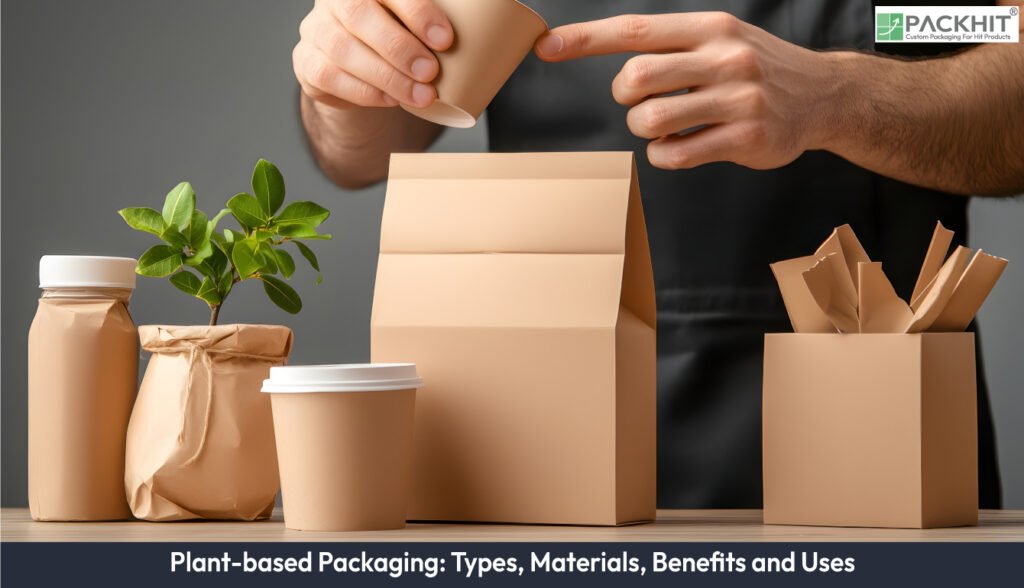
Plant-based packaging refers to packaging made from renewable plant feedstocks such as corn, sugarcane, bamboo, potatoes and algae, designed to replace petroleum-based plastics while supporting multiple end-of-life routes, including composting and recycling where systems allow. The main types of plant-based packaging include bioplastics, fibre-based materials, bagasse, mycelium, starch-based formats, algae and seaweed films, and composite or hybrid structures that improve barrier performance. These formats are produced from materials such as PLA and bio-PET from corn and sugarcane, cellulose fibres from bamboo and wood pulp, starch blends from potatoes and wheat, and emerging marine biomass inputs.
The key benefits of plant-based packaging include reduced carbon footprint, lower fossil-fuel dependence, compostability or recyclability, waste-stream flexibility, strong consumer appeal and high design versatility. Plant-based packaging is also widely used across food and beverage, cosmetics, electronics protection, retail packaging, beverage bottles and takeaway formats, with material selection matched to product temperature, moisture and shelf-life needs.
- What is Plant‑based Packaging?
- What are the Different Types of Plant‑Based Packaging?
- 1. Bioplastic Packaging Types
- 2. Fibre‑Based Packaging Types
- 3. Bagasse Packaging Types
- 4. Mycelium Packaging Types
- 5. Starch‑Based Packaging Types
- 6. Algae and Seaweed Film Types
- 7. Composite and Hybrid Plant‑Based Types
- What Materials are Used for Plant‑Based Packaging?
- Corn and Cornstarch Derivatives
- Sugarcane and Ethanol‑Based Polymers
- Bamboo Fibre and Plant Cellulose
- Potato, Wheat and Other Starch Sources
- Algal Biomass and Seaweed Inputs
- What are the Benefits of Plant‑Based Packaging?
- Lower Carbon Footprint
- Reduced Fossil‑fuel Dependence
- Biodegradability and Compostability
- Waste‑stream Flexibility
- Brand and Consumer Appeal
- Design Versatility
- What are the Uses of Plant‑Based Packaging?
- Food and Beverage Packaging
- Cosmetic and Personal‑care Packaging
- Electronics and Protective Packaging
- Flexible and Rigid Retail Packaging
- Bottles and Beverage Containers
- Takeaway and Catering Formats
- Material‑to‑Product Matching
- How is Plant‑based Packaging Manufactured?
- How Should Plant‑based Packaging Be Disposed of?
- How can Businesses Implement Plant‑Based Packaging?
- What are the Limitations and Current Challenges in Plant-Based Packaging?
What is Plant‑based Packaging?
Plant‑based packaging uses renewable plant feedstocks and replaces petroleum‑based plastics in common packaging formats. Plant‑based packaging uses renewable inputs such as corn, sugarcane, potatoes and algae to form materials like bamboo fibre, cellulose and biopolymers, and this resource base reduces fossil oil use in production. These materials show different breakdown behaviours and enter several end‑of‑life routes if local systems accept them, including industrial composting, municipal composting, recycling streams that take plant‑derived PET, and controlled energy recovery.
What are the Different Types of Plant‑Based Packaging?
Plant‑based packaging types separate into defined material and format classes that support food, beverage, cosmetic and protective‑pack categories, discussed below:
1. Bioplastic Packaging Types
Bioplastic packaging uses PLA, bio‑PET and starch blends formed from corn, sugarcane and wheat. These polymers shape bottles, films and thermoformed trays. Global datasets for 2023–2029 list bioplastics as the fastest‑expanding segment, due to PLA and bio‑PET capacity additions and trade flows.
2. Fibre‑Based Packaging Types
Fibre‑based packaging uses bamboo fibre, moulded pulp and paperboard, and each material behaves differently during pulping, drying and forming. Bamboo fibre and wood‑pulp cellulose create dense structures that withstand stacking pressure, while moulded pulp forms shaped trays for eggs, produce and cosmetic inserts. Paperboard supports cartons and sleeves because its fibre network accepts crease lines and surface printing without distorting.
3. Bagasse Packaging Types
Bagasse packaging forms three common types, namely rigid trays, shaped bowls and flat lids, pressed from sugarcane by‑product fibres prepared during juice extraction. Producers compress the fibres into dense structures that keep form during hot‑fill service in takeaway and catering lines, and heat‑stable bonds maintain stiffness during transport.
4. Mycelium Packaging Types
Mycelium packaging, also called mushroom packaging, forms rigid protective shapes by growing fungal root networks around agricultural residues such as hemp hurd and corn stalks. The growth process binds the fibres into dense blocks that absorb shock and replace petroleum foams in electronics, glassware and appliance transport. Market intelligence classifies mycelium within emerging rigid plant‑based packaging types, with gradual capacity scale‑up recorded from 2025 to 2034 as regional production hubs expand in North America and Europe.
5. Starch‑Based Packaging Types
Starch‑based packaging uses potato, wheat and blended starch compounds shaped into loose‑fill and thin‑film formats. Moisture sensitivity defines handling limits, while industrial composting sites accept certified grades if temperatures align with decomposition ranges.
6. Algae and Seaweed Film Types
Algae and seaweed films support thin‑film and coating applications used for short‑life food wraps. Global context data lists this group as an emerging flexible category, tracked in APAC and coastal regions where marine biomass provides consistent feedstock.
7. Composite and Hybrid Plant‑Based Types
Composite plant‑based packaging merges fibres, starches and biopolymers into multi‑layer structures for chilled and ambient items. These hybrids stabilise barrier levels for moisture‑sensitive goods and appear in retail and cosmetic lines where single‑material structures cannot meet technical limits.
What Materials are Used for Plant‑Based Packaging?
Plant‑based packaging materials include bioplastics, fibres and starch compounds, and the following sections define each group in detail:
Corn and Cornstarch Derivatives
Corn and cornstarch derivatives form PLA and thermoplastic starch compounds, and these inputs supply predictable feedstock volumes because agricultural and processing routes already run at scale in North America, Europe and APAC. Corn inputs influence lifecycle emissions through fermentation efficiency and transport energy use.
Sugarcane and Ethanol‑Based Polymers
Sugarcane and sugarcane ethanol generate bio‑PET and related polymers. These materials enter rigid and flexible packaging across food and beverage lines. Sugarcane output shapes carbon intensity values, and market data attributes strong growth in the bio‑PET segment to established refining capacity in Brazil and expanding facilities in APAC.
Bamboo Fibre and Plant Cellulose
Bamboo fibre and wood‑pulp cellulose supply moulded pulp, paperboard and film substrates used in cartons, wraps and rigid trays. These fibres support composting and recycling, if local rules accept fibre-based items. Fibre density and pulping efficiency determine structural strength.
Potato, Wheat and Other Starch Sources
Potato, wheat and similar starch sources create thermoplastic starch blends used in loose‑fill materials and lightweight film applications. These blends break down in industrial composting sites if compost temperatures hold above threshold levels. Moisture sensitivity influences performance in long‑duration storage.
Algal Biomass and Seaweed Inputs
Algal biomass and seaweed inputs form thin films and coatings used in short‑life packaging. Marine biomass supports feedstock diversification in coastal regions. Market intelligence groups algae films in the emerging flexible segment inside the plant‑based category that expands from 2025 to 2034.
What are the Benefits of Plant‑Based Packaging?
The benefits of plant-based packaging are mentioned below:
Lower Carbon Footprint
Lower carbon footprint signals reduced production‑phase emissions because plant feedstocks generate fewer upstream emissions than oil‑derived polymers. Global market data shows rapid scale expansion from USD 152.87 billion in 2025 toward 410.48 billion by 2034, and this scaling increases emission‑efficient output capacity. Producers report 30–70% lower manufacturing emissions for PLA, bio‑PET and fibre substrates when compared with conventional plastics, if industrial inputs use certified low‑carbon energy.
Reduced Fossil‑fuel Dependence
Reduced fossil‑fuel dependence follows from the use of agricultural inputs such as corn, sugarcane and bamboo, which replace petroleum feedstocks in polymer formation. North American and European manufacturers increase bio‑feedstock substitution rates because regional policy frameworks restrict single‑use plastics and promote circular‑economy uptake. This shift allows brands to cut crude oil exposure in categories such as flexible films, bottles and moulded trays.
Biodegradability and Compostability
Biodegradability and compostability describe how cellulose, bagasse and starch composites break down into water, CO2 and biomass under controlled environments. Industrial composting sites in the EU and UK accept certified PLA if the material meets heat‑triggered decomposition thresholds. Fibre mouldings decompose faster because their structure supports microbial access, which shortens breakdown times in municipal systems.
Waste‑stream Flexibility
Waste‑stream flexibility arises because plant‑based polymers and fibres can enter several end‑of‑life routes. Industrial composting, mechanical recycling for bio‑PET, and controlled energy recovery all operate across the UK and EU regions. Producers gain more control over landfill diversion when packaging integrates simple mono‑material structures that prevent contamination.
Brand and Consumer Appeal
Brand and consumer appeal increase because consumers select lower‑impact packaging in food and beverage categories; market studies in 2024 reported awareness levels near 75% for plant‑derived materials. Large brands such as Tetra Pak and Coca‑Cola report higher adoption for bio‑based formats across Europe’s 32% market share, which influences purchasing behaviour among sustainability‑focused groups.
Design Versatility
Design versatility reflects the range of shapes produced from PLA, bio‑PET, moulded pulp, bagasse and mycelium. Rigid bottles, flexible wrappers, hot‑food trays and protective inserts all use plant materials because polymer and fibre compounds adapt to extrusion, thermoforming and moulding lines already present in UK manufacturing. This spread of geometries supports both lightweight designs and heavy‑duty protective packaging.
What are the Uses of Plant‑Based Packaging?
The uses of plant-based packaging are explained below:
Food and Beverage Packaging
Food and beverage lines adopt plant‑based packaging in meal trays, clamshells, hot‑fill containers and flexible wraps because cellulose, bagasse and PLA maintain structure under heat and moisture. Global demand in this sector grows fastest, according to market intelligence for 2025–2034.
Cosmetic and Personal‑care Packaging
Cosmetic and personal‑care brands use moulded fibre, bio‑PET and PLA for jars, bottles and applicator components. Fibre parts support decorated surfaces printed with eco‑ink, while bio‑PET enters recycling streams that accept plant‑derived PET variants.
Electronics and Protective Packaging
Electronics producers specify mycelium, moulded pulp and starch‑based foams for shock‑absorbing inserts and secondary packs. These materials replace petroleum‑based foams and break down in composting systems, if heat and moisture stay within expected ranges.
Flexible and Rigid Retail Packaging
Retail goods use flexible bioplastic films for wraps and rigid fibre trays for ambient products. Market data segments these uses into flexible and rigid categories across North America, Europe and APAC, with Europe holding about a 32% share due to circular‑economy rules.
Bottles and Beverage Containers
Beverage lines apply bio‑PET in bottles when recycling streams accept plant‑derived PET. Feedstock input from sugarcane ethanol supports scalable production and maintains compatibility with existing UK and EU recycling systems.
Takeaway and Catering Formats
Takeaway operations deploy bagasse trays, bamboo fibre bowls and PLA lids for short‑life meals. Heat‑formed bagasse maintains rigidity for hot dishes, and PLA tops hold clarity for presentation, if temperatures stay below PLA deformation thresholds.
Material‑to‑Product Matching
Material choice reflects product shape, size, moisture, temperature and shelf‑life requirements. Chilled goods rely on higher barrier structures, while ambient‑stable goods use lightweight films formed from PLA, starch or cellulose composites.
How is Plant‑based Packaging Manufactured?
Plant‑based packaging production follows staged material processing that converts renewable feedstocks such as bioplastics, fibres, starch compounds, bagasse and mycelium into flexible and rigid formats used across food, cosmetics and protective‑pack categories.
- Feedstock preparation uses cleaning, grinding or pulping steps that convert corn, sugarcane, bamboo, algae or agricultural residues into consistent particle sizes. These steps shape polymer yield and fibre strength, and they align with global plant-based capacity growth tracked from 2025 to 2034.
- Polymer or fibre conversion applies fermentation or pulping routes. Corn or sugarcane converts into lactic acid or ethanol that forms PLA or bio PET, and bamboo or wood pulp refines into cellulose fibres. These conversions link directly to regional capacity, with North America leading PLA optimisation and Europe maintaining a 32 per cent share in fibre-based substrates due to circular economy policies.
- Compounding and blending mixes starch, biopolymers or fibres with additives that adjust heat response, moisture control or forming strength. Producers group these blends with emerging materials such as mycelium, bagasse and algae films that appear across flexible and rigid segments in market datasets.
- The forming process uses extrusion, thermoforming, moulding or pressing to create films, trays, bottles or inserts. UK and EU plants run these processes on lines built for conventional plastics, and this alignment reduces conversion time for PLA, bio PET and moulded fibre packaging.
- Drying and finishing stabilise moisture levels, cut formed parts and apply coatings that match chilled or ambient goods. Fibre and bagasse trays enter this stage to define stiffness, and thin PLA films pass through calibrated heat cycles that prevent deformation.
- Printing and decoration apply inks that retain fibre integrity and compatibility with recycling or composting. Market players referenced in 2025 intelligence datasets, such as Tetra Pak and Amcor, run controlled ink adhesion tests to protect fibre recovery rates.
- Quality testing measures barrier levels, impact strength and heat tolerance across representative batches. These tests determine acceptance for food, cosmetic and transport categories and support alignment with EU performance rules introduced under circular economy targets.
- Certification and traceability confirm compostability, recyclability and feedstock chain of custody. Audits follow regional rules shaped by
- European and North American process standards, and certification codes record material class, composting route and recycling compatibility for PLA, bio PET, bagasse, starch and paper substrates.
How Should Plant‑based Packaging Be Disposed of?
Correct disposal requires matching the material to local end‑of‑life infrastructure; compost plant‑based packaging at home or through municipal programmes when a product is labelled compostable, and place plant‑derived polymers into appropriate recycling streams when they are compatible with existing processes.
How can Businesses Implement Plant‑Based Packaging?
Implementation requires a systematic selection and piloting process: evaluate product characteristics, select certified and traceable materials, test transport and handling resilience, and plan end‑of‑life pathways with waste managers.
- Product appraisal: assess shape, size, weight, moisture, temperature and shelf life, and reference UK cases for perishable produce, frozen goods and ambient snacks used in plant-based formats across North America, Europe and APAC.
- Material selection: choose certified, traceable feedstocks and the minimal efficient material to meet functional needs, and include PLA grades, FSC paperboard and other plant-based inputs tracked in 2025 market datasets.
- Pilot testing: verify packaging performance in transport, storage and retail handling, and run drop tests and shelf life trials that reflect food and beverage demand increases recorded in market intelligence.
- Label and communication: provide clear labels and disposal instructions using standard terms and certification marks, and match compostable and recycling codes referenced in EU and UK circular economy rules.
- End of life partnerships: collaborate with waste management and municipal bodies to secure composting or recycling routes, and align with regional collection capacity recorded for Europe, North America and APAC.
- R and D collaboration: partner with researchers and suppliers to improve durability and reduce cost where required, and include plant-based material data from Tetra Pak, Vegware, Amcor and other producers.
Use industrially compostable polymers if industrial composting infrastructure exists locally. Pilot small runs before full‑scale rollout and prioritise certified materials to maintain regulatory compliance and consumer trust.
What are the Limitations and Current Challenges in Plant-Based Packaging?
Plant‑based packaging faces constraints in cost, performance variability, scalability and end‑of‑life infrastructure. These limitations and challenges are given below:
- Production cost rises because producers run bioplastics, bagasse, starch and mycelium through feedstock and conversion steps that remain less mature than petroleum routes.
- Performance variability occurs because heat, moisture and storage length alter barrier strength in PLA, starch and fibre composites; UK and EU trials show stable results only when chilled, ambient or hot‑fill conditions match certified limits.
- Infrastructure gaps persist because industrial composting capacity differs by region; Europe’s circular‑economy rules lift acceptance rates, while
- North America and APAC run uneven municipal collection for compostable grades such as PLA and fibre mouldings.
- Recycling contamination appears when bio‑PET, PLA and starch films mix with conventional plastics; trace levels alter melt‑flow rates in recycling plants and prompt sorting requirements referenced in 2023–2029 production datasets.
- Consumer confusion stems from mixed labels for compostable, recyclable and biodegradable items; market reports from 2025 show mis-sorting across food and beverage lines when packs lack clear regional codes.