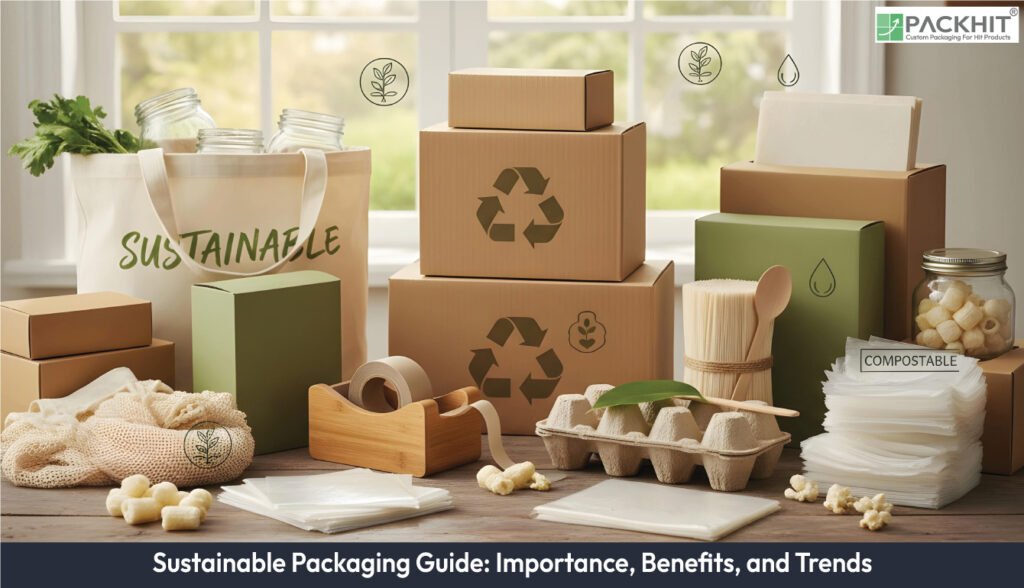
Sustainable packaging reduces material use and waste by relying on recyclable, compostable, or reusable formats such as paper fibre, biodegradable bioplastics, and mono-material structures. Sustainable packaging supports environmental goals by lowering impact, improving recyclability, reducing transport emissions, and aligning with customer demand and UK waste systems. Current trends in sustainable packaging focus on material simplification, fibre-based substitution, lightweight and reusable formats, while addressing limits such as material performance, recycling access, cost pressure, and storage sensitivity. Businesses adopt sustainable packaging by balancing material behaviour, regulatory and operational requirements, supplier capability, and clear reporting to maintain protection, efficiency, and accountability.
- What is Sustainable Packaging?
- Why is Sustainable Packaging Important?
- What are the Benefits of Sustainable Packaging?
- Lower Material Waste
- Reduced Environmental Impact
- Improved Recyclability
- Better Composting Compatibility
- Higher Customer Acceptance
- Lower Transport Mass
- What are the Latest Trends in Sustainable Packaging?
- Material Simplification
- Fibre-Based Substitution
- Reusable Transport Cycles
- Compostable Film Expansion
- Lightweight Mailer Adoption
- What are the limitations of Sustainable Packaging?
- Which Factors Influence Sustainable Packaging Decisions?
- How do Brands Implement Sustainable Packaging?
- Why Do Businesses Choose Sustainable Packaging?
What is Sustainable Packaging?
Sustainable packaging means packaging that reduces material use, supports recovery through recycling or composting, and avoids persistent waste. Brands adopt sustainable packaging because customer demand for low‑impact materials has increased in recent years, and waste‑system constraints have pushed manufacturers toward simpler, recoverable formats. Common materials of sustainable packaging include paper fibre, biodegradable bioplastics, recyclable padded mailers and reusable transport packs. Paper fibre covers cartons and lightweight mailers; biodegradable bioplastics cover starch‑based films; recyclable packs include mono‑material plastics. Examples of sustainable packaging include recycled‑paper mailers for clothing, compostable film wraps for small goods and corrugated boxes for e‑commerce shipments.
Why is Sustainable Packaging Important?
Sustainable packaging is important because it cuts waste generation, supports recyclable or compostable pathways and reduces pressure on local waste systems. It aligns with customer demand for low‑impact materials such as paper fibre or biodegradable bioplastics. It supports environmental goals through lower material mass per unit. Sustainable packaging improves brand accountability through clearer sustainability reporting. It reduces contamination risks in recycling streams through simpler mono‑material structures. Sustainable packaging supports long‑term resource efficiency across production and transport.
What are the Benefits of Sustainable Packaging?
The benefits of sustainable packaging centre on lower material waste, reduced environmental impact, and improved recyclability across UK waste systems. These benefits apply to paper fibre packs, biodegradable bioplastics, recyclable padded mailers, and reusable boxes.
Lower Material Waste
Lower material waste occurs through reduced pack weight, simplified mono‑material formats, and removal of unnecessary secondary packaging. Lower material waste reduces pressure on collection, sorting, and reprocessing systems across UK regions.
Reduced Environmental Impact
Reduced environmental impact comes from cleaner material streams, lower contamination risk, and smaller resource inputs during manufacture. Reduced environmental impact also links to lifecycle reductions, where recycled fibre or recycled resin displaces virgin materials.
Improved Recyclability
Improved recyclability follows from the use of mono‑material plastics, fibre‑based cartons, and recyclable padded mailers. Improved recyclability supports recovery through local kerbside systems if the pack structure matches the sorting capabilities of the area.
Better Composting Compatibility
Better composting compatibility applies to certified biodegradable bioplastics and fibre‑based materials. Better composting compatibility depends on access to industrial composting facilities that process these materials in controlled conditions.
Higher Customer Acceptance
Higher customer acceptance results from visible use of recycled fibre, biodegradable films, and lightweight mailers. Higher customer acceptance reflects consumer preference for low‑impact packaging, documented across UK retail sectors.
Lower Transport Mass
Lower transport mass arises from lightweight cartons, thin films, and reduced void space. Lower transport mass reduces freight emissions across distribution hubs and increases palletisation efficiency for manufacturers shipping multiple SKUs (Stock Keeping Units).
What are the Latest Trends in Sustainable Packaging?
The latest trends in sustainable packaging focus on material simplification, fibre‑based substitution and reusable transport cycles.
Material Simplification
Material simplification reduces complex laminates and swaps them for mono‑material structures. Material simplification increases recyclability across kerbside systems because sorters process single‑resin or single‑fibre packs with fewer contaminants.
Fibre-Based Substitution
Fibre-based substitution replaces plastic trays, wraps and mailers with recycled paper fibre. Fibre-based substitution aligns with kerbside recovery rates above 70% in many UK regions and reduces residual waste where compostable systems are scarce.
Reusable Transport Cycles
Reusable transport cycles use returnable crates, totes or refill packs. Reusable transport cycles cut single‑use material demand across distribution hubs and support closed‑loop flows if retailers manage container returns and cleaning cycles.
Compostable Film Expansion
Compostable film expansion increases the use of certified starch‑based or cellulose‑based films. Compostable film expansion depends on access to industrial composting plants that process these materials under monitored temperatures.
Lightweight Mailer Adoption
Lightweight mailer adoption replaces rigid packs with thin recyclable or compostable mailers. Lightweight mailer adoption reduces transport mass and improves pallet fill rates for manufacturers shipping multiple SKUs.
What are the limitations of Sustainable Packaging?
The limitations of sustainable packaging relate to material performance, waste‑system constraints and commercial cost.
- Material weakness affects fibre packs and compostable films if humidity or compression loads exceed the tested thresholds.
- Recycling mismatch occurs when mono‑material plastics or bioplastics enter UK regions without compatible kerbside sorting.
- Composting access remains limited across local authorities that process certified biodegradable bioplastics.
- Cost pressure rises for recycled fibre cartons and compostable films during periods of raw‑material scarcity.
- Print restrictions apply to fibre and compostable substrates that react poorly to heat, solvent inks or extended curing.
- Contamination risk increases when food residues remain on fibre trays or compostable wraps.
- Storage sensitivity affects starch‑based films and recycled‑fibre packs that deform under moisture or fluctuating temperatures.
- Performance gaps appear in transit when lightweight mailers replace rigid packs without confirmed drop‑test data.
Which Factors Influence Sustainable Packaging Decisions?
Factors that influence sustainable packaging decisions are material behaviour, waste‑system compatibility and commercial constraints across UK regions.
- Material strength determines carton compression limits, film tear resistance and mailer puncture control for goods shipped through multi‑stop distribution.
- Waste‑system access shapes recyclability or composting outcomes across local authorities that accept paper fibre, mono‑material plastics or certified compostable films.
- Product sensitivity affects pack thickness, moisture barriers and closure formats used for food, garments or electronics sold by UK manufacturers.
- Regulatory compliance steers substrate selection because UK guidance restricts contaminating laminates and requires clear disposal instructions.
- Cost variation shifts sourcing strategies for recycled fibre, starch‑based bioplastics and recyclable padded mailers during tight raw‑material markets.
- Brand reporting demands influence recycled‑content percentages, certificate tracking and lifecycle data added to sustainability disclosures.
- Supplier capability controls fibre‑strength testing, film‑thickness checks, and order repeatability across production runs.
- Operational fit governs pallet stacking, humidity exposure and warehouse rotation for printed cartons and compostable films used in regular fulfilment.
How do Brands Implement Sustainable Packaging?
Brands implement sustainable packaging by applying clear material, design and disposal choices that reduce waste and match UK recycling or composting systems.
- Material selection uses paper fibre, biodegradable bioplastics and recyclable padded mailers, if product protection aligns with each format.
- Design reduction cuts secondary layers, shrink films and void fill, if transport testing confirms product stability.
- Mono‑material adoption replaces mixed laminates with single‑resin plastics or single‑fibre cartons that sort correctly in kerbside streams.
- Reuse planning introduces returnable crates, refill formats or reusable boxes across repeated shipments, if supply chains support returns.
- Supplier alignment specifies recycled-content targets across cartons and mailers, plus batch testing for fibre strength or film thickness.
- Label clarity follows UK waste‑disposal instructions that identify recycling, composting or reuse pathways for customers handling packs.
- Operational checks validate palletisation, stacking and humidity resistance for fibre-based packs used in UK distribution hubs.
Why Do Businesses Choose Sustainable Packaging?
Businesses choose sustainable packaging because it cuts material waste, supports recyclable or compostable routes across UK waste systems, and aligns with customer demand for low‑impact packs made from paper fibre, biodegradable bioplastics or recyclable padded mailers. Sustainable packaging reduces raw material pressure in production and lowers transport mass through lighter cartons or thin films. Sustainable packaging strengthens reporting accuracy across ESG data if recycled‑content percentages and recovery rates remain traceable through suppliers. Sustainable packaging maintains product protection without complex laminates, if mono‑material designs pass compression or drop‑test checks used in UK distribution hubs.