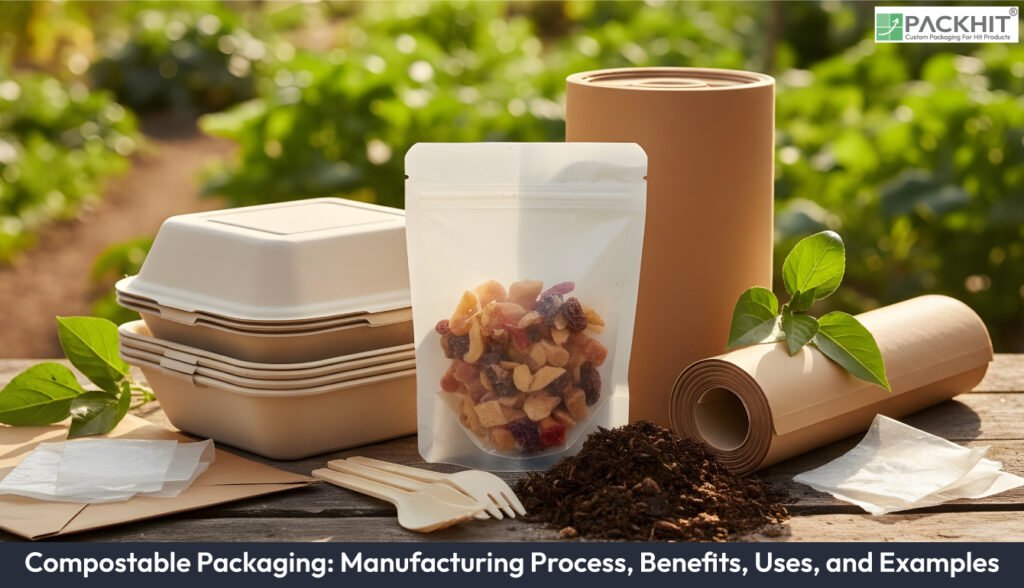
Compostable packaging refers to plant-based packaging materials that break down through controlled biological processes into non-toxic compost. Compostable packaging is made through defined steps that convert seaweed, starches, sugarcane fibres and other plant feedstocks into films, trays, and wraps. The benefits of compostable packaging include reduced persistent waste, reduced dependence on fossil-based plastics, and support for soil-enhancing compost outputs. Compostable packaging serves food-contact, dry-goods and short-life applications where packaging and food waste enter the same organics stream. Examples of compostable packaging include seaweed sachets, sugarcane trays, snack-bar wraps, compostable cling films and bark-based packs. Compostable packaging differs from biodegradable and recyclable materials by meeting certified composting standards with defined breakdown timelines and residue safety.
- What is Compostable Packaging?
- How is Compostable Packaging Made?
- 1.Material Preparation
- 2. Biopolymer Formation
- 3. Sheeting or Moulding
- 4. Drying and Finishing
- 5. Cutting and Conversion
- 6. Certification and Batch Testing
- What are the Benefits of Compostable Packaging?
- Reduced Persistent Waste
- Lower Fossil‑Plastic Dependency
- Soil‑Supporting Outputs
- Cleaner Food‑Contact Waste Streams
- What are the Uses of Compostable Packaging?
- Food-Contact Packs
- Dry-Goods Packaging
- Cling Films
- Antibacterial Protective Layers
- Bark‑Derived Structural Packs
- What are the Examples of Compostable Packaging?
- How do Compostable Packaging Materials Differ from Biodegradable Packaging Materials?
- What are the Challenges of Using Compostable Packaging?
What is Compostable Packaging?
Compostable packaging is a type of packaging material designed to break down through controlled biological processes and convert into usable compost under specific composting conditions. Unlike conventional plastics, it decomposes into natural elements such as water, carbon dioxide, and biomass, leaving no toxic residues behind. Key characteristics of compostable packaging include the use of plant-based or renewable feedstocks, clean and complete disintegration, and chemical safety for soil and microorganisms. These materials are engineered to remain durable during storage and use, while breaking down efficiently once placed in a composting environment. Common examples of compostable packaging materials include seaweed-based films, uncoated sugarcane fibres (bagasse), and potato- or starch-based wraps. These materials provide adequate product protection during their lifecycle and decompose after disposal under composting conditions. The material composition of compostable packaging typically relies on polysaccharides, plant fibres, or biopolymers. These components maintain structural integrity during handling but fragment and biodegrade when exposed to composting temperatures, moisture, and microbial activity. Certification plays a critical role in validating compostable packaging. Recognised standards, such as those for industrial or home composting, assess biodegradation rate, physical disintegration, and chemical safety, ensuring the material fully converts into compost within a specified timeframe without harming the environment.
How is Compostable Packaging Made?
Compostable packaging is made through a sequence of controlled material‑conversion steps that shape plant‑based feedstocks into films, fibres or rigid forms used for food‑contact and dry‑goods applications.
- Material Preparation
- Biopolymer Formation
- Sheeting or Moulding
- Drying and Finishing
- Cutting and Conversion
- Certification and Batch Testing
1.Material Preparation
Material preparation starts with plant‑based feedstocks such as seaweed extracts, potato starch, sugarcane fibres or bark‑derived lignocellulose. Material preparation cleans, refines and mills these inputs into powders, pulps or gels ready for polymer conversion.
2. Biopolymer Formation
Biopolymer formation combines refined feedstocks with water and compost‑safe additives to create a workable biopolymer matrix. Biopolymer formation gives the mixture the viscosity needed for extrusion, casting or fibre‑forming without adding synthetic coatings.
3. Sheeting or Moulding
Sheeting or moulding shapes the biopolymer mixture into films, trays or wraps. Sheeting or moulding covers the extrusion of thin seaweed films, the casting of potato‑based cling wraps, and the thermoforming of non‑coated sugarcane trays used for food‑contact packs.
4. Drying and Finishing
Drying and finishing remove moisture and stabilise the formed structures. Drying and finishing set the mechanical properties that allow snack‑bar wrappers, bark‑based sleeves or upcycled cling wraps to hold shape until composting starts.
5. Cutting and Conversion
Cutting and converting trim films, press shapes or laminate compost‑safe layers. Cutting and conversion prepare final pack forms such as compostable seaweed sauce sachets, consumable snack‑bar coatings and vitamin sachets made from plant fibres.
6. Certification and Batch Testing
Certification and batch testing check compost‑safe behaviour under industrial or home‑compost conditions. Certification and batch testing verify disintegration rates, residue quality and chemical safety before products enter food‑contact or dry‑goods supply chains.
What are the Benefits of Compostable Packaging?
The benefits of compostable packaging reduce persistent waste, cut fossil‑plastic use, support organics recovery systems and create compost that feeds soil structure. These benefits arise from plant‑based feedstocks, controlled breakdown pathways and compatibility with industrial composting streams.
Reduced Persistent Waste
Reduced persistent waste occurs because compostable packaging breaks down under controlled biological conditions into compost rather than microplastic residues. Reduced persistent waste also aligns with organics‑collection systems that treat food scraps and certified packaging together.
Lower Fossil‑Plastic Dependency
Lower fossil‑plastic dependency results from the use of materials such as seaweed films, potato‑based wraps and non‑coated sugarcane fibres, and lower fossil‑plastic dependency supports manufacturers that want plant‑based formats for single‑use packs.
Soil‑Supporting Outputs
Soil‑supporting outputs arise because compostable packaging forms compost that contributes organic matter after processing, and soil‑supporting outputs match standards that test for chemical safety and residue quality.
Cleaner Food‑Contact Waste Streams
Cleaner food‑contact waste streams develop when compostable wrappers, cling‑wraps and snack‑bar films accompany food scraps into the same bin, and cleaner food‑contact waste streams reduce sorting contamination if packaging stays free from non‑compostable coatings.
What are the Uses of Compostable Packaging?
The uses of compostable packaging cover food-contact packs, dry‑goods formats, consumable films and short‑life protective wraps that enter organics streams once discarded. These uses come from plant‑based feedstocks, clean breakdown behaviour and certification that confirms compost‑safe additives.
Food-Contact Packs
Food-contact packs include seaweed‑based food packages, non‑coated sugarcane containers and moulded plant‑fibre trays that hold ready meals or fresh produce. Food-contact packs keep residue contamination low because the pack and the leftover food go to the same organics bin.
Dry-Goods Packaging
Dry-goods packaging covers starch films, compostable bags for grains and bio‑polymer satchels that work for cereals or powdered mixes. Dry-goods packaging maintains structure during storage and then breaks down during composting.
Cling Films
Cling films include potato‑made compostable cling wrap and seaweed‑made packaging films used for household or commercial food prep. Cling films and everyday wraps prevent direct plastic contact with food while still entering organic streams.
Antibacterial Protective Layers
Antibacterial protective layers include antibacterial biodegradable packaging that adds microbial‑control compounds derived from plant extracts. Antibacterial protective layers help maintain hygiene conditions without adding persistent plastics.
Bark‑Derived Structural Packs
Bark-derived structural packs use bark‑based packaging technology for trays or sleeves around dry foods or personal‑care goods. Bark-derived structural packs use lignocellulosic fibres that maintain rigidity during handling and break down through natural microbial activity.
What are the Examples of Compostable Packaging?
Examples of Compostable Packaging appear in consumer goods, food‑contact packs and protective wraps that break down under controlled composting conditions and leave no persistent residue.
- Seaweed‑made packaging adds thin hydrophilic films used for dry snacks or prepared foods; seaweed‑made packaging includes compostable seaweed sauce sachets for condiment portions.
- Non‑coated sugarcane packaging uses moulded fibre trays or clamshells for produce or ready meals; non‑coated sugarcane packaging breaks down without synthetic coatings.
- Plant‑based snack bar wrappers include cellulose or biopolymer films for nutrition bars; plant‑based snack bar wrappers sit safely in organics bins with food scraps.
- Wrapperless snack bars use consumable coatings that form a thin edible layer for single bars; wrapperless snack bars remove post‑use handling of film.
- Upcycled cling wraps use plant‑fibre blends for household food storage; upcycled cling wraps disintegrate under composting temperatures.
- Potato‑made compostable cling wraps add starch‑based stretch films for catering or kitchen prep; potato‑made compostable cling wraps break down through microbial activity.
- Antibacterial biodegradable packaging combines plant‑derived antibacterial compounds with compostable substrates; antibacterial biodegradable packaging limits surface microbes without creating persistent plastics.
- Bark‑based packaging technology shapes lignocellulosic fibres into sleeves or trays; bark‑based packaging technology provides structural support for dry goods.
- Compostable vitamin packaging adopts plant‑fibre tubs or sachets for supplements; compostable vitamin packaging replaces fossil‑plastic tubs in short‑life formats.
- Sustainable seaweed‑made packaging forms flexible wraps for produce or snack portions; sustainable seaweed‑made packaging breaks down under industrial composting
How do Compostable Packaging Materials Differ from Biodegradable Packaging Materials?
Compostable packaging materials differ from biodegradable packaging materials because compostable formats break down under controlled composting conditions and create non‑toxic compost within defined timeframes. Compostable packaging materials follow certification rules that measure disintegration and chemical safety, while biodegradable packaging materials break down without set rates or residue limits. Recyclable packaging materials enter mechanical or chemical recycling streams that recover material value rather than convert it to compost. Compostable packaging materials match food‑contact uses such as seaweed films or potato‑based wraps, if organics‑collection access exists.
What are the Challenges of Using Compostable Packaging?
The challenges of using compostable packaging arise from material behaviour, infrastructure limits, certification demands and product‑fit issues that affect seaweed films, non‑coated sugarcane trays and plant‑based wraps used across UK manufacturing.
- Collection mismatch affects compostable seaweed films, potato‑made cling wraps and snack‑bar wrappers because organics‑collection access varies across UK regions, if local authorities restrict certified packaging in food‑waste bins.
- Composting‑rate variation affects starch films, bark‑based sleeves and antibacterial biodegradable layers because breakdown times differ between home‑compost and industrial‑compost conditions, if ambient temperatures stay low.
- Residual contamination affects compostable vitamin sachets and upcycled cling wraps because food residues or non‑compostable additives slow disintegration, if sorting steps add mixed materials.
- Mechanical‑performance limits affect thin seaweed‑made packaging and wrapperless snack‑bar coatings because these materials absorb moisture and lose strength during storage if humidity levels fluctuate.
- Supply‑chain variability affects sugarcane fibres and seaweed feedstocks because crop yields change by season, and if agricultural supply contracts shift.
- Certification workload affects small UK manufacturers because compost‑safe testing requires disintegration studies, residue checks and chemical‑safety reports, if multiple product variants exist.
- Cost divergence affects plant‑based snack‑bar films and lignocellulosic bark trays because small production batches raise unit costs, if fossil‑plastic converters run at 10× higher volumes.
- Consumer‑sorting errors affect everyday compostable wraps because look‑alike plastics cause bin‑placement mistakes if labelling clarity drops.