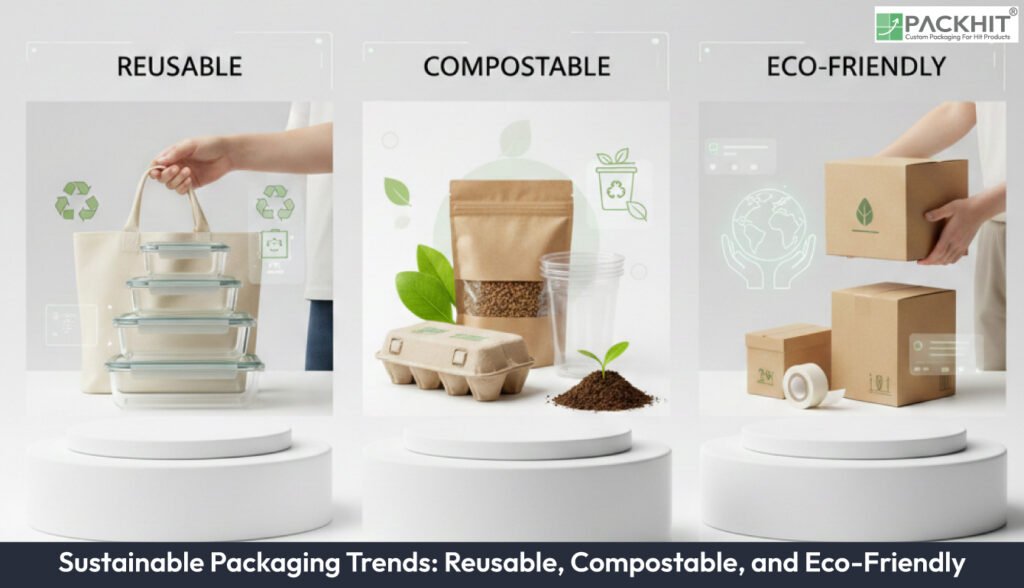
Sustainable packaging trends reflect how modern packaging reduces waste through lighter materials, simpler formats, and recovery systems aligned with UK recycling and composting infrastructure. Reusable packaging systems extend product lifecycles through refill and return models that cut single-use waste and emissions. Compostable packaging materials address food-related contamination by breaking down safely within organic waste streams. Bio-based and plant-derived packaging replaces fossil-based inputs with renewable resources while improving performance and scalability. Recyclable mono-material packaging simplifies sorting and supports circular recycling within existing systems. Minimalist and lightweight packaging lowers material use and transport emissions while meeting consumer expectations for simplicity. Smart and sustainable packaging technologies enhance transparency, traceability, and waste reduction through digital tools. Edible packaging innovations explore zero-waste solutions for food applications as materials mature. Circular economy–driven packaging design ties all approaches together by keeping materials in continuous, recoverable use rather than disposal.
What is Sustainable Packaging?
Sustainable packaging refers to the material systems that cut waste through reduced mass, simplified formats, and recovery routes that match UK recycling or composting infrastructure. It relies on renewable fibres, plant starch films, and mono‑material plastics that sort cleanly through kerbside schemes. The term also covers refill containers used in food and personal‑care categories, where repeated cycles lower raw‑material demand. Brands apply sustainable packaging to limit landfill use, if contamination prevents recycling, and to support verifiable environmental reporting. Designers in sectors such as food and drink refer to current trend lists from packaging boards and style catalogues, where form changes, such as lightweight boards or simplified closures, support lower transport loads and clearer disposal instructions.
What are the Future Trends of Sustainable Packaging?
The future trends of sustainable packaging centre on reuse, composting pathways, plant‑based feedstocks, and mono‑material formats that keep material flows simple for UK recovery systems.
- Reusable Packaging Systems
- Compostable Packaging Materials
- Bio-Based and Plant-Derived Packaging
- Recyclable Mono-Material Packaging
- Minimalist and Lightweight Packaging
- Smart and Sustainable Packaging Technologies
- Edible Packaging Innovations
- Circular Economy–Driven Packaging Design
Reusable Packaging Systems
Reusable packaging systems are designed to be used multiple times through refill, return, or deposit-based models. Reusable packaging systems significantly reduce single-use waste, conserve raw materials, and lower overall carbon emissions by extending the lifecycle of packaging. Reusable packaging systems are increasingly adopted by brands in the food, personal care, and e-commerce sectors to support sustainable consumption habits.
Compostable Packaging Materials
Compostable packaging materials are engineered to decompose into natural, non-toxic components under industrial or home composting conditions. Compostable packaging materials help reduce landfill accumulation and environmental pollution while supporting organic waste management systems. Compostable packaging materials are particularly valuable for food packaging, where contamination often limits recyclability.
Bio-Based and Plant-Derived Packaging
Bio-based and plant-derived packaging utilises renewable resources such as corn starch, sugarcane fibres, bamboo, seaweed, and mycelium. Bio-based and plant-derived packaging reduces dependence on fossil fuels and lowers greenhouse gas emissions during production. Bio-based and plant-derived packaging continues to advance through innovation, improving durability, barrier performance, and cost efficiency.
Recyclable Mono-Material Packaging
Recyclable mono-material packaging is created using a single type of material instead of complex multi-layer structures. Recyclable mono-material packaging improves recycling efficiency by making sorting and processing easier for waste management systems. Recyclable mono-material packaging supports circular economy goals by enabling materials to be reused repeatedly without quality loss.
Minimalist and Lightweight Packaging
Minimalist and lightweight packaging focuses on reducing material use while maintaining product safety and functionality. Minimalist and lightweight packaging lowers transportation weight, reduces energy consumption, and decreases carbon emissions throughout the supply chain. Minimalist and lightweight packaging also aligns with consumer preferences for simpler, waste-conscious designs.
Smart and Sustainable Packaging Technologies
Smart and sustainable packaging technologies integrate digital features such as QR codes, RFID tags, and digital watermarks. Smart and sustainable packaging technologies provide consumers with information about sourcing, recycling, and environmental impact. Smart and sustainable packaging technologies also help brands track products, reduce waste, and improve supply chain transparency.
Edible Packaging Innovations
Edible packaging innovations involve the development of packaging that can be safely consumed along with the product. Edible packaging innovations reduce waste entirely and offer a zero-waste alternative for food and beverage applications. Edible packaging innovations are still emerging but show strong potential as material performance and scalability continue to improve.
Circular Economy–Driven Packaging Design
Circular economy–driven packaging design considers the full lifecycle of materials from production to disposal or reuse. Circular economy–driven packaging design prioritises durability, recyclability, and material recovery to minimise waste. Circular economy–driven packaging design supports sustainable business models by keeping materials in continuous use rather than discarding them.