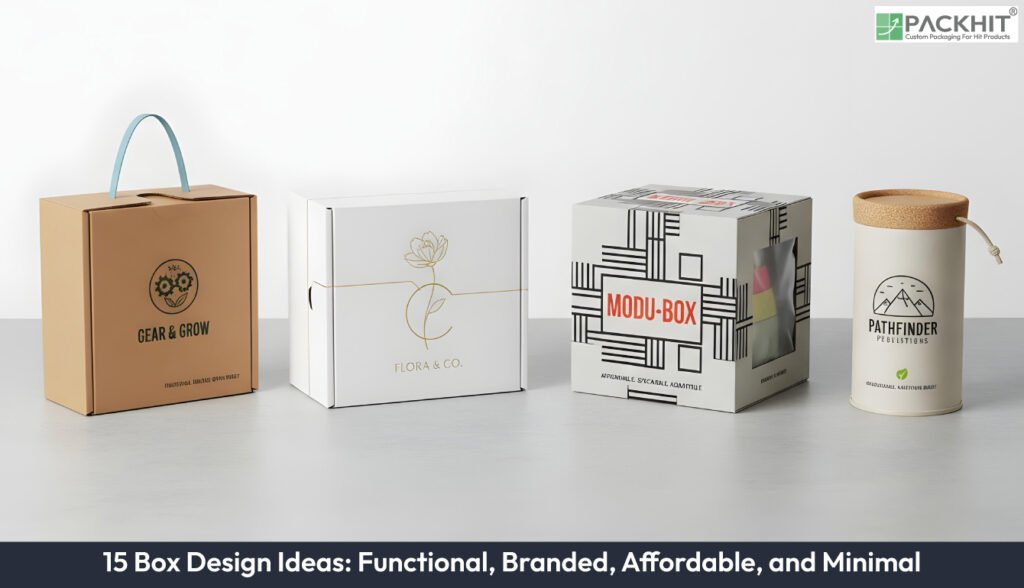
Box design ideas describe structured approaches to packaging that organise protection, branding, cost control, and visual restraint into a single physical object. The box design ideas range from window cut-outs for product visibility and interactive pop-up or DIY designs for customer engagement, to modular and origami-inspired structures for efficiency and sustainability. Premium and expressive branding is reflected through metallic, holographic, textured, gradient, and illustrated story boxes, while nature-inspired and minimal designs support clear positioning and aesthetic restraint.
The fifteen box design ideas are given below:
- Window Cut-Out Box Design
- Interactive Pop-Up Box Design
- Modular Box Design
- Origami-Inspired Box Design
- Metallic Box Design
- Holographic Box Design
- Illustrated Story Box Design
- Vintage & Retro Box Design
- Transparent Window Box Design
- DIY Box Design
- Textured Box Design
- Geometric Box Design
- Minimalist Box Design
- Gradient Box Design
- Nature-Inspired Box Design
- 1. Window Cut-Out Box Design
- 2. Interactive Pop-Up Box Design
- 3. Modular Box Design
- 4. Origami-Inspired Box Design
- 5. Metallic Box Design
- 6. Holographic Box Design
- 7. Illustrated Story Box Design
- 8. Vintage & Retro Box Design
- 9. Transparent Window Design
- 10. DIY Box Design
- 11. Textured Box Design
- 12. Geometric Box Design
- 13. Minimalist Box Design
- 14. Gradient Box Design
- 15. Nature-Inspired Box Design
1. Window Cut-Out Box Design
The window cut-out box design allows customers to see the product inside without opening the package. This builds instant trust and reduces uncertainty at the point of purchase. It enhances visual appeal by framing the product as part of the design itself. This style works especially well for food, cosmetics, and handcrafted items. Ferrero Rocher uses window cut-out boxes for its signature chocolate collections, allowing customers to view the gold-wrapped chocolates.
2. Interactive Pop-Up Box Design
Interactive pop-up box design creates a memorable unboxing experience through movement and surprise. It actively engages customers, making the packaging feel playful and premium. This design helps brands stand out in crowded markets by encouraging interaction. It is ideal for promotional packaging and gift boxes. LEGO incorporates interactive packaging concepts in its special edition LEGO sets, enhancing the unboxing experience.
3. Modular Box Design
The modular box design offers flexibility by allowing multiple components to fit together seamlessly. It improves storage efficiency and simplifies transportation and assembly. This design supports customization for different product sizes or bundles. It is especially useful for subscription boxes and product sets. Apple uses a modular box design for products like the iPhone and Apple Watch packaging, ensuring consistency and efficiency.
4. Origami-Inspired Box Design
Origami-inspired box design showcases creativity through intricate folds and clever structure. It reduces the need for adhesives, making it more eco-friendly. This design communicates craftsmanship and attention to detail. It appeals strongly to design-conscious and sustainability-focused consumers. Puma applied origami-inspired design in its Clever Little Bag shoe packaging, reducing cardboard waste.
5. Metallic Box Design
Metallic box design conveys luxury and high perceived value through reflective finishes. It instantly attracts attention on retail shelves due to its shine. This design is often associated with premium or limited-edition products. It works well for cosmetics, electronics, and celebratory packaging. Dior uses metallic box finishes for its limited-edition perfume gift sets, reinforcing a luxury feel.
6. Holographic Box Design
Holographic box design delivers a futuristic and eye-catching visual effect. It changes appearance based on light and angle, creating dynamic interest. This design appeals strongly to younger and trend-driven audiences. It is ideal for fashion, beauty, and tech-related products. Fenty Beauty uses holographic packaging for products like its highlighter and makeup collections.
7. Illustrated Story Box Design
Illustrated story box design uses artwork to communicate a narrative or brand message. It emotionally connects customers to the product through visual storytelling. This design helps reinforce brand identity and uniqueness. It is particularly effective for children’s products and artisanal brands. Tony’s Chocolonely uses illustrated boxes for its chocolate bars, telling stories about ethical sourcing.
8. Vintage & Retro Box Design
Vintage & retro box design evokes nostalgia and timeless charm. It appeals to emotions by referencing familiar styles from the past. This design helps brands appear authentic and heritage-driven. It works well for food, beverages, and lifestyle products. Coca-Cola frequently uses vintage-style packaging for its classic glass bottle gift boxes.
9. Transparent Window Design
Transparent window box design allows customers to clearly see the product while keeping it securely packaged. It builds trust by showcasing the actual product without requiring the box to be opened. This design enhances shelf appeal by combining visibility with branding elements. It is especially effective for food, cosmetics, and retail products where appearance matters. Ferrero Rocher uses transparent window box design for its chocolate gift boxes, highlighting the premium look of the chocolates inside.
10. DIY Box Design
DIY box design encourages customer participation and creativity. It adds value by transforming packaging into an activity or keepsake. This design strengthens emotional engagement with the brand. It is ideal for gifts, educational products, and craft-related items. Kinder uses DIY-style packaging in its Kinder Joy activity-based products.
11. Textured Box Design
Textured box design enhances tactile experience through embossed or patterned surfaces. It adds depth and sophistication to packaging aesthetics. This design increases perceived quality by engaging the sense of touch. It is well-suited for luxury and premium brands. Chanel uses textured boxes for products such as its Chanel No. 5 fragrance packaging.
12. Geometric Box Design
Geometric box design uses sharp lines and structured forms for a modern look. It communicates precision, innovation, and order. This design stands out through bold shapes and symmetry. It is popular in tech, fashion, and minimalist branding. Adidas applies geometric packaging design to its performance footwear and apparel boxes.
13. Minimalist Box Design
Minimalist box design focuses on simplicity and clarity. It reduces visual clutter to highlight essential branding elements. This design conveys elegance and confidence through restraint. It appeals to modern consumers who value clean aesthetics. Aesop is known for minimalist packaging across its skincare and personal care products.
14. Gradient Box Design
Gradient box design blends colours smoothly to create depth and visual interest. It adds a contemporary and artistic feel to packaging. This design draws attention without overwhelming the viewer. It works well for beauty, wellness, and lifestyle products. Samsung uses gradient box designs for special edition smartphone packaging.
15. Nature-Inspired Box Design
Nature-inspired box design reflects organic elements such as leaves, textures, and earth tones. It communicates sustainability and environmental responsibility. This design resonates with eco-conscious consumers. It is ideal for organic, wellness, and natural products. The Body Shop uses nature-inspired boxes for its skincare and body care gift sets.