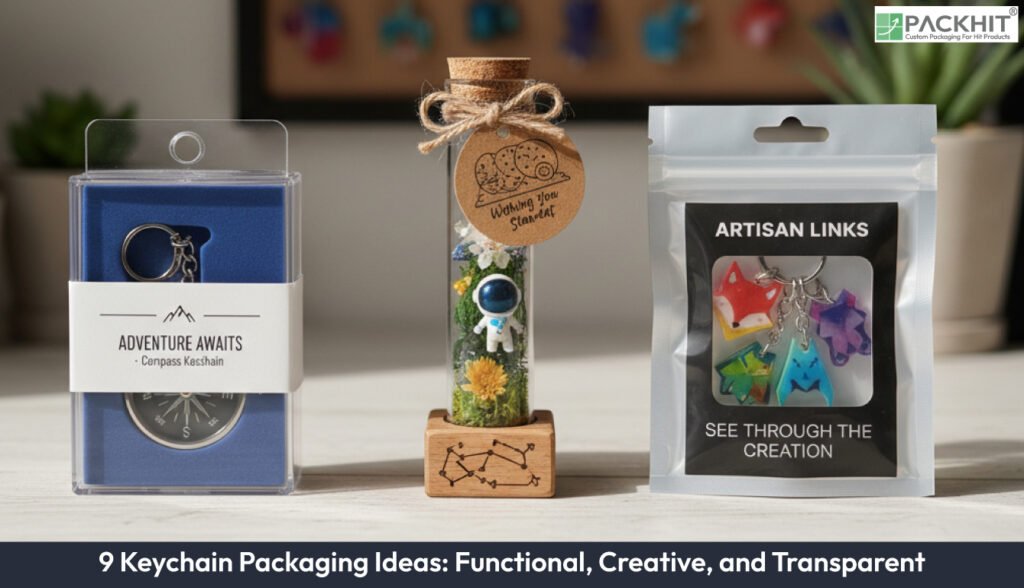
The nine keychain packaging ideas vary based on visibility, protection, and presentation needs. Cardboard window boxes, tray-and-sleeve designs, and transparent sheet boxes balance product display with structural support, while poly bags provide space-saving protection for bulk storage. Velvet pouches and leather cases focus on tactile appeal and gift-style presentation rather than visibility. Two-piece boxes with foam inserts and acrylic cases offer higher protection, especially for metal or premium keychains. Kraft papercards highlight simplicity and recyclability with minimal material use. Together, these formats address retail display, shipping safety, branding, and long-term presentation requirements.
The nine keychain packaging ideas are discussed below:
1. Cardboard Window Boxes
Cardboard window boxes combine printed paperboard with a clear plastic cut-out to show the keychain while keeping it enclosed. The cardboard frame controls shape and stacking, while the PET window exposes metal rings, charms, or logos without full removal. Window size varies by die-cut layout and usually covers 30–60% of the front panel. Printing stays on the cardboard surface, allowing colour, instructions, and compliance marks to remain readable. This format balances visibility with protection for retail shelves and mail packing.
2. Tray and Sleeve Boxes
Tray-and-sleeve boxes use two parts to pack a keychain in a controlled way. The inner tray holds the keychain in one fixed position, so the ring and body do not move. The outer sleeve slides over the tray and covers the keychain during storage. This sliding action shows the keychain step by step when the box opens. All printed text and colours stay on the sleeve, not on the tray. Small window cut-outs in the sleeve show part of the keychain while keeping it protected.
3. Velvet Pouches
Velvet pouches package keychains inside soft textile enclosures that prevent surface scratching during short-distance handling. Woven polyester or cotton velvet forms a drawstring or flap-closed pouch, which absorbs contact marks on plated rings, engraved tags, and polished metal bodies.
Size grading aligns the pouch interior with single keychains or paired sets, while colour selection differentiates product variants. Opacity removes visual inspection and shifts attention to material touch, often used for souvenir or gift-distributed keychains.
4. Two-piece Boxes
Two-piece boxes with foam inserts keep a keychain fixed and protected during storage and transport. The box uses a solid base and a separate lid, while the foam insert holds the keychain in one position. This foam cutout stops metal rings and parts from moving inside the box. Custom options include foam thickness, foam colour, and printed text on the lid. The structure reduces scratches on the keychain surface. This packaging fits metal keychains and electronic keychains that carry extra weight.
5. Kraft Papercards
Kraft papercards hold a keychain on unbleached paperboard with minimal surface coating. The paper surface absorbs single-colour ink and stamp marks, which keeps printing clear and simple. A punched hole or natural twine secures the keychain in one fixed position. The card stays flat during packing and shipping, which reduces bending. Limited size options keep the focus on material texture, while the plain surface allows clear recycling and compliance labels.
6. Leather Cases
Customised leather cases convert keychain packaging into a secondary carrying accessory. Vegetable-tanned or PU-coated leather wraps around the Keychain, often secured by snap buttons or stitched flaps. Opacity replaces transparency, shifting emphasis from visual inspection of the Keychain to tactile and material cues.
Brand marks are embossed or debossed rather than printed, and internal lining dimensions are matched to specific keychains. This packaging idea suits metal or minimalist keychain designs where concealment aligns with perceived durability rather than display.
7. Transparent Sheet Boxes
Transparent sheet boxes pack a keychain inside folded PET or PVC sheets that form a clear, rigid box. The box keeps its shape, so the keychain stays aligned on shelves and during stacking. The plastic walls measure about 0.3 to 0.5 mm, which provides resistance to light pressure and protects surface finishes. A tuck-lock closure keeps the box closed without extra parts. Clear inner tabs hold the keychain in one position. Printed logos and compliance text sit near the edges, so the keychain remains fully visible.
8. Poly bags
Clear poly bags pack a keychain inside a thin, see-through plastic cover that blocks dust and light moisture. The plastic film usually measures 40 to 80 microns and wraps closely around metal rings, enamel parts, or soft PVC shapes. This flexible form bends around the keychain, so it uses less space inside shipping cartons. The bag keeps the surface clean during bulk storage and short transport. Size changes depend on the full length of the keychain, including the ring. Small labels or barcodes sit on the outside, so the keychain stays fully visible.
9. Acrylic Cases
Acrylic cases encase keychains within rigid, optically clear housings that prioritise long-term display over transport efficiency. Cast acrylic panels resist yellowing and scratching more effectively than thin plastics, which makes them common in commemorative or limited-run keychains.
Customisation focuses on laser-cut edges, magnetic or screw-fastened closures, and internal standoffs that prevent contact between the keychain and the case walls. The case itself becomes a reusable object, extending the packaging’s functional life beyond the point of purchase.