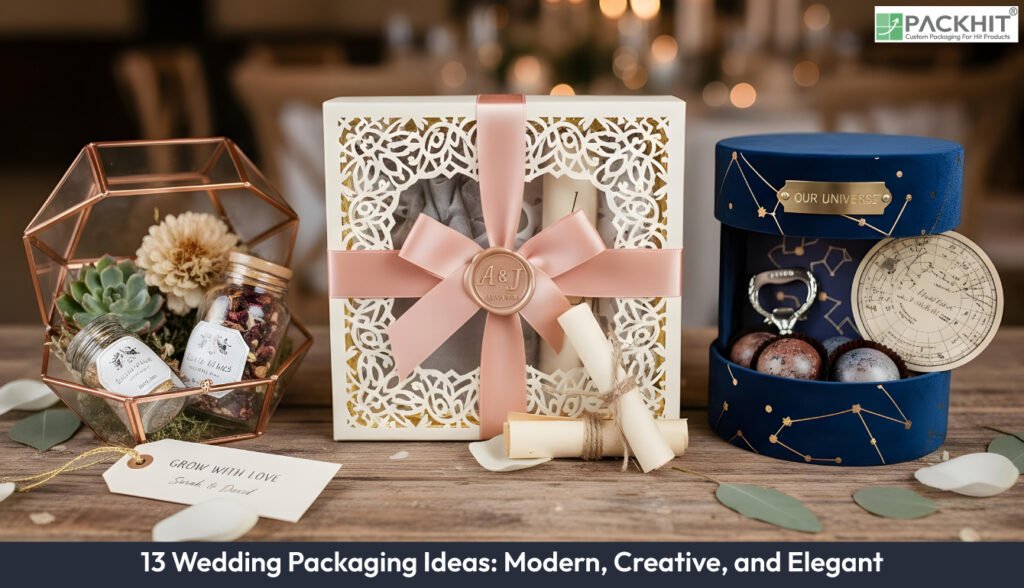
Wedding packaging combines protection, presentation, and personalisation to enhance the gifting experience during ceremonies. Modern formats prioritise simplicity, practicality, and clean designs, allowing items to be easily handled and stacked while maintaining a neat aesthetic. Creative approaches introduce unique forms, playful details, and personalised touches, adding visual interest and memorable moments for guests. Elegant options focus on refined materials, subtle embellishments, and sophisticated finishes that elevate presentation and convey a sense of luxury. Across these styles, packaging choices consider functionality, ease of use, and visual appeal, ensuring gifts, favours, and stationery are secure, recognisable, and beautifully displayed throughout the event.
The following thirteen wedding packaging ideas illustrate a mix of modern, creative, and elegant solutions, each designed to protect items, enhance presentation, and create a memorable gifting experience.
1. Favour boxes
Compact, rigid containers for single-item gifts such as sugared almonds, tealight candles, or mini soaps. Constructions include tuck-flap, crash-lock base, or interlocking tabs. Surface finishes range from uncoated board to foil stamping or spot varnish.
2. Handle boxes
Board-based cartons with integrated die-cut handles or cord grips. Weight tolerance is usually under 2 kg. Common uses include takeaway desserts, cupcakes, or mixed favours at venue exits or outdoor receptions.
3. Two-piece boxes
Lid-and-base constructions with telescoping tolerances of 3–5 mm. Supports precise stacking and controlled reveal, often used for jewellery, keepsakes, or folded invitation sets. Materials include rigid greyboard wrapped in paper or fabric.
4. Drawstring pouches
Soft textile bags in cotton, linen, jute, or organza. Closure relies on single or double cords, producing tactile and subtle sound feedback. Common fillings include jewellery, crystals, sweets, or scented items.
5. Customised hangtags
Tags applied after box assembly, carrying names, dates, or symbols. Attachment methods include string, ribbon, or safety pins, adding identification without changing die-lines or structural tooling.
6. Handwritten notes
Short messages on folded or flat cards are inserted inside boxes, pouches, or bags. Variations include single-line notes, thank-you cards, or name cards, introducing visible irregularity through handwriting.
7. Fine gift labels and tags
Die-cut card labels attached post-packaging using ribbon, twine, or metal eyelets. Shapes include rectangles, circles, or scalloped edges. Printed information often covers guest names, dates, or short messages.
8. Kraft welcome bags
Paper bags made from natural-fibre kraft with flat or twisted handles. Capacity supports bottled water, snacks, maps, or itineraries. Uncoated surfaces accept stamps, stickers, and single-colour printing.
9. Wedding hampers
Multi-item packaging units built with corrugated or rigid board and internal partitions. Fill media includes shredded paper, wood wool, or moulded inserts to limit movement. Typical contents include food jars, candles, and small bottles for bridal parties or family gifts.
10. Gable boxes with handles
Single-piece cartons with a peaked top and fold-over handle. Internal volume suits baked goods, sweets, or mixed items. Supplied flat and assembled without adhesive, reducing storage space while maintaining vertical presentation.
11. Personalised wedding cards
Stiff card enclosures printed with names, dates, and venue details. Formats include folded cards, flat cards with belly bands, or paired with envelopes. Stock weights typically range from 300-400 GSM for crease stability.
12. Cardboard handle bags
Folding cartons with glued side seams and reinforced die-cut handles. Board thickness usually ranges from 300–450 gsm, supporting moderate-weight items such as oils, candles, or glass jars.
13. Colourful ribbons and stickers
Closure and decoration components are applied externally. Ribbon types include satin, grosgrain, or paper; stickers use adhesive paper or vinyl. Functions include sealing flaps, colour coding, and marking celebratory themes.