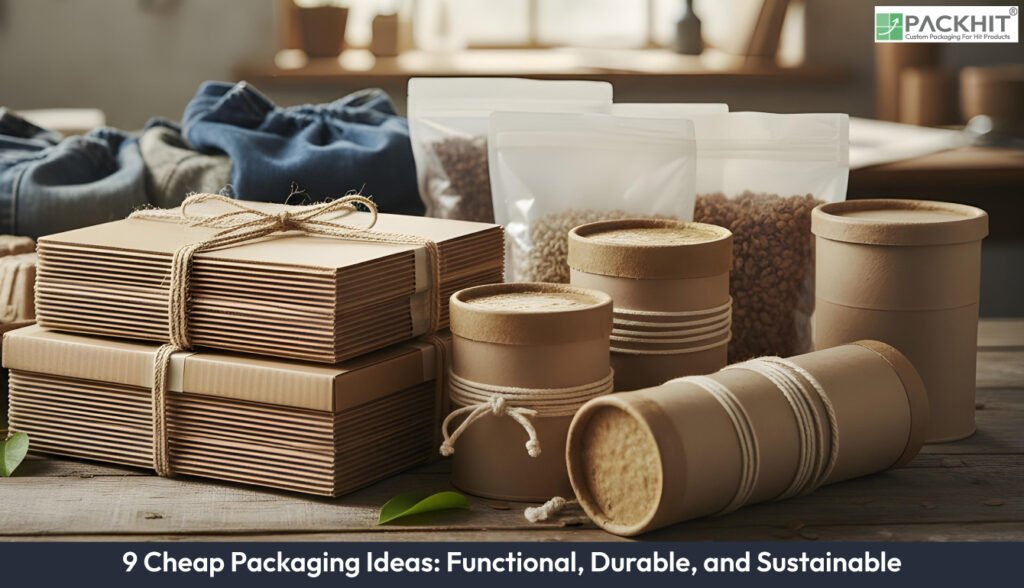
The nine cheap packaging ideas include cardboard boxes, kraft paper, padded envelopes, rigid mailer boxes, poly mailers, moulded pulp inserts, minimalist packaging, plant-based packaging, and moulded pulp packaging. Corrugated cardboard boxes and kraft paper rely on recycled fibre, standard sizes, and flat-pack handling to reduce cost and waste. Lightweight yet durable options include padded envelopes, rigid mailer boxes, and poly mailers, which cut postage weight while protecting small goods like handmade jewellery and accessories. Moulded pulp inserts and moulded pulp packaging secure fragile items through form-fitted recycled fibre shapes that absorb shock and limit breakage. Minimalist packaging and plant-based materials, which lower spend by removing excess layers and replacing petroleum plastics with compostable fibres, keeping packaging functional, durable, and sustainable across common manufacturing use cases.
1. Cardboard Boxes
Cardboard boxes are rigid packaging containers made from corrugated paperboard layers bonded into a fluted structure. This construction keeps packaging cheap because single-wall and double-wall boards achieve stacking strength above 25 kilograms while using lightweight recycled fibre, often above 70% content. Standardised box sizes reduce material waste and keep manufacturing costs stable across large runs. Flat-pack delivery cuts inbound freight volume and lowers storage costs in warehouses. These properties make cardboard boxes a cost-effective option for bulk shipments, subscription kits, and handmade jewellery packaging, where protection and price control matter more than decorative finishes.
2. Kraft Paper Bags
Kraft paper bags are flexible packaging bags made from unbleached wood pulp with high tear resistance. Unit cost stays low because kraft paper uses minimal chemical processing and high recycled fibre content. The material holds weight without coatings, keeping packaging functional for transport and retail handling. Common uses include handmade jewellery pouches, soap bars, candle jars, boutique apparel accessories, and small gift items sold at craft fairs or shipped as lightweight orders.
3. Padded Envelopes
Padded envelopes, also referred to as padded or cushioned mailers, are lightweight mailing envelopes that combine an outer shell with an internal cushioning layer. They are made from heavy paper, paperboard, or thin corrugated fiberboard, paired with recycled paper padding or bubble lining to absorb impact. This structure keeps costs low by using minimal material while reducing the need for boxes and void fill. Common uses include shipping handmade jewellery, small electronics accessories, documents, and cosmetics, where surface protection and postage control matter.
4. Rigid Mailer Boxes
Rigid mailer boxes are foldable packaging boxes made from dense chipboard that keep their shape during parcel handling. They are affordable because single-piece die-cut designs reduce material waste and avoid separate inserts or liners. Chipboard thickness between 1.5 and 2.5 millimetres resists bending and corner collapse under compression loads above 30 kilograms. Common uses include handmade jewellery sets, watches, and compact gift items, where flat surfaces and edge protection limit transit damage.
5. Poly Mailers
Poly mailers are lightweight shipping envelopes made from low-density polyethene film. Unit cost stays low because roll-fed film extrusion uses minimal resin and high-speed sealing. Film gauges between 50 and 70 microns resist tearing, puncture, and water exposure during parcel handling. Poly mailers are commonly used for mailing lightweight, non-fragile goods where water resistance and low shipping weight reduce damage and postage costs. Typical applications include handmade jewellery packed in small poly bags, fabric-wrapped earrings, apparel inserts such as scarves or socks, and bead kits with sealed inner pouches, where moisture blocking and tear resistance limit transit returns.
6. Moulded Pulp Inserts
Moulded pulp inserts are form-fitted packaging components made from recycled paper fibres that lock products in place during transit. They are cheap because of high recycled content, and single-cavity molding reduce raw material and tooling costs. The rigid fibre structure absorbs repeated drops and spreads pressure across contact points. Common uses include ring boxes, glass jewellery, ceramic accessories, and small gift items packed inside mailer boxes with moulded pulp inserts.
7. Minimalist Packaging
Minimalist packaging reduces cost by removing non-essential layers, coatings, and inserts while keeping structural protection. Fewer components cut material use by 20–35% and shorten packing time. Plain cartons, single-colour kraft boxes, and uncoated paper wraps keep print and tooling costs low. Common examples include handmade jewellery boxes, candle jars, and small cosmetics packed with one insert and no secondary wrap.
8. Plant-Based Packaging
Plant-based packaging uses materials derived from renewable crops, which are cheap due to agricultural waste streams and large-scale farming. Fibers from sugarcane bagasse, cornstarch, and bamboo replace petroleum plastics at comparable unit costs. These materials break down under composting conditions and reduce plastic taxes in some states. Examples include bagasse trays for accessories, cornstarch mailers for lightweight goods, and bamboo paper boxes for jewelry.
9. Moulded Pulp Packaging
Moulded pulp packaging forms rigid shapes from recycled paper slurry, keeping costs low through high recycled content and simple tooling. The material absorbs shock and holds products in fixed cavities, reducing breakage rates by up to 40%. Production scales easily with standard molds and minimal finishing. Typical uses include ring holders, earring trays, and protective inserts for glass or ceramic items.